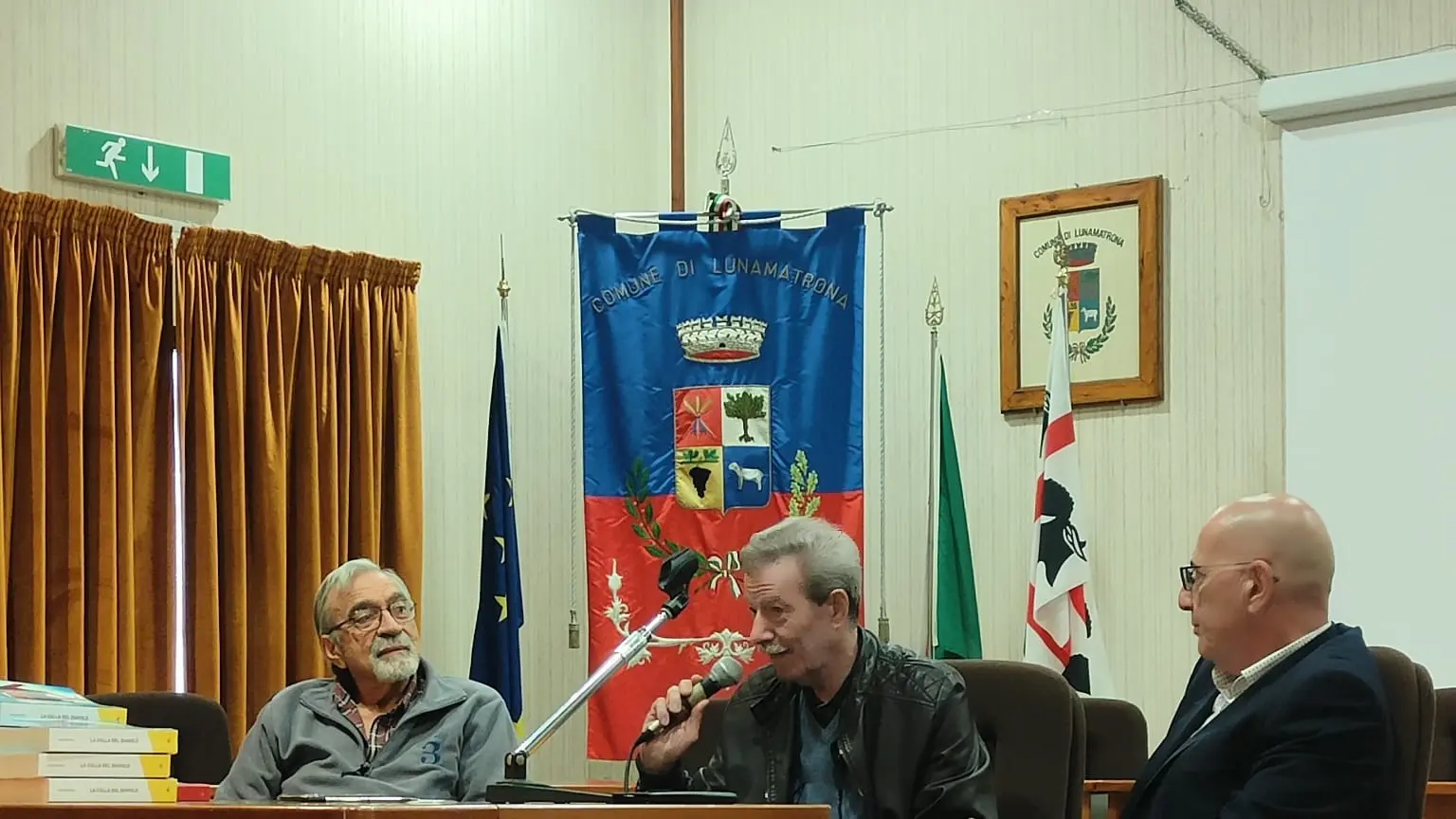


Antonio Spiga, the 75-year-old former Bulgari director, has always maintained a strong bond with Lunamatrona, the town where he spent most of his youth. Born in Siddi, a few kilometers from Lunamatrona, Spiga now lives in Liguria and dedicates himself to his lifelong passion: writing. He is moved in recounting the life journey that from Siddi, where he was born, and Lunamatrona, where he spent his childhood and adolescence, brought him to Genoa. Arrived in Liguria he wrote fairy tales and stories for children with cancer at Gaslini in an exodus to the peninsula that took place for work reasons. It was the '70s, he was just sixteen: «My father Adelchi was called to build a complex of palaces and the Morandi bridge. Hunger and desperation drove us to cross the Tyrrhenian Sea». A step that became important for him as he was able to study and make a career.
"The Devil's Cradle"
Two days ago Spiga was at Lunamatrona to present his fourth literary effort. "The Devil's Cradle". The event saw the participation of many lifelong friends, as well as that of many onlookers eager to know the face of this passionate novelist. Spiga told stories and anecdotes from the past.
In just over three weeks since its launch, "La Culla del Diavolo" has sold 5,000 copies, an excellent result considering that Spiga has decided to donate the proceeds to the parish of San Giovanni Battista in Lunamatrona. «Writing is always a great pleasure, I was given a gift and through this I have continued above all with the idea of doing good to others less fortunate. I hope to help those in real need. The proceeds from the sales will be available in two years,” Spiga says happily. The plot of his new novel develops precisely in Lunamatrona: the town is shocked by a series of mysterious deaths that throw the local population into terror and bewilderment. The story is full of unexpected twists and surprises that will keep readers in suspense until the very end.
On stage
During the meeting, the author was accompanied on stage, left, by Francesco Mereu, his childhood friend and faithful proofreader. It was Alfonso Merei, the father of his dear friend Francesco who noticed in him the gift of writing. Alfonso was among the many who helped Antonio's family in times of difficulty. Spiga recalls, in this regard, the parish priest of the time, Don Dessì, who gave 100 lire vouchers to buy food.