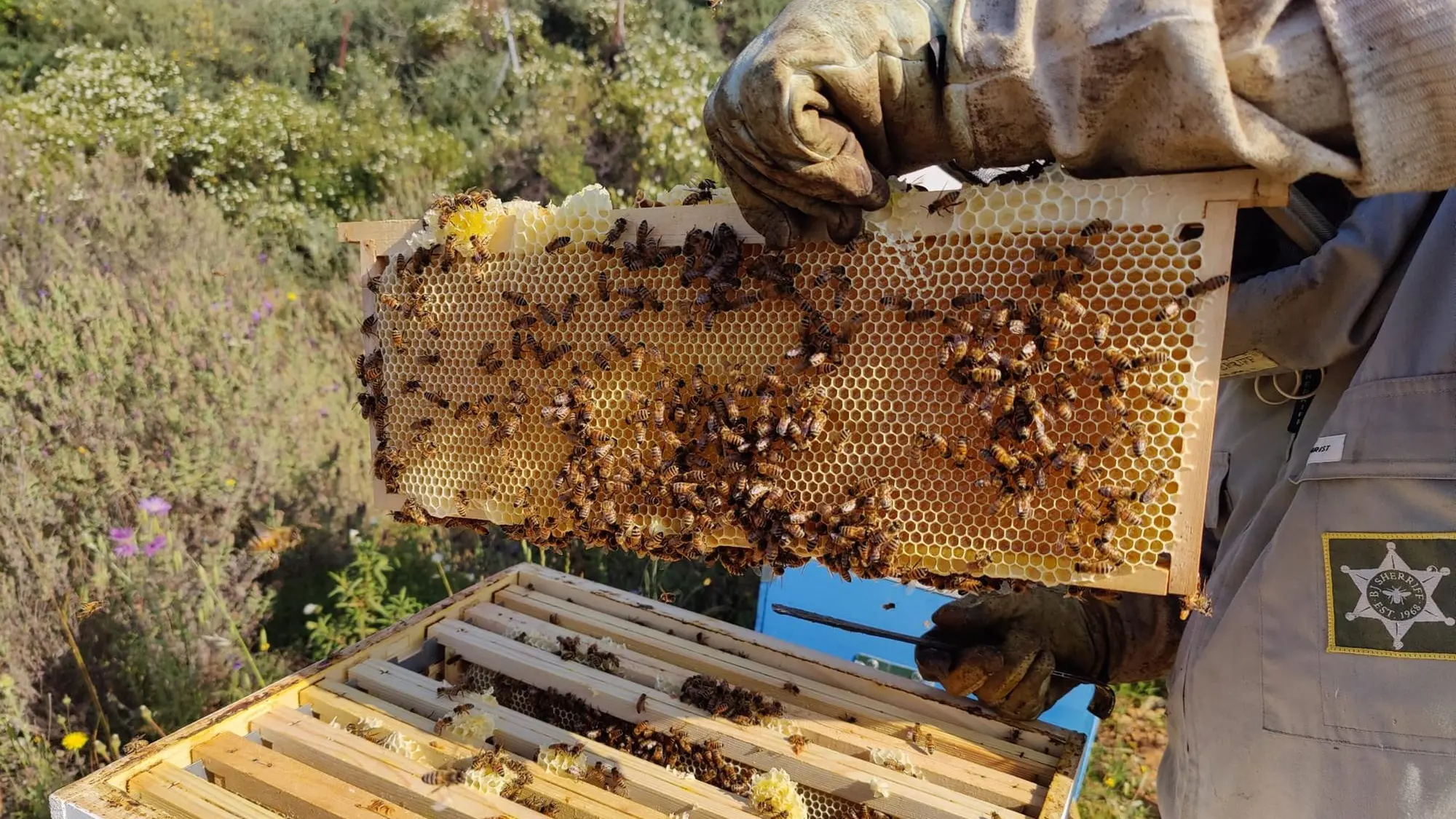


The great-great-grandfather a beekeeper, the grandfather as well, so did the father. However, Francesco Caboni, President of Terrantiga, the most important consortium of honey producers on the island, heir to a dynasty of beekeepers, risks being the last generation of that ancient art that collects honey, the one produced by millions of "workers" under the guidance of wise "queens". The scenario is dramatic: "We are at a crossroads: abandoning the hives because it is too expensive or thinking of sensational gestures, such as taking them to the Region in the presence of a council that has been absent from the requests of beekeepers for too many years". The President of Terrantiga does not use half sentences: we are ready to bring bee hives to the buildings of the Region. The last coup de grace to an already severely tried sector took place between May and June with record temperatures that wrecked the hoped-for "rich summer harvest of eucalyptus honey".
Thermal disaster
«After a troubled spring especially in south-central Sardinia where the weather conditions did not allow the spring harvest, we hoped for an important production for one of the most traditional honeys - says Francesco Caboni. The incredible thermal anomaly, on the other hand, irremediably compromised this expectation too ». And, in fact, it was precisely the climatic trend of this early summer, with the immeasurable rise in temperatures, that did the rest. The President of Terrantiga is lapidary: «The CNR data are merciless: almost 3 degrees higher than the average in May and June. These are the hottest temperatures ever with eucalyptus which, due to climatic imbalances, blooms earlier and is hit by a strong heat wave with averages between 36 and 44 ° in the heart of Campidano. A condition that made the flowers dry up and annihilated any possibility of future harvests ».
The damage bill
The damage bill is very heavy from north to south of the island: «The loss of production - according to the estimates of the Consortium based in San Sperate - is estimated at around 66%, compared to regular production. This means that a beekeeper had a loss of income of at least 120 euros per hive, an enormous amount given that this is more than two thirds of the expected production ».