
















LEGGI IL QUOTIDIANO
LEGGI IL QUOTIDIANOOggi 12 November
L'Unione Sarda English
Abbonati
ITA|ENG|DEU|RUS|CIN
videolina Linkradiolina linkSardegna 1 linkVai online linkPBM link
Read the newspaper
L'Unione Sarda English
Subscribe
L'Unione Sarda

Iniziative Editoriali

  • Biblioteca dell'identità

Account

  • Abbonati
  • LEGGI IL QUOTIDIANO
ABBONATI A L’UNIONE SARDA

SCARICA L'APP L'UNIONE DIGITAL

Download GoogleDownload apple
videolina Linkradiolina linkVai online linkPBM link

2021 L'Unione Sarda S.p.A. Tutti i diritti riservati. É vietata la riproduzione, anche parziale e con qualsiasi mezzo, di tutti i materiali del sito. | Indirizzo della Sede Legale: Piazzetta L'Unione Sarda nr. 24 | Capitale sociale 11.400.000,00 i.v. | Codice Fiscale ed iscrizione presso l'Ufficio Registro Imprese di Cagliari 01687830925 (P.I. 02544190925) | REA: CA-136248

Cookie e Privacy PolicyModifica impostazioni privacyInformativa commentiCorporate
L'Unione Sarda

News

  • Cronaca Sardegna
  • Economia
  • Salute
  • Cultura
  • Sport
  • Gossip
  • Turismo

Servizi

  • Necrologi
  • Annunci
  • Pubblicità

Bella Sardegna

  • Spiagge

Iniziative Editoriali

  • Biblioteca dell'identità

Account

  • Abbonati
  • LEGGI IL QUOTIDIANO
ABBONATI A L’UNIONE SARDA

SCARICA L'APP L'UNIONE DIGITAL

Download GoogleDownload apple
videolina Linkradiolina linkVai online linkPBM link

2021 L'Unione Sarda S.p.A. Tutti i diritti riservati. É vietata la riproduzione, anche parziale e con qualsiasi mezzo, di tutti i materiali del sito. | Indirizzo della Sede Legale: Piazzetta L'Unione Sarda nr. 24 | Capitale sociale 11.400.000,00 i.v. | Codice Fiscale ed iscrizione presso l'Ufficio Registro Imprese di Cagliari 01687830925 (P.I. 02544190925) | REA: CA-136248

Cookie e Privacy PolicyModifica impostazioni privacyInformativa commentiCorporate
Home
Everyone talks about it

Dying in the factory, in Ilaria Rossetti's novel the tragedy of Bollate's Sutter & Thévenot

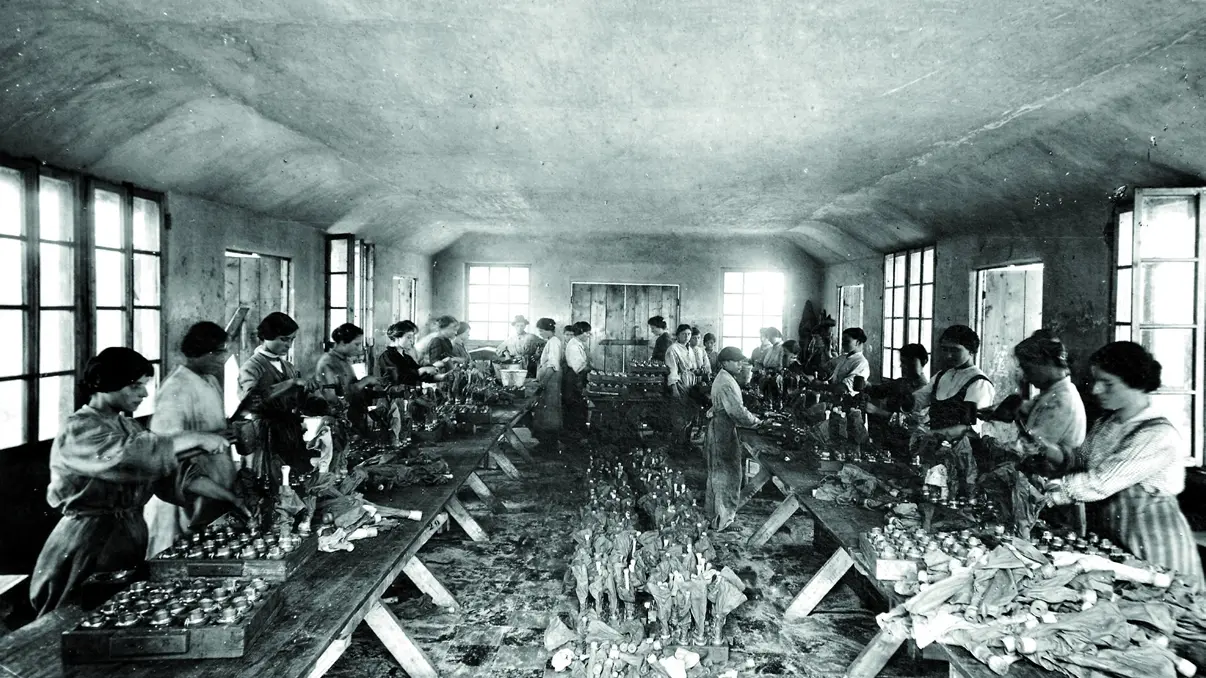
The story of the factory where, in 1918, 59 workers, and many women, lost their lives in an explosion
Roberto Roveda
1 maggio 2024 alle 14:36
Dying in the factory, in Ilaria Rossetti's novel the tragedy of Bollate's Sutter & Thévenot
La fabbrica di Bollate (foto concessa)
Resta informato su WhatsApp
FacebookXLinkedInWhatsApp
Argomenti similiSLOT_11
  • Da che parte sta?
    Caffè Scorretto

    Da che parte sta?

    Tacitus

Articoli correlati

Bomb scare, schools aren't closing. Meloni: "They want to scare us, not hit us. We'll react."
the emergency

Bomb scare, schools aren't closing. Meloni: "They want to scare us, not hit us. We'll react."

The prime minister called on the opposition and reassured them in a video on social media: "Nothing was found in the institutions. Those who send these threats want a nation that is terrified and fea…
Majority summit: "Forward with the statute, but no changes to the electoral law."
region

Majority summit: "Forward with the statute, but no changes to the electoral law."

The draft is ready and at the next session the special commission will begin examining all the articles.
Roberto Murgia
Grillo's appeal, the defense: "Evidence in our favor was ignored or undervalued, the trial must be retried."
Sassari

Grillo's appeal, the defense: "Evidence in our favor was ignored or undervalued, the trial must be retried."

In the grounds of appeal, a flurry of objections raised by the lawyers to the regularity of the conviction sentence of the Tempio Tribunal
Andrea Busia
Girasole: Mosquitoes test positive for the Usutu virus: Mayor's order comes into effect.
the alarm

Girasole: Mosquitoes test positive for the Usutu virus: Mayor's order comes into effect.

The verdict from the Teramo zooprophylactic institute is the first case in the municipality.
Roberto Secci
The eighteenth edition of the Carbonia Film Festival kicks off
cinema

The eighteenth edition of the Carbonia Film Festival kicks off

This morning, the Skan mural was unveiled at the ticket office, and the festival officially opens this afternoon. The event will get into full swing in the coming days.
MARCO CORRIAS
Salerno, a new adventure in the Eccellenza league: he will coach the Tortolì women's team.
soccer

Salerno, a new adventure in the Eccellenza league: he will coach the Tortolì women's team.

The 42-year-old coach returns to the bench, in a completely different context than those he has faced so far
Roberto Secci
Kimi Antonelli with his tricolor hair, Mercedes: "No words."
the champion

Kimi Antonelli with his tricolor hair, Mercedes: "No words."

In the video posted by the team, Kimi arrives at the headquarters, Wolff is incredulous: "Did you even pay?"
Costa Smeralda, the "emery gang" and thefts from dream villas: crimes prescribed after 16 years
Olbia

Costa Smeralda, the "emery gang" and thefts from dream villas: crimes prescribed after 16 years

In 2010, raids took place in Porto Cervo and Olbia, with the villa of an undersecretary of Labour and the residence of a Roman countess also targeted.
Andrea Busia
Ciro Grillo trial: appeal faces immediate risk of postponement
court

Ciro Grillo trial: appeal faces immediate risk of postponement

The defense: "A judge's signature is missing; the first-instance ruling must be retried."

Work, a bit like war, has always claimed its victims. This axiom is even more valid when a country is involved in a conflict and the war effort must be supported at all costs, without any regard to the tiredness of those who work and safety standards. Ilaria Rossetti reminds us of this, with highly evocative and poetic language, in her novel " The girls' factory " (Bompiani, 2024, pp. 312, also e-book) in which she recalls the serious accident that occurred in 1918 in the Sutter & Thévenot factory of Bollate , near Milan.

In the explosion of the plant, intended for the production of munitions, 59 workers and especially female workers died , because in the midst of the Great War men used to die in the trenches and women had the bitter task of supporting and sacrificing themselves on the home front.

Rivers of ink have rightly been spilled on the human tragedy experienced by soldiers engaged in the First World War.

Dying in the factory, in Ilaria Rossetti's novel the tragedy of Bollate's Sutter & Thévenot
La copertina del libro

However, the conflict was also dramatic for those who were not on the front lines, in particular for women . Let's just think of the tragedy of seeing fathers, husbands, sons leave for the front and live for years in anguished wait for a letter of reassurance or a meager official communication announcing that their family member had fallen for their country. Let's try to put ourselves in the shoes of women of all ages who suddenly found themselves alone in providing for their family, in an era when it was almost only men who worked and earned a salary. Often malnourished, exhausted by fatigue and terrorized by their enemies, women died in large numbers even if not from artillery fire: of the over six million civilians wiped out by the Great War, most were women. In this tragic picture which it would be senseless to embellish, the women showed great courage and above all a great heart. It was they who kept the home front, that is, the entire structure of civil society, standing, and they did so in many ways. You found them in the rear of the front as cooks, sutlers, seamstresses. Or in field hospitals as Red Cross nurses - ten thousand Italians worked in the Red Cross in 1918 - or nurses. With almost all the men absent, it was up to the women to go to the factories, to make the cities work. Young and old found themselves driving trams, working as postmen, sweepers and teachers, operating lathes and welding machines in factories, working in barber shops and offices previously the preserve of men only. And things worked great and the industrial machine never stopped , managing to satisfy the army's growing demand for armaments and supplies. Indeed, the women endured exhausting shifts, in unhealthy environments. For example, the workers who worked in armaments factories were called "canaries" because at the end of the job they were all yellow like canaries. Too bad that color was due to contact with gunpowder and harmful chemicals used in the factory!

Ilaria Rossetti dedicates a novel to these women which is a sort of emotional elegy . Girls from 1918 with the windswept hair of those who cycle through the countryside, with hollow cheeks because food is scarce but the burning eyes of those who have their whole life ahead of them, with thin fingers that are perfect for making ammunition. In fact, during the First World War, the Sutter & Thévenot factory chose the Lombard countryside to install, in Castellazzo di Bollate, one of the factories where hundreds of very young women took turns supplying the soldiers at the front. Thousands and thousands of boys, separated from their families and from work to go and become cannon fodder in the trenches, with hearts full of nostalgia and ready to light up when a postcard arrives written in a female handwriting, as happens to Corrado who arrives out of love to desertion...

But it is 1918 and history makes no concessions: this is how Emilia, the little girl of the house, says goodbye to her parents on the morning of June 7th without knowing if she will see them again, because a serious explosion hits the factory causing dozens of victims, almost all women and little girls. However, production resumes immediately, in wartime human lives matter even less than usual. This is how Corrado and Emilia's father, Martino, with his wife Teresa will have to accept that reality is harder than dreams and time passes indifferently. And that wars, even when they end, never end for everyone.

© All rights reserved