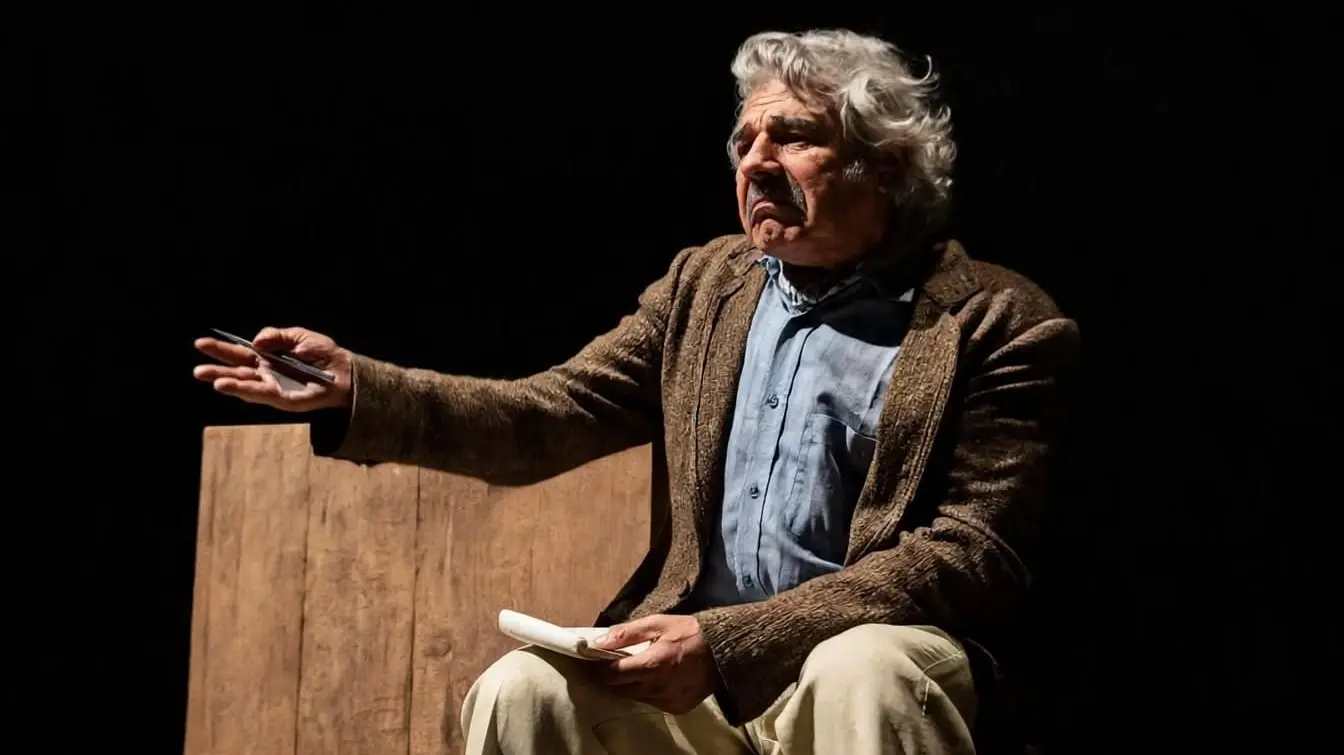


A journey through history, culture, and images, following in the footsteps of one of Sardinia's longest-running theater companies: until November 24th, the DoMusArt in Quartucciu , at Via Neghelli 13 , hosts the exhibition " 50 Years of Teatro Olata ," dedicated to the eponymous theater collective and its artistic and cultural commitment, featuring images, testimonies, and previously unpublished documents. The initiative is part of the " Identity and Value between Past and Present " project, organized and funded by the Municipality , coordinated by Forma e Poesia nel Jazz , and in collaboration with the Quartucci Pro Loco .
With the inauguration which took place today at 6pm , the exhibition will remain open for the next three days from 10am to 12pm and from 4pm to 6pm , offering an original overview of the theatrical adventure born in 1976 , first under the name Grupo de Cultura Populari , and which became the current Cooperativa Teatro Olata seven years later: in the following decades, the company has managed to build a recognisable identity, in the encounter between the valorisation of the Sardinian language and constant attention to society and its changes .
A story that took a clear direction in 1978 , after its initial debut with two comedies directed by Antonio Garau , with the Cooperative choosing at that time to engage with a theatre more sensitive to contemporary issues. But the turning point also came thanks to the new director Salvatore Vargiu , who also wrote " M'anti promitiu unu postu ": the show in fact represented an absolute novelty in the island's scenic art , immediately finding favor with audiences and critics thanks to the strength of the themes addressed, far from the farcical and caricatural canons of traditional Sardinian cummedia.
A decisive moment for the company, which since then has brought to the stage twenty-eight works created by Vargiu , focusing on the contradictions of society and suburban communities, turning its gaze especially to the most fragile and the least fortunate. A theatre that asserts both the dignity of its unfortunate protagonists and that of the Sardinian language as a tool for artistic expression: and in 1993, with the performance of " Lamentation for the Death of Ignacio " by maestro García Lorca, the Cooperative began to develop its research also with other authors and directors, in seven twentieth-century works by Ionesco , Pasolini , Dorothy Parker and others, without however renouncing its interpretative style and a personal expressive signature capable of combining profound drama and bitter laughter .
It was time for a new chapter in 2002 , in the encounter with the sacred that saw them bring to the stage in the churches " Passions of Jesus Christ " and " Nascimentu " first, and then in 2006 " Resurrections " to complete the religious trilogy. In parallel with the production activity, since 1994 Teatro Olata has also carried out an intense training and workshop activity aimed at the younger ones , in addition to having participated in cinematographic productions such as " The son of Bakunin " by Gianfranco Cabiddu , and experiences with other companies such as " Sa dì de sa Sardigna " by Marco Parodi – replaced in 2001 by Marco Gagliardo – and " Sa Passioni ", by Tonin Casalonga in a production of Teatro Sardegna .