

Early detection and treatment of depression in cancer patients is now possible thanks to a model developed by the University of Cagliari and the Ferrara Local Health Authority.
Depression affects up to 25% of people with cancer and is still often underdiagnosed and undertreated, with negative effects on quality of life, treatment adherence, and prognosis. Evidence on the effectiveness and economic sustainability of interventions, especially non-pharmacological ones, remains limited.
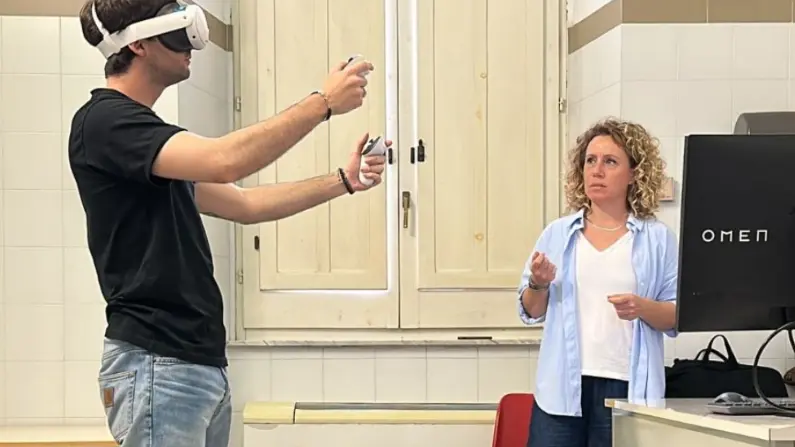
The research was carried out by the Psychosomatic Rehabilitation Service of the University Hospital of Cagliari, directed by Professor Mauro Giovanni Carta , and the Consultation Psychiatry Unit of the Ferrara Local Health Authority, directed by Professor Luigi Grassi . The project is funded by the Ministry of Health through the PNRR NextGenerationEU and is led by Professor Federica Sancassiani (AOU Cagliari) as Operations Manager and Professor Luigi Grassi (AUSL Ferrara) as Scientific Director. A depression risk prediction model is being developed for people with cancer, which will also be made available online for public use. The effectiveness and cost-effectiveness of innovative non-pharmacological interventions, such as repetitive transcranial magnetic stimulation (RTMS), a non-invasive and painless technique that uses magnetic fields to influence brain activity, and cognitive rehabilitation in immersive virtual reality for people with cancer and depression, were evaluated.
The project's final conference, where the initial results will be presented, will be held on Friday, May 8th in Cagliari (Hotel Regina Margherita, starting at 8:30 a.m.). The day will feature a variety of events focusing on prevention, early diagnosis, and personalized interventions for treating depression in cancer patients. The final meeting will conclude at 4:30 p.m., when Professor Pietro Giorgio Calò, Director of General Surgery at the Duilio Casula Polyclinic and Vice Rector for Health Care at the University of Cagliari, and Professor Marcello Nonnis, Director of the Prevention and Protection Service at the University of Cagliari, will moderate