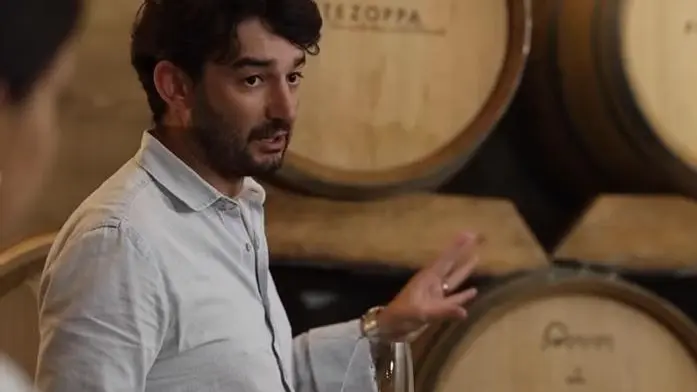


"Italian wine continues to be an economic and cultural pillar, with a value exceeding 14 billion euros and accounting for 1.1% of the national GDP . However, the data shows a slowdown on some fronts, particularly in domestic consumption and exports, a sign of a system that must adapt to new global balances." This is the analysis by winemaker Andrea Pala for the 58th edition of Vinitaly in Verona , a key event for the international wine industry and a privileged observatory for understanding the transformations underway in the sector. For Pala, "the sector remains structurally solid, but is undergoing a phase of profound evolution in consumption patterns and market dynamics."
Consumption
As stated in a press release, " One of the most significant factors concerns the evolution of consumption. In Italy, there are approximately 30 million wine consumers, equal to 55% of the population, a figure that has remained stable in recent years . What is changing, however, is the frequency." "Consumption," Pala emphasizes, "is no longer daily or habitual: the share of occasional consumers, who choose wine at specific times, is growing. This is a significant cultural shift: less quantity, more quality, and greater awareness." In the last twenty years, in fact, "occasional consumers have increased from 44% to 61%, increasingly accounting for total consumption. This phenomenon is also reflected in sales, which are declining in both large-scale retail trade and the HoReCa channel, confirming a trend of decreasing volumes."
New generations
Another key element that emerged at Vinitaly, the press release highlights, concerns the role of the new generations. "Young people," Andrea Pala emphasizes, "are approaching wine with curiosity, but in different ways than in the past. They are more open to experimentation, less tied to family habits, and more attentive to the context of consumption, the experience, and the product narrative." The data shows a strong propensity for discovery, with over 70% of Gen Z "interested in trying new wines, while price remains a determining factor in purchasing decisions. A polarization is also emerging: on the one hand, accessible and immediate products; on the other, premium wines tied to territory and identity."