
















Bruno Bovo and Andrea Cavattoni survived with a tangle of bullets in their bodies. Vittorio Luise was saved because the onion watch on his waistcoat deflected the bullet. Toni Peretto shared bread and salami before being killed. Walter Saudo tried to reason with the Germans before being mowed down by the volley. Ottorino Bovo collected the dead and wounded. Carolina Zenoni saw her boyfriend killed with a gunshot to the head.
These are some of the stories collected by the journalist and writer Luca Fregona in Italiani Kaputt. La strage degli operai (Athesia, 2025, Euro 18.00, pp. 160. Also Ebook), a volume published on the occasion of the eightieth anniversary of the massacre of May 3, 1945 in the industrial area of Bolzano. That day, with the war already over, German soldiers retreating towards Germany rounded up eighteen workers in the factories: a reprisal after some clashes with the partisans. The workers were lined up in two rows in front of the wall of the Lancia factory and killed with two bursts of machine gun fire from an armored car. Ten victims; the survivors, seriously wounded, will forever bear the scars, in their body and soul. Scars even deeper because for a long time May 3, 1945 will become a date to forget and the massacre of that day a tragic event, but one to let fall into oblivion.

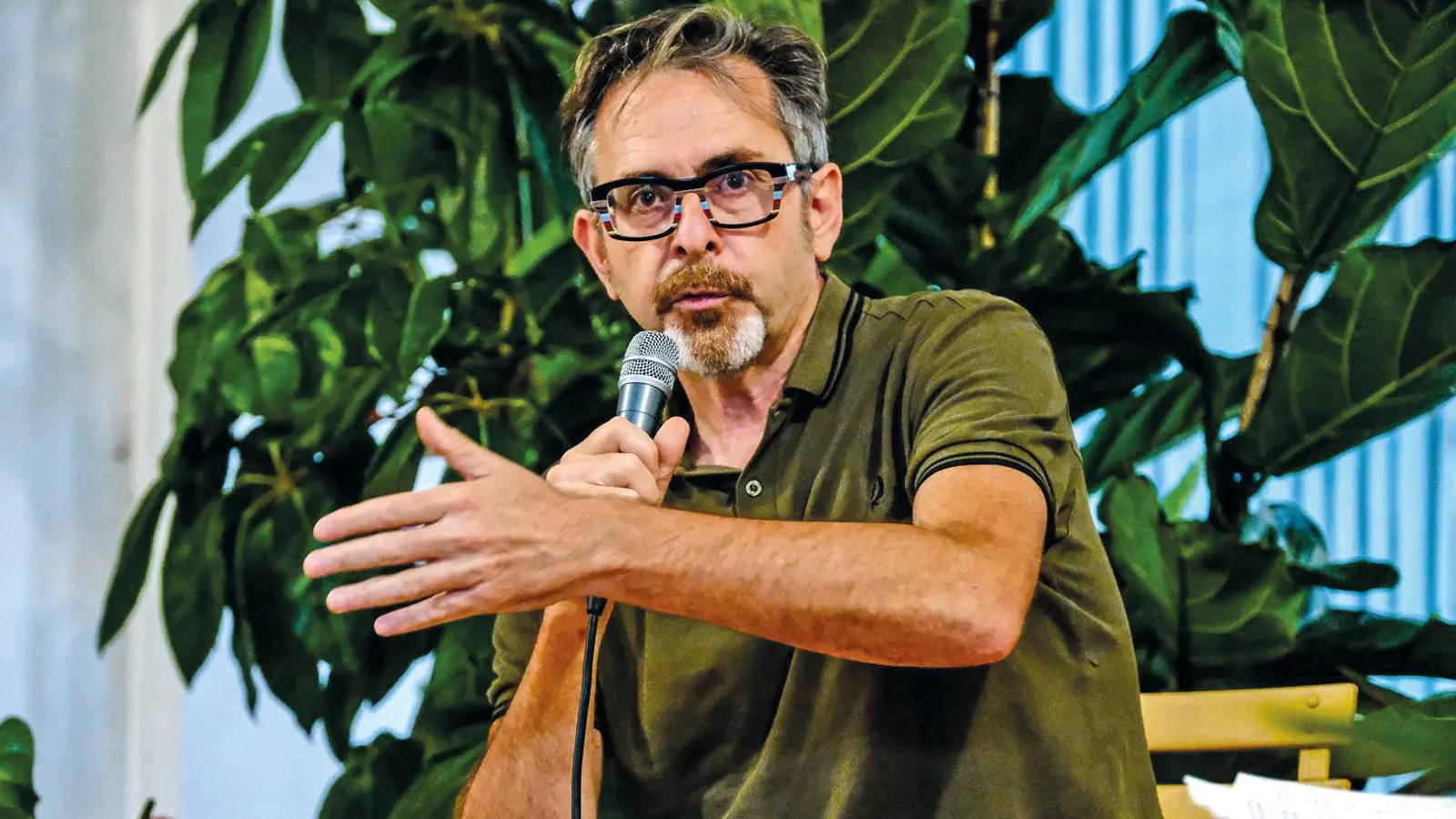
We first asked Luca Fregona what was the impetus for writing a book on an event that has been forgotten for so long:
«This book was born from the testimonies of the few survivors and the families of the victims, who for generations have passed down the memory of what happened. It is a story that I have wanted to tell for many years with a book with a narrative approach that would allow me, in some way, to also convey the emotions and fears experienced by the workers rounded up on May 3, 1945 by German soldiers in the factories of the industrial area of Bolzano. Every day I pass in front of the wall where they were shot (the wall of the Lancia factory), in front of that plaque that remembers them as 'victims of Nazi ferocity'. And, every time, I wonder what they thought in those last moments, the last words they exchanged, the last things they saw. The dead of May 3, 1945 still walk these streets so changed over time, bulldozer blows that have demolished the old factories to make room for warehouses, shopping centers and gyms. And yet, I continue to hear and see those dead».
Why was this tragic story suppressed for so long?
«I have always wondered why that day had been deliberately erased, for so long, from the official biography of Bolzano. Almost as if it were an unpronounceable taboo. A gratuitous and infamous massacre, with the war already over, with the Americans a handful of kilometers away. Those deaths were inconvenient. They weighed on the conscience of a city in ruins. Because the German retaliation had been triggered out of time. Just as out of time had been the firefights between partisans and defeated Nazis fleeing toward the border. A cursed and wrong day between contradictory orders, German fury, and geopolitical tactics on the future of Alto Adige (Austria or Italy?). Those deaths lifted the veil on pro-Nazi collaboration in Alto Adige, but also on the errors of the National Liberation Committee. In the chaos, feuds that had remained pending during the dark years of fascism and the criminal years of the German occupation re-emerged: the hunt for Italian soldiers, for Jews, the concentration camps, the executions, the roundups, the rapes."
How did survivors and relatives of victims bear witness to the tragedy they experienced?
«The roundup in the Industrial Zone was a retaliation, after some shootings between workers and columns of the Wehrmacht in transit. It was conducted with extreme harshness by a unit of German paratroopers accustomed to killing without mercy. For years I conducted my own research into the past. I found witnesses and survivors. I listened to them over and over again. I wrote several articles in my newspaper, Alto Adige, and gave voice to the families who forcefully asked that the fallen and wounded of May 3rd finally be remembered by the city. Bruno Bovo, one of the survivors, told me that, once the war was over, no one wanted to hear that story, so he stopped telling it. But inside him it was brooding, it wouldn't leave him in peace. He remembered that morning minute by minute. Until his death, in 2018, he continued to ask himself why he had survived and others hadn't. The survivors testified to me about the tragedy they experienced above all with their bodies. The scars that Bruno Bovo, then over ninety, showed me on his arms and chest. The finger amputated by a bullet. The steady hand of Ottorino Bovo (only Bruno's namesake, they were not relatives), who helped the wounded and was hit by two bullets. He wanted to see me again, shortly before dying, so that I would promise him that that story would not be lost. And again: the onion watch that saved Vittorio Luise's life, preserved with dedication by his nephew. The dull eyes of Carolina Zenoni, who had to witness the execution of her boyfriend, and never recovered. A fundamental contribution also came from sons, daughters and grandchildren, who made photos, documents and the memory of that day available to me, passed down from generation to generation".
Why did you choose a narrative style for your book?
«Because it takes you there. In front of the Lancia wall. I chose to have five of the workers tell the story of that hour and a half — from the arrival at the factory to the roundup, from the execution to the collection of the bodies. Each time the story starts from scratch, adding biographical details, details about Bolzano at the time, about life before and during the war. The narration then continues with other stories that always have the industrial area of Bolzano as a backdrop and that time period, like a second massacre narrowly avoided not far away, where the Germans had gathered together some families taken from the Lancia Village, a sort of dormitory for workers. The narrative style gave me the opportunity to imagine and describe May 3 with a freedom that is not granted to a historian. I pushed the narration a lot, and this can be a risk, but I think I did it honestly and, above all, respecting the testimonies that the survivors, who are no longer with us today, entrusted to me».
Why is it still important to talk about events like that of May 3, 1945 in Bolzano?
"It was important to me that this story be published on the occasion of the eightieth anniversary of the Liberation and the Lancia massacre. It so happens that the book comes out at a time in history when terrible winds of war are blowing again, even in Europe. I hope that young people will read it, those who have no direct memory of what the Second World War was, and who perhaps watch the images from Ukraine, from Gaza or the massacre of October 7, 2023 without understanding, as if they were watching a video game. As Primo Levi said many times: 'It happened, it can happen again'."