















LEGGI IL QUOTIDIANO
LEGGI IL QUOTIDIANOOggi 11 November
L'Unione Sarda English
Abbonati
ITA|ENG|DEU|RUS|CIN
videolina Linkradiolina linkSardegna 1 linkVai online linkPBM link
Read the newspaper
L'Unione Sarda English
Subscribe
L'Unione Sarda

Iniziative Editoriali

  • Biblioteca dell'identità

Account

  • Abbonati
  • LEGGI IL QUOTIDIANO
ABBONATI A L’UNIONE SARDA

SCARICA L'APP L'UNIONE DIGITAL

Download GoogleDownload apple
videolina Linkradiolina linkVai online linkPBM link

2021 L'Unione Sarda S.p.A. Tutti i diritti riservati. É vietata la riproduzione, anche parziale e con qualsiasi mezzo, di tutti i materiali del sito. | Indirizzo della Sede Legale: Piazzetta L'Unione Sarda nr. 24 | Capitale sociale 11.400.000,00 i.v. | Codice Fiscale ed iscrizione presso l'Ufficio Registro Imprese di Cagliari 01687830925 (P.I. 02544190925) | REA: CA-136248

Cookie e Privacy PolicyModifica impostazioni privacyInformativa commentiCorporate
L'Unione Sarda

News

  • Cronaca Sardegna
  • Economia
  • Salute
  • Cultura
  • Sport
  • Gossip
  • Turismo

Servizi

  • Necrologi
  • Annunci
  • Pubblicità

Bella Sardegna

  • Spiagge

Iniziative Editoriali

  • Biblioteca dell'identità

Account

  • Abbonati
  • LEGGI IL QUOTIDIANO
ABBONATI A L’UNIONE SARDA

SCARICA L'APP L'UNIONE DIGITAL

Download GoogleDownload apple
videolina Linkradiolina linkVai online linkPBM link

2021 L'Unione Sarda S.p.A. Tutti i diritti riservati. É vietata la riproduzione, anche parziale e con qualsiasi mezzo, di tutti i materiali del sito. | Indirizzo della Sede Legale: Piazzetta L'Unione Sarda nr. 24 | Capitale sociale 11.400.000,00 i.v. | Codice Fiscale ed iscrizione presso l'Ufficio Registro Imprese di Cagliari 01687830925 (P.I. 02544190925) | REA: CA-136248

Cookie e Privacy PolicyModifica impostazioni privacyInformativa commentiCorporate
Home
The point of view

Italy: Between primaries and electoral law: what future for the 2027 general election?

Two themes that intersect, impacting each other more or less directly.
27 aprile 2026 alle 09:19
Italy: Between primaries and electoral law: what future for the 2027 general election?
(foto Ansa)
Resta informato su WhatsApp
FacebookXLinkedInWhatsApp
Argomenti similiSLOT_14
  • Russi e russanti
    Caffè Scorretto

    Russi e russanti

    Luigi Almiento

Articoli correlati

Majority summit: "Forward with the statute, but no changes to the electoral law."
region

Majority summit: "Forward with the statute, but no changes to the electoral law."

The draft is ready and at the next session the special commission will begin examining all the articles.
Roberto Murgia
Grillo's appeal, the defense: "Evidence in our favor was ignored or undervalued, the trial must be retried."
Sassari

Grillo's appeal, the defense: "Evidence in our favor was ignored or undervalued, the trial must be retried."

In the grounds of appeal, a flurry of objections raised by the lawyers to the regularity of the conviction sentence of the Tempio Tribunal
Andrea Busia
Girasole: Mosquitoes test positive for the Usutu virus: Mayor's order comes into effect.
the alarm

Girasole: Mosquitoes test positive for the Usutu virus: Mayor's order comes into effect.

The verdict from the Teramo zooprophylactic institute is the first case in the municipality.
Roberto Secci
Bomb scare, schools aren't closing. Meloni: "They want to scare us, not hit us. We'll react."
the emergency

Bomb scare, schools aren't closing. Meloni: "They want to scare us, not hit us. We'll react."

Meloni called on the opposition and reassured them in a video on social media: "Nothing was found in the institutions. Those sending these threats want a nation that is terrified and fearful."
The eighteenth edition of the Carbonia Film Festival kicks off
cinema

The eighteenth edition of the Carbonia Film Festival kicks off

This morning, the Skan mural was unveiled at the ticket office, and the festival officially opens this afternoon. The event will get into full swing in the coming days.
MARCO CORRIAS
Salerno, a new adventure in the Eccellenza league: he will coach the Tortolì women's team.
soccer

Salerno, a new adventure in the Eccellenza league: he will coach the Tortolì women's team.

The 42-year-old coach returns to the bench, in a completely different context than those he has faced so far
Roberto Secci
Kimi Antonelli with his tricolor hair, Mercedes: "No words."
the champion

Kimi Antonelli with his tricolor hair, Mercedes: "No words."

In the video posted by the team, Kimi arrives at the headquarters, Wolff is incredulous: "Did you even pay?"
Costa Smeralda, the "emery gang" and thefts from dream villas: crimes prescribed after 16 years
Olbia

Costa Smeralda, the "emery gang" and thefts from dream villas: crimes prescribed after 16 years

In 2010, raids took place in Porto Cervo and Olbia, with the villa of an undersecretary of Labour and the residence of a Roman countess also targeted.
Andrea Busia
Ciro Grillo trial: appeal faces immediate risk of postponement
court

Ciro Grillo trial: appeal faces immediate risk of postponement

The defense: "A judge's signature is missing; the first-instance ruling must be retried."

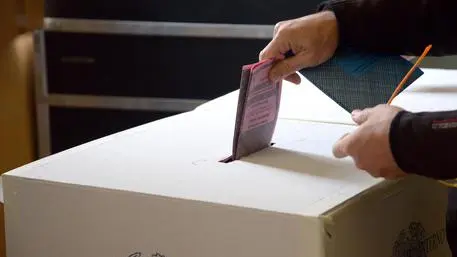
In recent times, given current events and global upheavals, the key concepts on the domestic political level, especially given the approaching next election, seem to be two: "primaries" and "electoral law." The former are simply electoral procedures used to allow the electorate (i.e., the base) to effectively select from within a party/coalition the candidate or candidates nominated for public office, who, in doing so, would not be designated or imposed beforehand by the parties. The latter, on the other hand, is understood as a set of legal norms governing the voting process itself, which translates the votes cast by the general membership into parliamentary or administrative seats.

It goes without saying that the two concepts intersect, impacting each other more or less directly. In this sense, what has now been dubbed the "Stabilicum" has caused considerable discussion. Or, more simply, a proposed electoral law, presented at the end of February 2026 and strongly supported by the Meloni government, can be described as a proportional system with a majority bonus specifically designed to ensure stability, at least according to its promoters, assuming, perhaps not conceding, that a government's stability can rest on numbers alone. Translated into a nutshell, and to better understand what we're talking about, 70 seats in the Chamber of Deputies and 35 in the Senate for those who surpass 40% of the vote, with blocked lists and a strong focus on nominating a leader, and a 3% threshold.

The reform, moreover, would almost entirely eliminate single-member constituencies and would seem to assume that a coalition would win more than 40 percent of the vote. What if that weren't the case? In short, it would be a bill in line with the idea/reform of the so-called Premiership and with the idea of thus bypassing the negative effects of abstentionism.

No question, one might exclaim. If only electoral systems, whatever their formula, didn't end up conditioning the form of government, that is, the relationships established between the constitutional bodies (electoral body, legislative branch, and executive branch), in terms of political direction. This is because the electoral system adopted changes the political and institutional structure of the form of government, as the Prime Ministerial Bill demonstrates. And again, no question, if only by doing so, one wouldn't end up impacting and conditioning the role of the parties considered individually and within the coalition to which they belong, generating forms of multiparty politics that are difficult to manage and, therefore, constant fragmentation. This is completely counter to the intention of their architects. Reflecting on the current Italian political and party situation, we might roughly observe that center-left political forces and the Five Star Movement would tend to favor a proportional system, while center-right forces, with due distinctions, would generally favor a majoritarian system. Generally speaking, if the electoral reform were to pass, and if it were to significantly compromise representativeness for the sole purpose of ensuring government stability, it would likely pose unconstitutional aspects that would render the reform unworkable. This is especially true if, at a rational level, some might also observe that a proportional system, such as the one proposed, with a very strong majority bonus, could translate into a sort of fully-fledged majoritarian electoral system. This latter circumstance, regardless of the tradition followed by certain parties, would make primaries necessary for everyone: center-left and center-right. With the possibility that current coalition alliances may no longer be such.

Giuseppina Di Salvatore – Lawyer, Nuoro

© All rights reserved