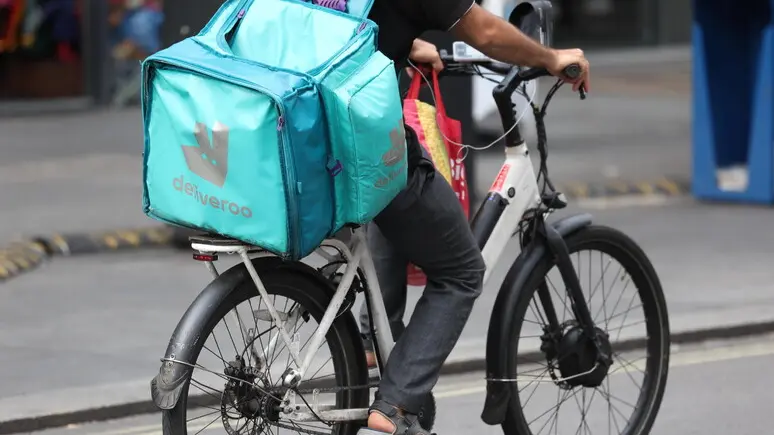


Milan prosecutor Paolo Storari has ordered a judicial review of Deliveroo , the food delivery giant, following his investigation into Glovo, again for gangmastering of riders. In this case , between 3,000 and 20,000 workers in Milan and nationwide were allegedly exploited, paid below the poverty line and taking advantage of their poverty.
The judicial administrator will have to work to regularize their positions. The company and its sole director are under investigation.
In the 60-page urgent order (which will have to be evaluated by a preliminary investigations judge), prosecutor Storari, who has been conducting similar investigations for years in the logistics, transport, fashion, and private security sectors, states that the company Deliveroo Italy srl, based in Milan, is registered and that the sole director Andrea Giuseppe Zocchi is under investigation for gangmastering .
The riders (3,000 in Milan and 20,000 nationwide), according to the indictment, were allegedly paid wages "in some cases up to approximately 90% lower than the poverty line and collective bargaining agreement." These sums also violate the Constitution, as they cannot guarantee a "free and dignified existence."
Deliveroo and its CEO are said to have adopted a "business policy that explicitly disregards the need to comply with the law." Labor exploitation, the prosecutor writes, based on findings by the Carabinieri Labor Inspectorate, has been "perpetrated for years." This illegality must "end as soon as possible."
Hence the appointment by the Public Prosecutor's Office, headed by Marcello Viola, of judicial administrator Massimiliano Poppi for Deliveroo Italy, to "proceed with the regularization of the workers."
On February 19 , investigating judge Roberto Crepaldi validated the order by prosecutor Storari, who had ordered, again on an emergency basis, a judicial review of Foodinho, a Milan-based delivery company of the Spanish giant Glovo , which had been the focus of investigations into gangmastering. According to the prosecution, 40,000 delivery drivers employed throughout Italy were exploited. These "workers, formally self-employed under a flat-rate scheme," but "in reality, should be considered fully employed workers: by taking advantage of their state of need, they would have earned an annual net income below the poverty line."