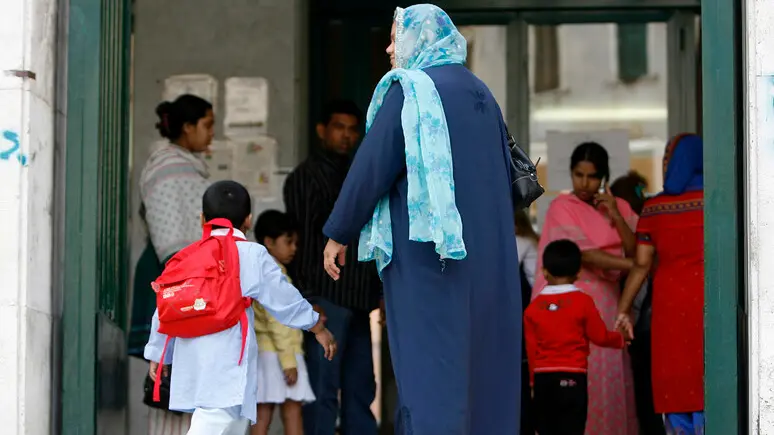


A 30% cap on foreign students in first-year elementary and middle school classes and a thousand-euro fine for those who wear a burqa to school .
These are two of the measures approved today by the Council of Ministers, announced in recent days by Giorgia Meloni.
In primary school, "the number of students with non-Italian citizenship who were not born in Italy or who have not attended at least two years of preschool" must not exceed 30% of the total in each first grade.
In lower and upper secondary schools, the 30% ceiling in the first classes applies to "students with non-Italian citizenship who have not successfully attended the national education system for at least three school years" .
There are 34,000 classes with foreign students exceeding 30%, said Education Minister Giuseppe Valditara: "First-generation foreign students have a year less Italian language preparation. Implicit dropout, or failure to achieve the required skills, is 5.7% for Italians and 10% for foreigners," he explained.
The 30% cap, Minister Valditara said, "does not apply to those born in Italy but refers to those foreign children who don't know, or don't have an adequate command of, our language ." The provincial school board, she explained, "will assign the additional students to local schools," "so it's not a matter of sending the child 20 km away, but of directing them, where the percentage exceeds 30%, to local schools."
As stated in the draft decree, schools, "within the scope of their autonomy," will use these criteria to establish the initial classes of elementary, middle, and high schools "starting in the 2027/28 school year, in order to ensure a balanced composition of classes, functional to the quality of educational and teaching activities, the full enjoyment of the right to education, and the integration of foreign students."
If it is not possible to apply the cap to foreign students due to the number of enrollment applications, "the local school offices, in consultation with the school principals concerned, shall adopt the necessary organizational measures to ensure a balanced presence of such students among neighboring schools, in compliance with the principle of proximity and full effectiveness of the right to education, taking into account the student's domicile or, in any case, proven family needs, with particular reference to those related to the need for assistance for children with disabilities, which do not allow for alternative solutions."