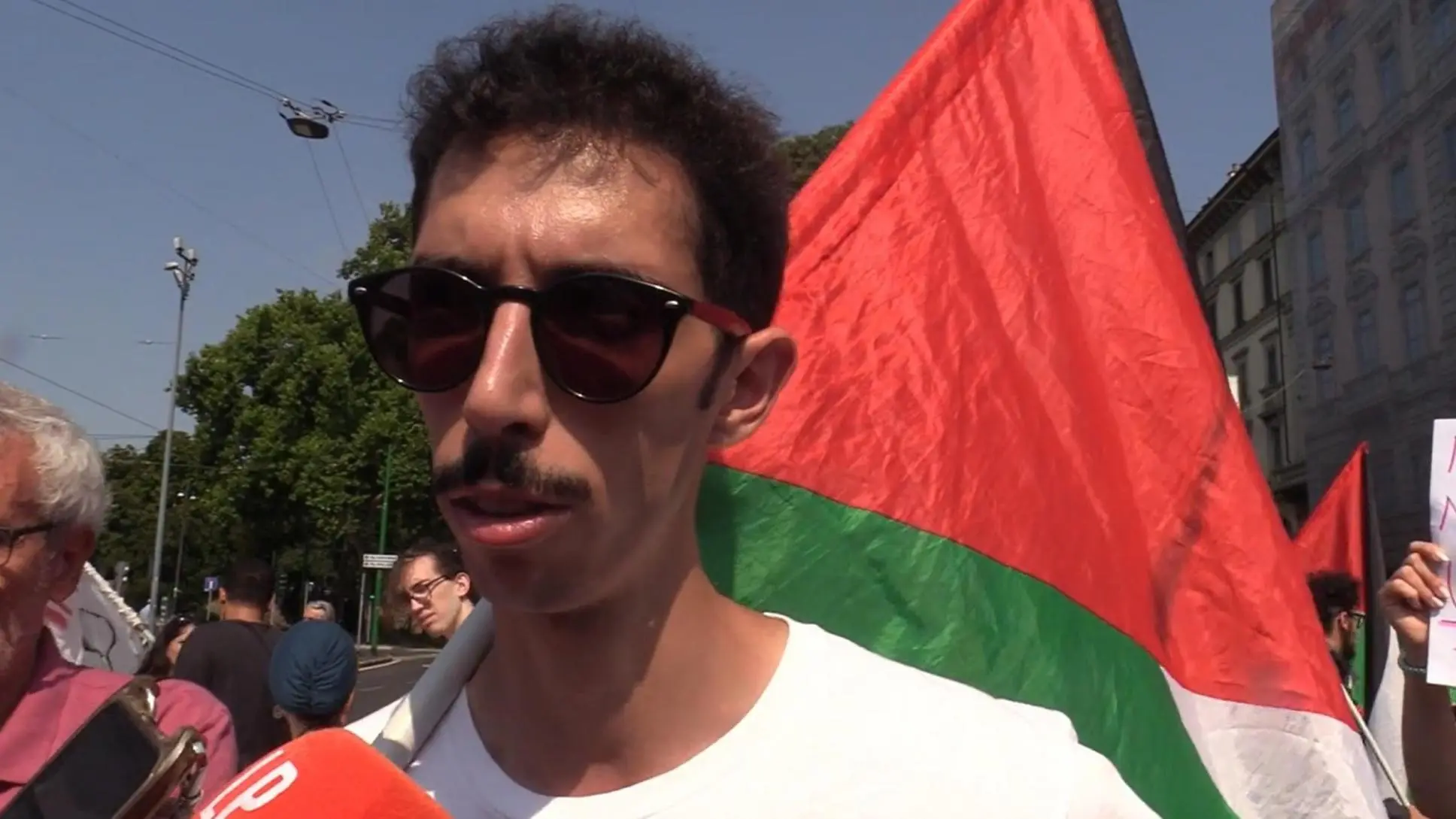


With his knowledge of IT tools, he could have "developed a revolutionary strategy" by spreading messages like those disseminated through the social media channels he managed. These messages were defined as "a declaration of ongoing 'war' (...) deliberately aimed—and certainly appropriate—at instilling profound fear in the population and destabilizing the ordinary course of civil life." The Milan Prosecutor's Office is convinced of this and today requested the validation of the arrest and the application of pre-trial detention for Youssef Siher , the researcher arrested the night before last for managing the 'October 17 Movement' on Telegram and Instagram, a group born online after the riots in the center of the Lombardy capital just over a week ago, amassed several thousand followers.
In prison in San Vittore on charges of aggravated incitement to crime with the aim of terrorism and organized violence at public demonstrations , the 30-year-old Italian of Moroccan origin, who investigators say has a " high cultural background " and "relationships" sufficient to "commit serious crimes," will be questioned tomorrow morning by investigating judge Tiziana Landoni. She will decide no later than late Wednesday morning on the requests made by anti-terrorism prosecutor Francesca Crupi and prosecutor Marcello Viola.
According to prosecutors, the most severe restrictive measure is necessary for Siher, represented by lawyer Yasmina Abu Sharar, because, despite having a clean criminal record, in addition to the risk of flight, he may reoffend. "He demonstrated particular skill and acumen, capable of creating in just a few days," with the complicity of his wife, Sagia Hammoud, who is under investigation at large, "a Telegram group of over 11,000 people, most of whom were clearly inclined to engage in criminal conduct against public order."
Furthermore, the 14-page complaint states, " he demonstrated similar mastery of the IT tools needed to develop his revolutionary strategy, including through the drafting of press releases" capable of "concentrating thousands of people ready for anything in the streets." They were ready to wage the "called-for revolution against the current government," providing instructions—also citing the clandestine manual used during the Arab Spring in Egypt—that, according to the reconstruction, "denoted a clear subversive plan" since "the squares designated as the gathering places were entirely strategic for preventing or limiting police controls."