


















Mandatory vaccination and green pass? They were legitimate. This was established by the Constitutional Court, the body that decides whether a law complies with the fundamental principles that underpin the Italian Republic. The ruling was dated December 23rd.
The case stems from a cross-appeal filed by the Catania Ordinary Court, acting as a labor tribunal, before which two permanent employees of the Sicilian Region, employed at the Provincial Office of Civil Motorization, appeared. Pursuant to a Prime Ministerial Decree (one of the acts governing the daily lives of Italians during the pandemic), they were "denied access to their workplace because they lacked one of the required Covid-19 green certificates certifying vaccination, recovery, or completion of a rapid antigen or molecular test (so-called basic green pass)." In short, they were not vaccinated and did not want to be tested. They engaged in a legal battle, which ultimately came to an end.
The protests
According to the complaints, the "constitutional legitimacy of the vaccination requirement itself (...) was questioned since it places "workers faced with the unavoidable choice of getting vaccinated (if they have not recovered or are exempt, or [...] if they do not intend to undergo a swab test every two days) or being temporarily removed from their workplace." Both "obligations" (the explicit and the surreptitious one) "would constitute compulsory health care that does not comply with Article 32, paragraph 1, of the Constitution." Furthermore, "the vaccination requirement for those over fifty would violate the principle of reasonableness pursuant to Article 3 of the Constitution, resulting in an unjustified disparity in treatment between those over fifty and those under fifty." The legitimacy of mandating swab testing was also questioned: "For its part, the requirement to 'submit to a swab test every two days' to obtain a basic green pass in the absence of vaccination or recovery would be detrimental to a person's dignity, as it would cause physical discomfort and suffering, take away time from ordinary personal activities, and in the long run would entail a significant financial outlay."
The sentence
The Constitutional Court judges disagree. According to the ruling, "the reasons that led to the introduction of mandatory SARS-CoV-2 vaccination for those over 50 are also clearly evident from the preparatory work for the law converting the decree, which emphasizes that the need to ensure maximum vaccination coverage for this segment of the population is based on national and international scientific evidence accumulated both during the pandemic and in the last month," a period of increasing circulation of the Omicron variant of the SARS-CoV-2 virus. It also emphasizes that the highest incidence of infections was recorded among those over 50.
"The vaccination requirement for those over fifty introduced by the provision," the ruling states, " therefore took into account the scientific and statistical data available at the time." The objective of protecting the most vulnerable, "consistent with the scientific and statistical evidence available at the time, clearly reveals a legitimate aim of protecting public health." The reasonableness of the provisions challenged "must be assessed based on the medical and scientific knowledge available at the time of their adoption, as well as 'taking into account the specific epidemiological conditions' existing at the time."
The Court also dismisses the challenge to compulsory medical treatment, which the appellants consider unconstitutional: "The scientific evidence available when mandatory vaccination came into force confirms the effectiveness of the COVID-19 vaccination as a fundamental preventive measure to contain the spread of the infection," the ruling explains. It also disproves the alleged health risks posed by vaccination: "This Court has already carefully considered the conclusions of the AIFA and the ISS on the safety of COVID-19 vaccines. In this regard, it specifically noted that, 'according to the conclusions presented, the majority of adverse reactions to vaccines are non-serious and result in complete resolution. Serious adverse reactions are rare to very rare and do not constitute a risk sufficient to outweigh the benefits of vaccination.'" and added that "furthermore, no excess of deaths following vaccination was observed and the number of cases in which vaccination may have contributed to the fatal outcome of the adverse event is extremely small and in any case not such as to undermine the benefit of these medicines".
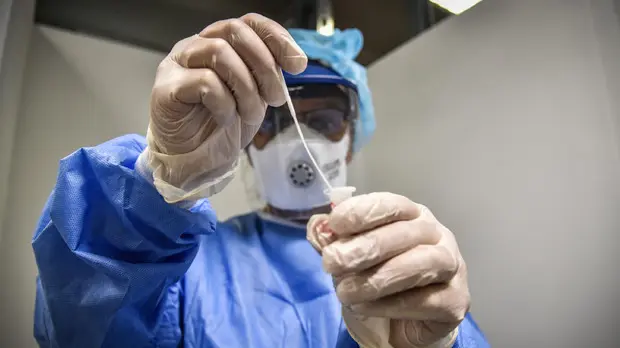
And what about the swab, which was supposedly so invasive? "It is clear that the time required for the test," the constitutional judges write, "is not sufficient to impede the performance of ordinary personal activities, just as the procedure itself, on the one hand, does not imply any negative assessment of the person undergoing it and, on the other, also considering its short duration, does not appear capable of causing significant physical suffering."
Having established the premises, the Court addresses the issue of dismissal from the workplace and the resulting proportional loss of salary: "The consequences resulting from failure to comply" with the mandatory vaccination and swab test "do not violate any of the aforementioned constitutional parameters: neither the right to work and remuneration (Articles 4 and 36 of the Constitution), nor the right to personal dignity as defined in the ordinance (Article 2 of the Constitution), nor the principle of reasonableness and proportionality (Article 3 of the Constitution). First, because they are in any case the result of an individual choice. Second, because failure to comply with these obligations assumes a "merely bilateral" relevance in terms of the terms of the employment contract: their failure renders the performance non-compliant with the rules of the relationship, thus justifying the preclusion from carrying out the work activity and the consequent deprivation of remuneration and any other compensation or emolument."