









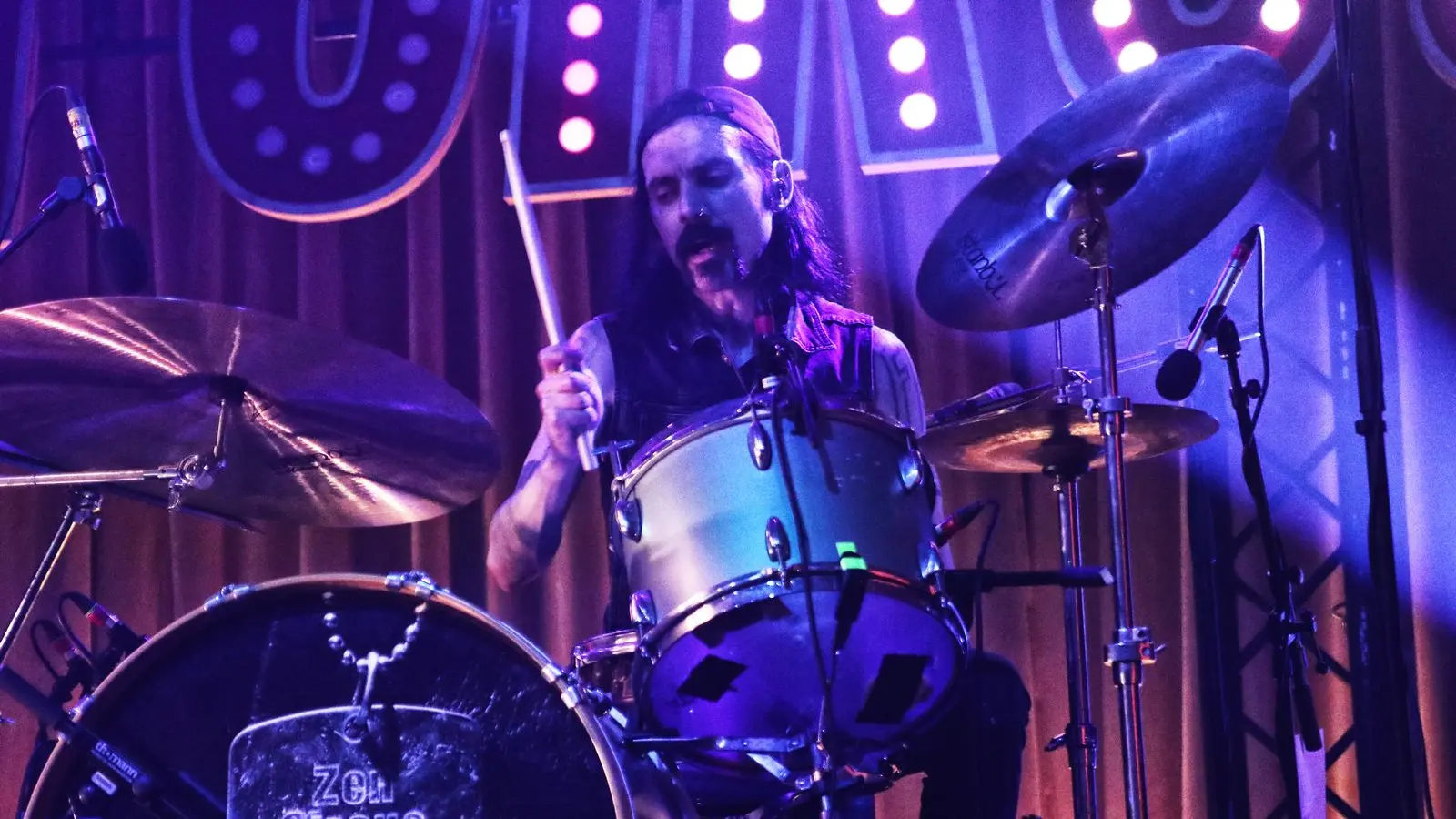


As a child, he crossed the sea on the Moby Prince, when the ferry's name wasn't yet associated with the words "massacre" or "disaster," but it was the bridge between Sardinia and the mainland, one of the few for families who couldn't afford the prohibitive fares of air travel. Forty-three years after being born ("by chance") in Tuscany, Karim Qqru, aka Gian Paolo Cuccuru, drummer for Zen Circus, has never stopped feeling profoundly Sardinian. His roots lie in Meilogu, between Pozzomaggiore and Mara, in that inland Sardinia where he grew up surrounded by a priceless heritage of traditions. This summer, he returned to play on the island with Zen Circus at the Sa-Rock Festival, for the first time since the release of his latest album, "Il Male," his thirteenth, archived along with an "anti-biographical" novel, a Sanremo Festival in 2019, and thousands of concerts.
The island is a land she calls home. What's Sardinian about her way of life?
"My strong imprint is thanks to my grandmother, who spoke Sardinian and taught me even before I learned Italian; to both my parents, the first in the family to go to university; and to my paternal grandfather, who was a jockey. And then there's my present: my wife is from Casteddaia, my son was born in Cagliari, at the San Giovanni di Dio hospital. Sardinia is the place where I hope to die."
Does she find a different island every time she returns, or does she look at it with different eyes?
Cagliari is growing bigger and bigger, small towns are depopulating, and the thought of the ones I grew up in disappearing hurts me. It would be the end of a millennia-old legacy. Of course, it's an inevitable process: people look for work, move, change their lives. What worries me is a rush for progress that risks turning into shame for its own past.
The summer tour features “Il Male,” the classics, and the tenth anniversary of “La Terza Guerra Mondiale.” How do you create a setlist like this?
"Looking for balance. Our latest album was well received and attracted a new audience, but there are many songs that are now considered essential. The fact remains that we like unpredictability: we don't play with sequences, metronomes, or timecodes. Every concert can change direction at any moment."








