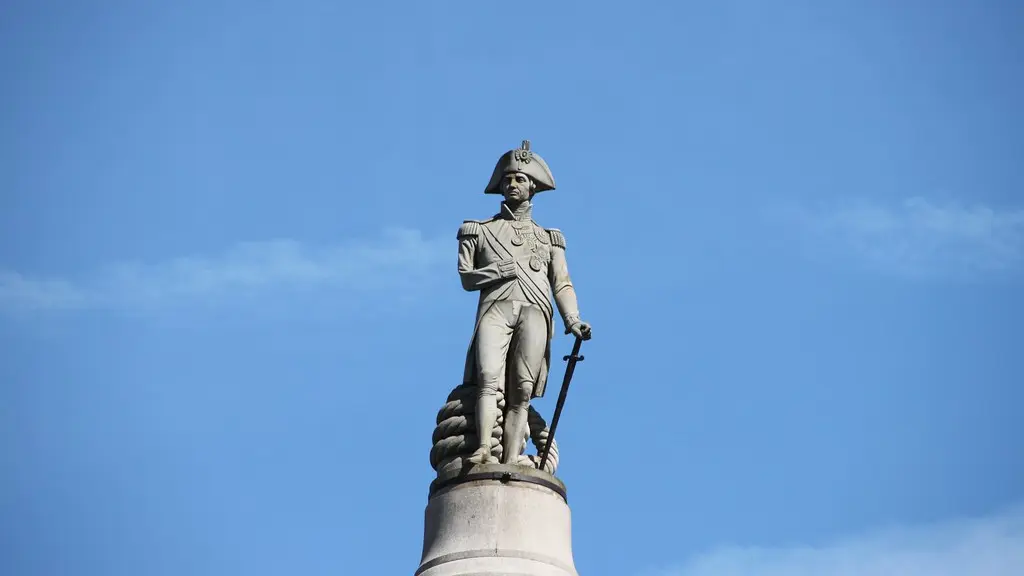


Exactly 220 years ago, on 31 October 1803, the flagship of the English fleet, Victory, commanded by Admiral Orazio Nelson, dropped anchor in the bay of Mezzo Schifo, between the current coast of Palau, then uninhabited, and that of Maddalena island, which had a thousand inhabitants.
It was around 4pm.
Lord Nelson, Duke of Bronte, was 45 years old, blind in one eye and missing one arm. Fate had arranged that he had just 720 days to live, 79 of which were to be spent in the waters of the La Maddalena Archipelago, in 8 successive stops, the last of which departed on 19 January 1805.
But let's go back to 220 years ago. On 13 May 1803 the war between England and Napoleonic France resumed. The French fleet was blocked in the port of Toulon and Nelson, to monitor it, had deemed it appropriate to anchor his own near La Maddalena, from where he could intervene promptly in cases where the French ships had set sail.
After 5 months of uninterrupted navigation it was now essential to touch land, to carry out the necessary supplies, starting with water, and continuing with meat, flour, vegetables, etc. Around four in the afternoon of October 31, 1803, therefore, the Victory dropped anchor in the Middle Bay together with six other ships, to which two were added the following day. That bay, close to the prevailing winds, was renamed “Agiuncourt suond” by Nelson.
Due to the neutrality of the Kingdom of Sardinia, there could be no direct relations between Nelson and Admiral Giorgio Andrea Des Geneys, commander of the small Sardinian fleet which was based in La Maddalena; Nelson always remained on board his ship and relationships were maintained, not with Des Geneys but with the port commander, Agostino Millelire, who was invited several times on the Victory and with whom Nelson agreed on movements and supplies.
Again due to the neutrality of the Kingdom of Sardinia, not even the English soldiers would have been able to land. In fact, officers, non-commissioned officers, sailors and troops did it several times, in service and on duty, not only on the islands of Maddalena, Caprera and Santo Stefano but also on the coast of today's Palau and in the vast countryside surrounding the valley of the Liscia river . And English officers as well as Nelson's secretary, the Anglican clergyman and chief chaplain, the Rev. Alexander Scott, were guests several times, even for lunch or dinner, at Commander Millelire's house; and complete with guard of honour.