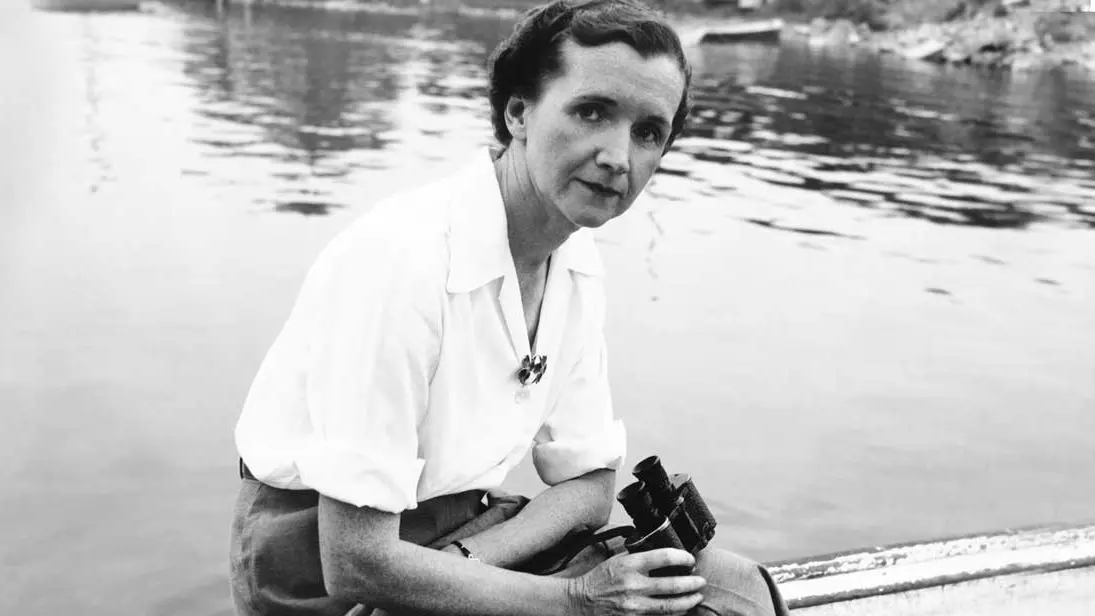


Between the 1960s and 1970s, the impact of the massive post-World War II industrialization on the environment became increasingly evident. Many cities in the most advanced nations experienced the effects of pollution on the air, soil and water. In those years, the awareness took shape that something had to be done to curb the excesses of industrialization and reduce its impact on nature. Thus the first environmentalist or ecologists movements were born, particularly inspired by a book published in 1962, Silent Spring , by the American biologist Rachel Carson (1907-1964), a volume that criticized the excessive use of pesticides (in particular DDT) with consequent destruction of natural habitats.
In years when everyone seemed devoted to progress and industrialization without limits, Carson wrote: "The most alarming of man's attacks on the environment is the contamination of the air, land, rivers and seas with dangerous and even lethal materials." And again: " Man is part of nature and his war against nature is inevitably a war against himself ." Words spoken more than sixty years ago that today seem prophetic and that helped transform Rachel Carson into an icon of environmentalism .
Carson was not, however, only an inspiration for the nascent ecological movement. She was first of all a great scholar of nature , a biologist to be precise, and, no less importantly, a great writer . In fact, he knew how to combine competence and talent in narrating as demonstrated by Stories from the depths of the sea (Aboca Edizioni, 2024, pp. 240), a volume published for the first time in 1941 and now offered in the beautiful translation by Isabella Blum.