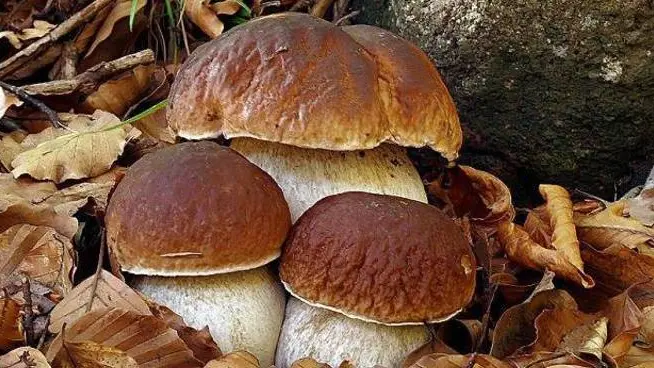


Good to die for. But will they also be nutritious? The autumn forest offers delights: mushrooms, chestnuts, berries. A feast for gourmets from all latitudes, increasingly attentive to what they eat.
From a biological point of view, mushrooms are simply mushrooms. They are not fruits or vegetables, they have no seeds or roots. They are part of an autonomous kingdom, that of the "Fungi". From a nutritional point of view they are equated with vegetables, however they have peculiar characteristics that make them very interesting.
The best known, from a food point of view, are certainly the porcino, the cardoncello, the champignon, and the chiodino, to name a few, each with unmistakable characteristics and taste.
The macronutrient composition is almost similar in all fungal species. Mushrooms contain about 2-3 grams of protein per 100 grams of product. Important is the content of lipids, essential fatty acids such as linoleic acid, a very important omega 3 to keep blood cholesterol levels under control.
In addition to a large amount of water and fiber, mushrooms contain a good dose of mineral salts essential for the proper functioning of our body, such as iron, selenium, phosphorus, zinc, manganese, calcium. However, these quantities are variable depending on the soil in which they were collected.
A constant that characterizes above all the porcini is the content of vitamins, in particular vitamin C, excellent against seasonal ailments, and of the B and D groups which become very important in a vegetarian or vegan diet in which they are often scarce.
Mushrooms, the meat of the poor, enhance ribs and fillets. Meat lovers know that they provide an excellent adjuvant for the assimilation and metabolism of proteins in association.
Each rose has its thorn, each mushroom its dark side.
In general they are all poisonous, as they also contain cytolysin in different concentrations. This substance degrades easily with boiling, but a little attention is needed. For example, nails contain a greater amount of cytolysin than porcini mushrooms. They therefore need to be blanched before being used in the kitchen, taking care to eliminate the cooking water.