








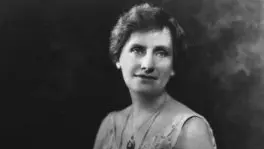


She rose to the most prestigious office in the state after burying her husband. Nellie Taylor Ross, however, was no mere mere shadow of American politics. She was the first female governor in the history of the United States, and the first woman to head the Mint, and she did so with a firm hand during the depths of the Great Depression of the 1930s and the war of the 1940s.
An adventure that began in 1924, and perhaps not coincidentally, in Wyoming, the first American territory to grant women the vote in 1869. In October of that year, Governor William Bradford Ross died suddenly after an appendicitis operation. The remaining two years of his term had to be filled (Ross had taken office in 1923, thus expiring in January 1927), and the Democratic Party chose his widow, Nellie Tayloe Ross, 48, a mother of three and previously a stranger to active politics, as its candidate for the special election.
It wasn't a revolutionary choice, at least not in its intentions. In America at the time, it was customary for the wives of deceased politicians to take up the mantle, partly out of respect, partly to capitalize on the outpouring of grief and the notoriety of their names. It was a widow's prerogative, a way to keep the seat warm, usually while awaiting a man to occupy it. Nellie, by her own admission, reluctantly accepted and campaigned with almost no personal appearances. She won by a wide margin, and on January 5, 1925, she was sworn in at Cheyenne, becoming the first female governor in American history.
Anyone expecting a silent stand-in for the late governor was disappointed. She immediately confirmed her husband's stance: rigorous enforcement of Prohibition, spending cuts, and state loans to farmers and ranchers. Hers was a brief government, from January 5, 1925, to January 3, 1927, two years in which, amid drought, bank failures, ranches and farms in disrepair, poverty was rampant.
In her administration, she focused on tighter banking regulation, stronger mine safety measures, the protection of female workers, and the reduction of child labor. Only five of her eleven bills were passed, but it was still a success for a governor facing a Republican-majority legislature.