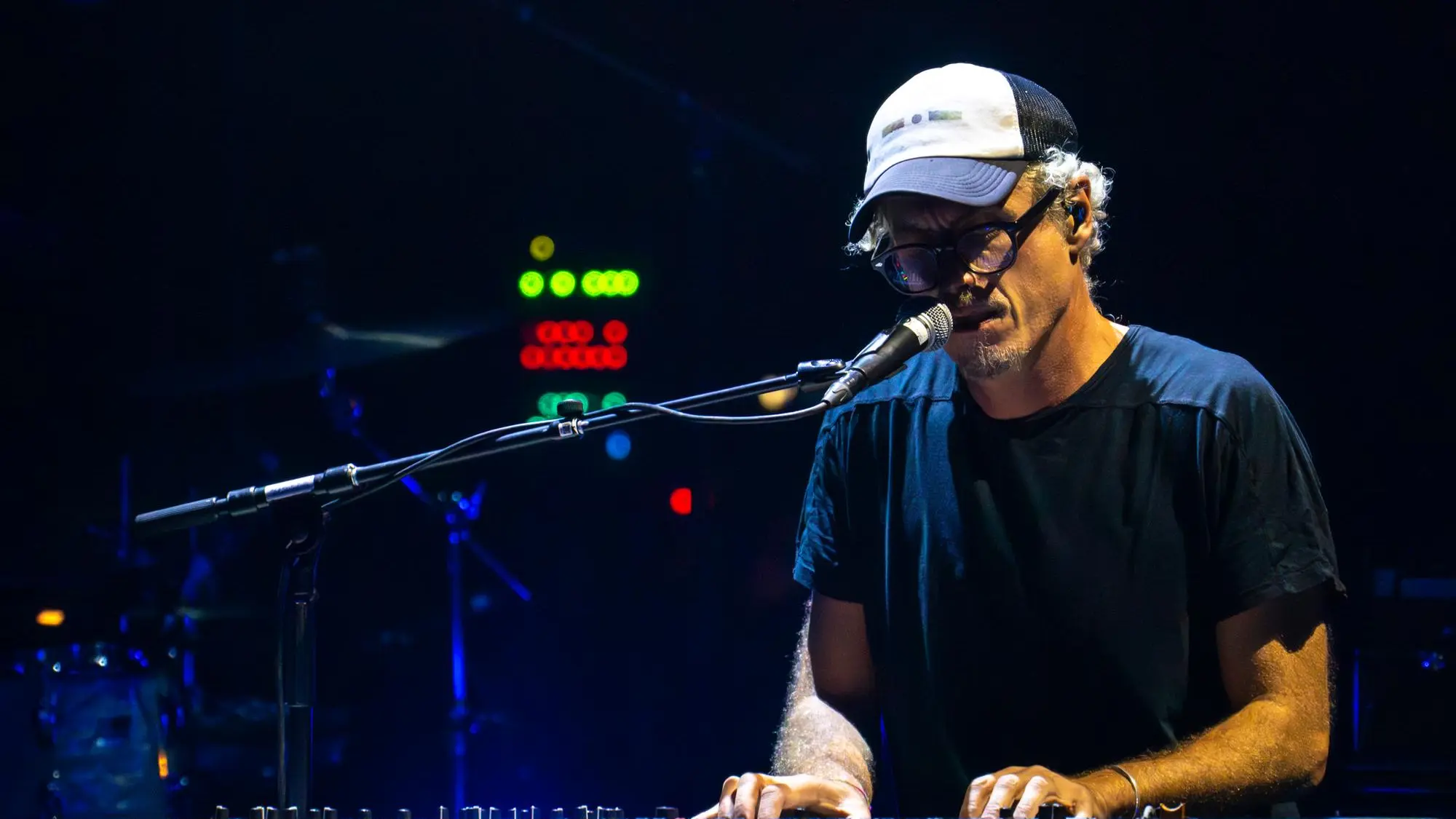


"What strikes me about Sardinia? The intoxicating power of nature." Niccolò Fabi returns to the island for three consecutive dates, but for an artist who, at 58, continues to seek a profound dialogue with time, place, and the most authentic dimension of existence, it's not just a stage but a territory called upon to daily defend "a precious balance, that between the presence of man and a still-pristine nature." With a career spanning over 25 years, the Roman singer-songwriter brings to Sardinia the summer tour of "Libertà negli occhi," his tenth album of unreleased songs born from a ten-day retreat in a mountain cabin in Val di Sole: on July 16th he'll be in Porto Rotondo, on July 17th in Cabras, and on July 18th in Sarroch.
A secluded residence far from the music industry, why this unconventional choice?
"I don't think I've ever done anything against the grain, in the sense of going against anything. I tried to understand what concerns me most and took the liberty of following it. Locking ourselves up with our usual friends and musicians in a splendid setting in the snow, without distractions, allowed us to infuse the recordings with a serenity that could enrich the songs."
You called this album "a gift to yourself and your fellow travelers." How important is sharing to you?
"The life of a singer-songwriter is filled with great solitude. Writing is a solitary experience, at least in my experience, a personal exercise that risks becoming self-referential. Meeting the gaze of others helps me to confront myself."
In "Freedom in the Eyes," the theme of the essential and the ability to pause returns. Is this a need born from this historical moment?
"I believe it's an age-old human need: when we grow up and realize we've become richer, even quantitatively, we move into a different phase, that of subtraction and reducing our expectations of grandeur. In the end, what truly belongs to us is little."
One of the most powerful songs is "Nessuna battaglia," a call for a different approach to illness. Is there a theme you feel close to? "The relationship with illness is an inevitable experience as we get older, and I believe this determines our approach to life. I think we need to accept it as an integral part of existence: it shouldn't be interpreted through the military vocabulary of warriors, of the enemy from beyond. It's a part of us."