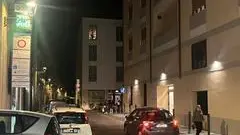


A play could be written about Oristano's Limited Traffic Zone, along the lines of those staged by the great Antonio Garau, who loved to portray an island (twentieth-century Oristano) within an island. Because the Limited Traffic Zone, which went into experimental effect a few days ago in the town's historic center, has a story all its own that makes it unique and worth telling.
The beginning
To do so, we need to go back to 2006, when the city council, then led by Antonio Barberio, instituted it, putting up signs and creating huge graffiti to indicate the entrances to the Limited Traffic Zone in the historic center. It lasted a few months, then the restrictions were no longer enforced (also because there were no cameras), and the ZTL remained in effect only because the resolution establishing it was never revoked. Years passed, administrations changed, but everything remained the same: frozen. Every now and then, a mayor remembered its existence, called meetings to discuss it, but then nothing was done.
The turning point
But those restrictions exist on paper, and the center-right government led by Massimiliano Sanna wants to implement the ZTL, so much so that in early June 2023, some drivers found a ticket on their windshield for parking without a pass (mandatory, and subject to a fee, for families living in the city center). "The rules exist and are in force, by virtue of two council resolutions from October 2006 and April 2007," said former traffic councilor Ivano Cuccu. And it was he, obviously with the support of the mayor, the government, and the majority parties, who pushed ahead with the process of installing cameras at the gates (first eight, then six). A year later, the city council launched a leaflet campaign to warn drivers "that checks will resume" because the new ZTL was about to go into effect. On February 10, 2025, the Sanna Council (unanimously) approved the regulations for the ZTL (gates open every day from 10 am to 1 pm and from 4 pm to 7:30 pm) and the pedestrian areas.
Protests and crises
A decision that sparked the ire of a handful of residents and business owners (six businesses serve food and beverages within the ZTL area) and prompted the minority to bring the issue to the Council on March 14, 2025: shouldn't the Civic Assembly, residents, and business owners be involved in the ZTL's planning? Eleven were against, seven were in favor, and one abstention: the motion was rejected, with the majority determined to continue installing security cameras. "There has been discussion, and since 2023, there have been numerous meetings," said Mayor Massimiliano Sanna. "Is the current situation in the historic center okay? Is it livable? Are businesses doing well? We need to provide new, experimental input. The problem is that this city doesn't want to make decisions. This logic doesn't apply to me." During the debate in the Chamber, not a single member of the minority or majority (who unanimously voted to proceed with the establishment) declared themselves opposed to the ZTL outright. So, the process proceeds: the municipality purchases the cameras (€105,000), asks the lighting company to install electrical systems at the gates (another €13,000). But above all, residents in the city center (and all authorized persons) fork over €36 for the new pass: one of the highest fees in Sardinia.