

How many times will it happen? Countless. Two little girls play together and end up arguing. The mother intervenes: she separates them, draws a line on the ground and forces each one to play on this side of her own border. After a while, each begins to ask questions of the other and, several laughs later, both scream so that they can be reunited. A man looks at them from the window and wonders: "Couldn't it be that we draw the borders only to be able to desire the other?".
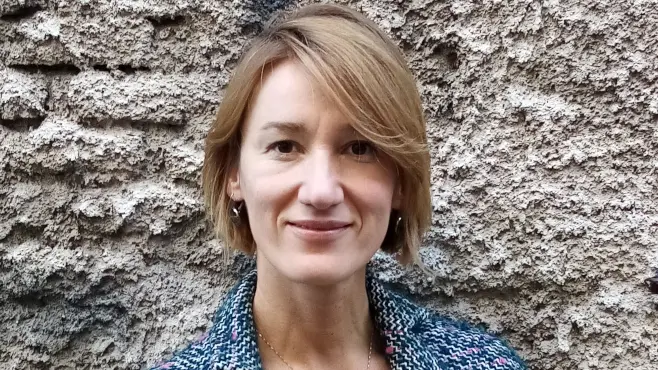
When we say the power of literature. With this curtain, which transfigures all the conflicts of humanity into a childish quarrel, opens "Good conduct" (Crocetti Editore), the latest book by Elvira Mujčič, Italian-Bosnian author, these days in Sardinia, guest of the festival Éntula, organized by the Lìberos association and the InCoros project.
His story is inspired by an event from 2012, but a similar fact also happened recently.
It is news of a few days ago that the Serbs of northern Kosovo gathered in front of the town halls of some cities to protest against the election of new mayors of Albanian ethnicity and to ask for the withdrawal of the Kosovo police units. However, the conflict between the two ethnic groups has been going on for about thirty years.
In the novel he is embodied by two characters who compete for the seat of mayor of a small town.
The story is set in a village where there are 1362 Albanians and 1177 Serbs. To be elected is a Serb who wants to get along with the Albanians, but in Belgrade
not good, and they send a new mayor whose aim is to continue to fan the flames in the ethnic rivalry. His arrival not only brings political turmoil, but turns the lives of the protagonists upside down.
Do you think mediation is possible?
The Balkans are a sort of liminal passage where international politics meet, for which Serbs and Albanians are not the only interlocutors: Serbia is close to Russia, Kosovo is a NATO protectorate. A solution can only take the form of an international solution.