

In December 1940, a young Alpine officer, Ottone Menato, was captured in Egypt by the British. After an adventurous escape, he was arrested again in Yemen and transferred to British prison camps in India. But Ottone refused to give up: he escaped the fences of Bangalore with three comrades. Hunted in the jungle infested with panthers, snakes, and other wild animals, he was aided by Indian shepherds and farmers. Recaptured, this time he was interned on the slopes of the Himalayas, where he discovered an unexpected microcosm: theaters with actors performing in women's clothing, open-air cinema, cultural debates, and a community that, after September 8, 1943, split between anti-fascists, with greater freedom of movement, and the so-called Fascist Republic of the Himalayas, the non-collaborators held in Camp 25.
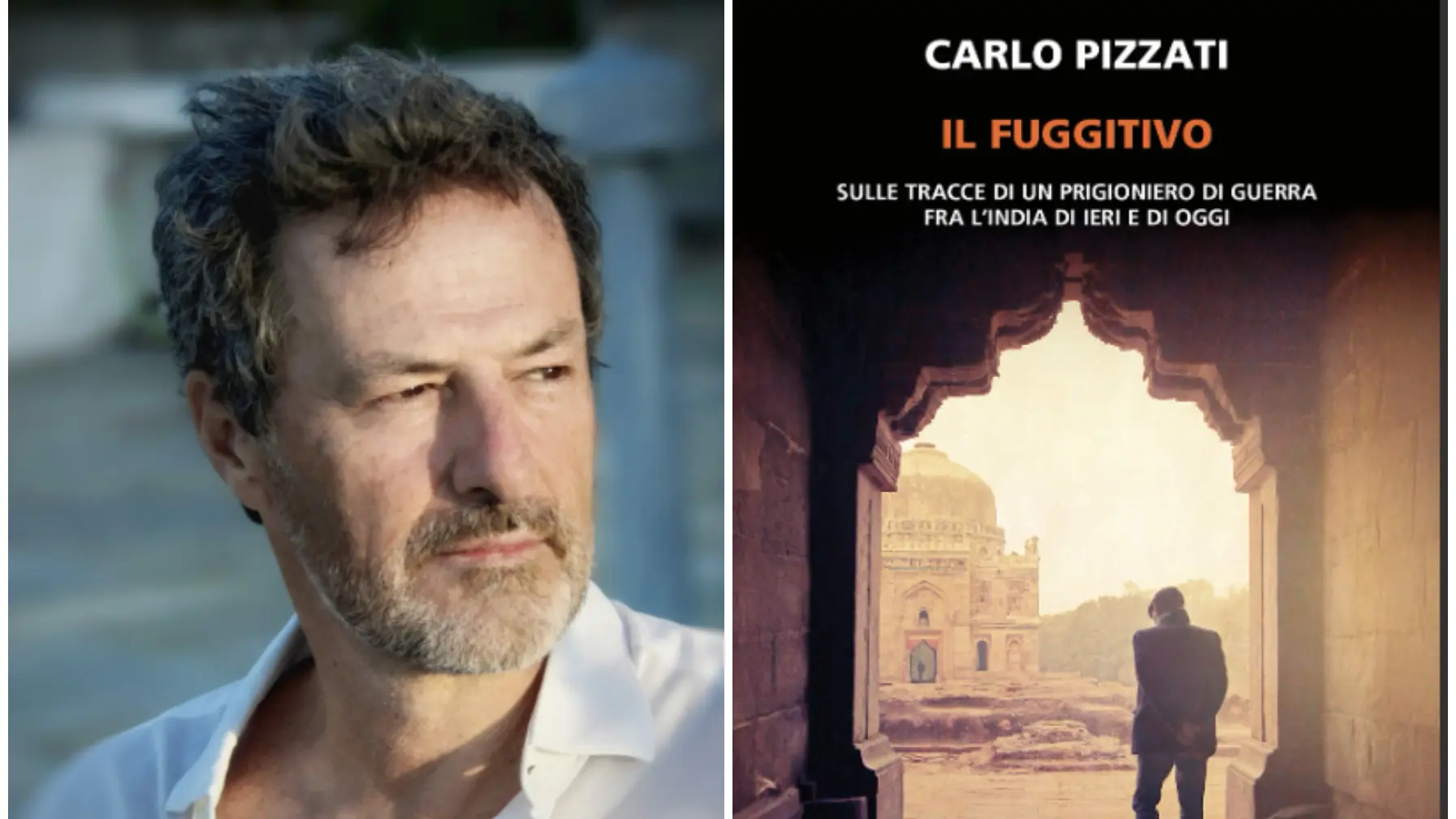
Eighty years later, Carlo Pizzati , Ottone's descendant and a writer who has lived in India for fifteen years, sets out on his great-uncle's trail. Thus was born Il fuggitivo (Neri Pozza, 2025, €21.00, 320 pages. Also available as an ebook) , a novel-reportage in which, between Mumbai, Bangalore, and Dharamsala, amidst secret archives and reconstructions of British intelligence's plans to "re-educate" Italian prisoners, an intimate dialogue with the past emerges, intertwining the India of today, projected toward an increasingly powerful future, with that of the 1940s, poised between colonialism and independence.
We first asked Carlo Pizzati how the idea of reviving the Ottone Menato story from oblivion came about.
I had already been living in India for five years when I reread Latin Lovers, the novel my great-uncle Ottone Menato had published in 1968 about his six years of captivity in Egypt, Bangalore, and Dharamsala during World War II. Suddenly, I realized that my idea of India had also been formed in those pages. Ottone, the heroic lieutenant of the Alpine troops who was a poet, journalist, and writer, appeared to me as charismatic and brilliant as I remembered him. He spoke to me through the character of his alter ego in that novel, Diego Taranto. And he had a lot to tell me. I listened. From this dialogue with the ghost, retracing the steps of Latin Lovers in today's India, Il fuggitivo was born.