

















LEGGI IL QUOTIDIANO
LEGGI IL QUOTIDIANOOggi 12 November
L'Unione Sarda English
Abbonati
ITA|ENG|DEU|RUS|CIN
videolina Linkradiolina linkSardegna 1 linkVai online linkPBM link
Read the newspaper
L'Unione Sarda English
Subscribe
L'Unione Sarda

Iniziative Editoriali

  • Biblioteca dell'identità

Account

  • Abbonati
  • LEGGI IL QUOTIDIANO
ABBONATI A L’UNIONE SARDA

SCARICA L'APP L'UNIONE DIGITAL

Download GoogleDownload apple
videolina Linkradiolina linkVai online linkPBM link

2021 L'Unione Sarda S.p.A. Tutti i diritti riservati. É vietata la riproduzione, anche parziale e con qualsiasi mezzo, di tutti i materiali del sito. | Indirizzo della Sede Legale: Piazzetta L'Unione Sarda nr. 24 | Capitale sociale 11.400.000,00 i.v. | Codice Fiscale ed iscrizione presso l'Ufficio Registro Imprese di Cagliari 01687830925 (P.I. 02544190925) | REA: CA-136248

Cookie e Privacy PolicyModifica impostazioni privacyInformativa commentiCorporate
L'Unione Sarda

News

  • Cronaca Sardegna
  • Economia
  • Salute
  • Cultura
  • Sport
  • Gossip
  • Turismo

Servizi

  • Necrologi
  • Annunci
  • Pubblicità

Bella Sardegna

  • Spiagge

Iniziative Editoriali

  • Biblioteca dell'identità

Account

  • Abbonati
  • LEGGI IL QUOTIDIANO
ABBONATI A L’UNIONE SARDA

SCARICA L'APP L'UNIONE DIGITAL

Download GoogleDownload apple
videolina Linkradiolina linkVai online linkPBM link

2021 L'Unione Sarda S.p.A. Tutti i diritti riservati. É vietata la riproduzione, anche parziale e con qualsiasi mezzo, di tutti i materiali del sito. | Indirizzo della Sede Legale: Piazzetta L'Unione Sarda nr. 24 | Capitale sociale 11.400.000,00 i.v. | Codice Fiscale ed iscrizione presso l'Ufficio Registro Imprese di Cagliari 01687830925 (P.I. 02544190925) | REA: CA-136248

Cookie e Privacy PolicyModifica impostazioni privacyInformativa commentiCorporate
Home
A book to discover

"The ten tomatoes that changed the world", in William Alexander's book secrets and curiosities of one of the most loved foods

From the arrival in Europe aboard the Spanish and Portuguese ships to the cultivations in Antarctica up to the journey to Mars
Robert Roveda
15 febbraio 2023 alle 12:32
"The ten tomatoes that changed the world", in William Alexander's book secrets and curiosities of one of the most loved foods
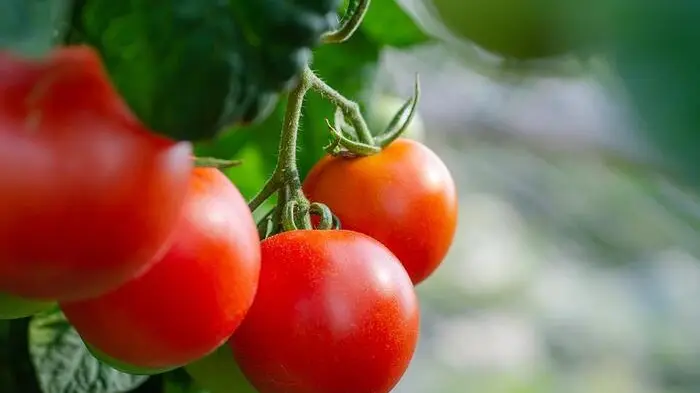
Pomodori (foto Ansa)
Resta informato su WhatsApp
FacebookXLinkedInWhatsApp
Argomenti similiSLOT_11
  • Da che parte sta?
    Caffè Scorretto

    Da che parte sta?

    Tacitus

Articoli correlati

Bomb scare, schools aren't closing. Meloni: "They want to scare us, not hit us. We'll react."
the emergency

Bomb scare, schools aren't closing. Meloni: "They want to scare us, not hit us. We'll react."

The prime minister called on the opposition and reassured them in a video on social media: "Nothing was found in the institutions. Those who send these threats want a nation that is terrified and fea…
Majority summit: "Forward with the statute, but no changes to the electoral law."
region

Majority summit: "Forward with the statute, but no changes to the electoral law."

The draft is ready and at the next session the special commission will begin examining all the articles.
Roberto Murgia
Grillo's appeal, the defense: "Evidence in our favor was ignored or undervalued, the trial must be retried."
Sassari

Grillo's appeal, the defense: "Evidence in our favor was ignored or undervalued, the trial must be retried."

In the grounds of appeal, a flurry of objections raised by the lawyers to the regularity of the conviction sentence of the Tempio Tribunal
Andrea Busia
Girasole: Mosquitoes test positive for the Usutu virus: Mayor's order comes into effect.
the alarm

Girasole: Mosquitoes test positive for the Usutu virus: Mayor's order comes into effect.

The verdict from the Teramo zooprophylactic institute is the first case in the municipality.
Roberto Secci
The eighteenth edition of the Carbonia Film Festival kicks off
cinema

The eighteenth edition of the Carbonia Film Festival kicks off

This morning, the Skan mural was unveiled at the ticket office, and the festival officially opens this afternoon. The event will get into full swing in the coming days.
MARCO CORRIAS
Salerno, a new adventure in the Eccellenza league: he will coach the Tortolì women's team.
soccer

Salerno, a new adventure in the Eccellenza league: he will coach the Tortolì women's team.

The 42-year-old coach returns to the bench, in a completely different context than those he has faced so far
Roberto Secci
Kimi Antonelli with his tricolor hair, Mercedes: "No words."
the champion

Kimi Antonelli with his tricolor hair, Mercedes: "No words."

In the video posted by the team, Kimi arrives at the headquarters, Wolff is incredulous: "Did you even pay?"
Costa Smeralda, the "emery gang" and thefts from dream villas: crimes prescribed after 16 years
Olbia

Costa Smeralda, the "emery gang" and thefts from dream villas: crimes prescribed after 16 years

In 2010, raids took place in Porto Cervo and Olbia, with the villa of an undersecretary of Labour and the residence of a Roman countess also targeted.
Andrea Busia
Ciro Grillo trial: appeal faces immediate risk of postponement
court

Ciro Grillo trial: appeal faces immediate risk of postponement

The defense: "A judge's signature is missing; the first-instance ruling must be retried."

Can we think of Italian cuisine without tomatoes? Absolutely not today. And yet, this fruit – because it is a fruit, even if it is often pigeonholed among vegetables – was unknown on our continent until the discovery of America .

After the arrival of Christopher Columbus in the New World many products crossed the Atlantic and arrived in Europe aboard Spanish and Portuguese ships . The list is long and perhaps surprising: corn, potatoes, many varieties of beans, peanuts, hot peppers, some varieties of peppers, some types of pumpkin, cocoa and vanilla and, of course, tomatoes.

"The ten tomatoes that changed the world", in William Alexander's book secrets and curiosities of one of the most loved foods
L'autore William Alexander (foto Katie Alexander)

The impact of these foods on European food culture has been enormous. Let us think, for example, of corn and potatoes which became part of the popular diet, as an alternative to bread and wheat flour-based products, and which proved to be fundamental in definitively defeating the scourge of hunger.

However, the affirmation of American products in European cuisine was not immediate. The tomato, for example, was initially used only as an ornamental plant and it was believed that its excessive consumption could be harmful to health. Only starting from the eighteenth century and even more in the nineteenth century did it become a staple food, present on every self-respecting table not only in Italy but all over the world.

The many stories that tell us the culinary triumph of this fruit with which the Aztecs, according to legend, also accompanied the meat of their killed enemies are told in the volume " The ten tomatoes that changed the world " (Aboca, 2023, pp. 384, also e-books).

"The ten tomatoes that changed the world", in William Alexander's book secrets and curiosities of one of the most loved foods
La copertina del libro

In this light-hearted and at the same time well-documented essay, journalist William Alexander investigates how the tomato went from being ignored and despised to becoming extraordinarily popular around the world . The first to mention it were the Spanish conquistadors who discovered it during the conquest of the Aztec civilization and brought it to Europe. When the tomato began to circulate in Italy, it was so strange that people didn't even understand what part of it they should eat . There were culinary experts who declared it unsuitable for human consumption after chewing the leaves. It was even judged poisonous by many because it was related to belladonna , one of the deadliest natural poisons.

When, still in Italy, the consumption of tomatoes finally began, it was above all wealthy and powerful people who tried them, looking for exotic tastings, such as the curious and adventurous gastronomes who, finding themselves in Japan, never fail to try their hand at fugu , the legendary potentially lethal puffer fish from Japanese cuisine.

Alexander then tells us how the tomato has transformed , over the centuries, in its use and perception: from a rare food to an industrial commodity . He explains, for example, how the history of the tomato goes hand in hand with the birth of the canning industry .

It was, in fact, one of the first canned foods in history. Among the many stories told in the book, we thus retrace the story of the San Marzano tomato and the jars to preserve it for a long time , how this fruit has accompanied the spread of pizza and how it has only recently become the main accompaniment for spaghetti and similar.

The author then traces the events of the explosion of its cultivation in the United States during the 19th century and how ketchup was invented, originally a product created to use the waste left over after canning tomatoes. Finally, Alexander takes us into the maze of genetic selection , which has always tried to grow bigger, redder and more resistant fruits, even to the detriment of the aroma and flavor of the final result. And it takes us to the most futuristic greenhouses , where every aspect - from heat to humidity to the presence of insects - is monitored by computer.

In short, William Alexander weaves together travels, legends, humour, adventures (but also misadventures) to follow the trail of the tomato through history . A daring and epic tale in which there is no shortage of heroes, artists, conquerors and mobsters in a volume that is a guide to the discovery of a food that not only bewitches our palate, but seems to have no boundaries as the author clearly writes : «Never has the tomato been so popular, its prospects have never been so bright. From its beginnings as a small, bitter berry in South America, the tomato can be considered the Zelig of the plant world […] One wonders how we could have done without it. Today, the tomato is grown on every continent (including Antarctica) and, in order not to be hindered by a triviality such as the Earth's gravity, it already has a guaranteed passage on the first human journey to Mars».

Not that we are not attracted by the "Martian" tomato, but for the moment the traditional il camone of our island may still be fine.

© All rights reserved