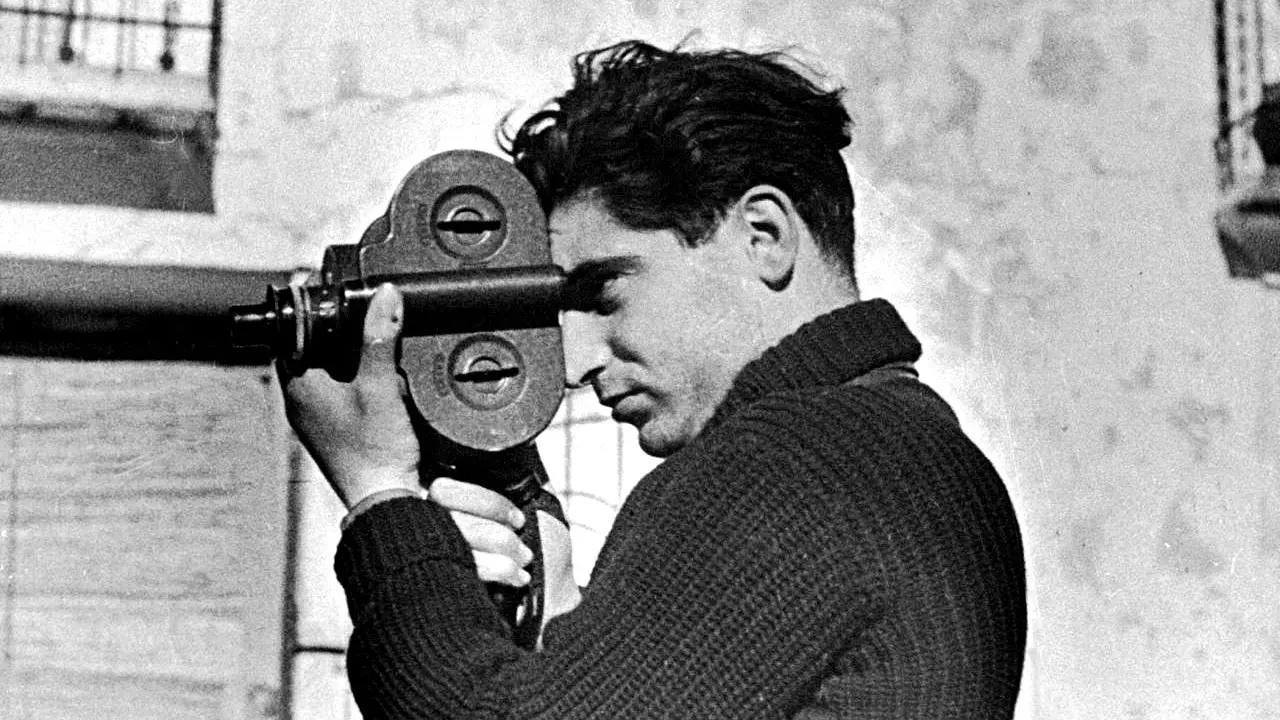


It takes courage and recklessness to jump out of a plane with a parachute while anti-aircraft fire explodes all around. It takes the same courage to walk through the streets of a bombed city meeting the terrified eyes of the bomb survivors . Yet for Robert Capa , born in Budapest in 1913 and now an American citizen, that courage must be found because war cannot be documented from too far away . If you want the perfect photo you have to get as close as possible to the action.
Capa did this during the Spanish Civil War, when he captured the death of an anti-Franco militiaman in a famous shot . He intends to do the same during the great conflict to eliminate the threat of Hitler and Mussolini from Europe. In the Second World War, he followed the Allies in North Africa as a photographer, was parachuted into Sicily and went up Italy, close to the front line. He was in Normandy with the first waves of landings, in the newly liberated Paris, in Leipzig and in the concentration camps. These are the adventures that involve the great photographer in the book for young people "Una giusta distanza” (Einaudi Ragazzi, 2024, pp. 160), co-written by Luca Cognolato and Silvia Del Francia .
Capa's lens frames the war, focusing on the suffering of civilians, showing the horror on the faces of children, portraying captured Germans .
Armed only with his camera, he runs the same risks as those soldiers who may never return home. He immerses himself ever more deeply in the war, convinced that his camera captures reality in all its complexity. He revisits what has long been his mantra: “ If your photos aren’t good enough, you’re not close enough .”