









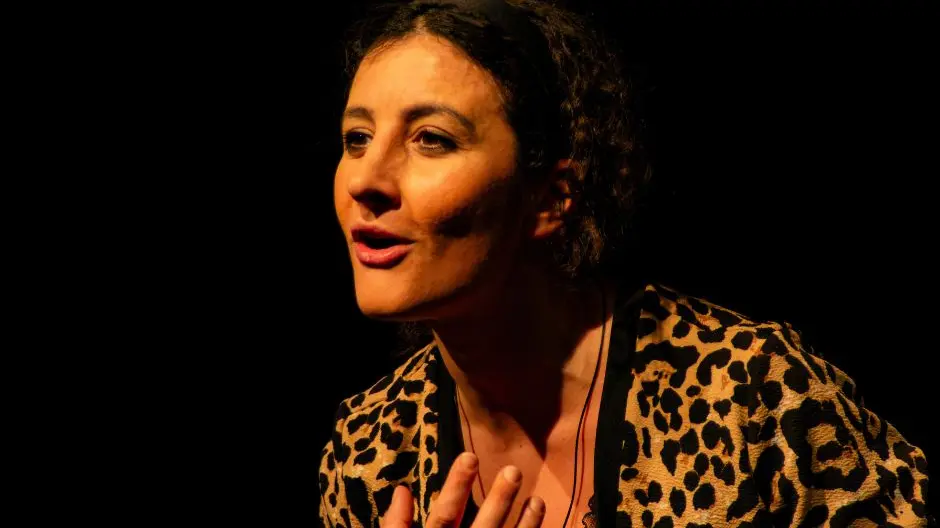


Born in Ragusa in 1988, Rossella Fava, after graduating in Performing Arts in Rome and gaining initial experience in experimental theater with Carlo Quartucci and Carla Tatò, arrived in Milan, graduating from the Paolo Grassi School of Dramatic Arts. On Sunday, August 9th, she brought M(Other), the show she wrote and stars in, directed by Renato Sarti, to Ulassai, Sardinia, for the first time at the 27th edition of the Festival dei Tacchi.
Rosella Fava, how did M(Other) come about?
I came across an article titled "The New Face of Female Prostitution: Surrogacy." It seemed like a very harsh title. So I started studying, and the more I studied, the more I realized that the reality is much more complicated; at the very least, we need to distinguish between countries where women are forced to bear children for others and those where this practice is legal.
And then?
And then it happened that I knew a lot but didn't know how to approach it in the theater. At that point, I went to ask the people who engage in this practice: I joined a Facebook group. In particular, I delved into interviews with Italian parents, and a whole new world opened up to me: the real world of these people. Having been gifted with all these stories, I wanted to channel them into the story I tell in M(Other).
The story moves on two time planes, 2050 and approximately 2020.
"The future I imagined is a gimmick; the story deals primarily with events that took place between 2001 and 2019, and therefore with Italy almost as it is today."
And what kind of Italy emerges on stage?
"A bigoted Italy, which fails to recognize the needs of some of its citizens, is unaware of their processes, and ignores their pain."
The title works on a language game in English between “mother” and “other.”
Because I asked myself: what is motherhood? Almost fifty years ago, the first case of medically assisted procreation occurred, and the idea of biological motherhood was challenged. And with surrogacy, there can be up to three mothers, so to speak: the woman who desires the child, the woman who gives birth to it, but there can also be the woman who provides the gametes. This is the real question of the show: does a child belong to the one who gives birth to it, or to the one who desires it and raises it?








