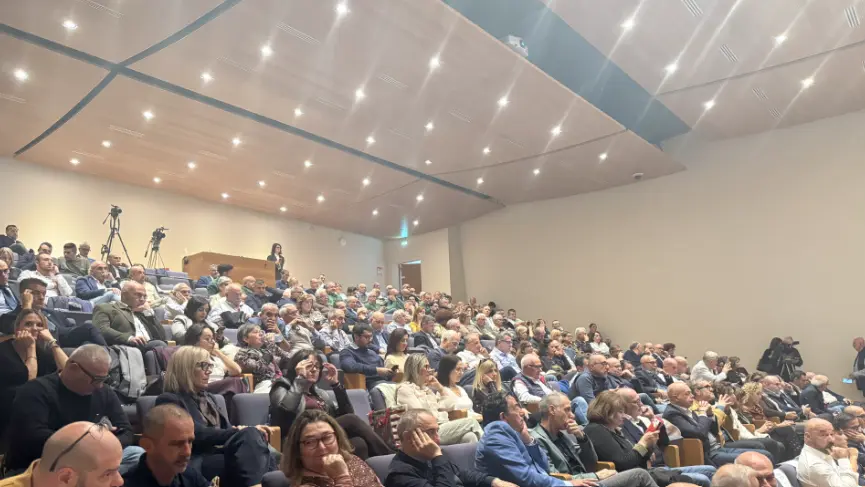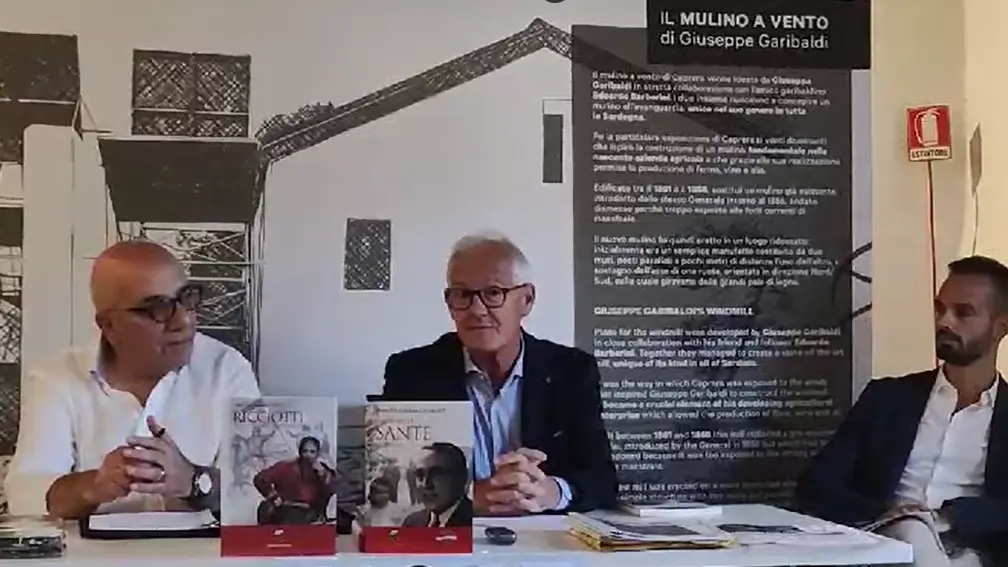


«Unlike some of his brothers who approached the fascist regime, Sante Garibaldi opposed it». Arrested in France by the Gestapo, he was interned in various concentration camps. Released in 1945, he died a year later as a result of the suffering endured during his imprisonment. Paolo Lisca, a teacher at the Dettori-De André Tempio Pausania High School, spoke about him, the son of Ricciotti Garibaldi, son in turn of the Hero and the legendary Anita, in recent days in Caprera, on the occasion of the European Heritage Days, presenting the book, fresh from the press, published by Paolo Sorba, written by his daughter, Annita Garibaldi Jallet, entitled: “A Garibaldi, Sante, my father”. Among others, the presentation was attended by Sergio Cappai, director of the Garibaldini Museums of Caprera; Gianvincenzo Belli, councilor for Culture of La Maddalena; Antonello Tedde, president of the ANVRG Section of La Maddalena; the author and the publisher.
In Caprera, Sante's father was also discussed, commenting on "Ricciotti, the irredento Garibaldi", a book also written by Anita Garibaldi Jallet, also published by Paolo Sorba.
What the two characters had in common, explained Paolo Lisca, was «certainly the relationship of kinship; Sante, fifth son of Ricciotti, both descend from Giuseppe Garibaldi, a hero with mythical connotations, capable of attracting crowds of volunteers to his command, of pursuing ideals of social emancipation and civil progress in the most absolute personal disinterest». However, they lived in different eras: «Ricciotti was born in 1847 and Sante in 1885, one is the son of the second half of the 19th century while the other is already projected into the 20th century, and this made the difference – explained Lisca – also from the point of view of that respect for the obsequious tradition of Garibaldi; a red thread that binds all the brothers, sons of Giuseppe Garibaldi, which essentially starts from Ricciotti».
And Sante's stance against the fascist regime places him, Paolo Lisca has always maintained, "in the position of being considered the custodian of the family values of the past, and a representative of the Garibaldian tradition in an anti-fascist key, considering that this has a strongly democratic value that has nothing to do with dictatorship".