







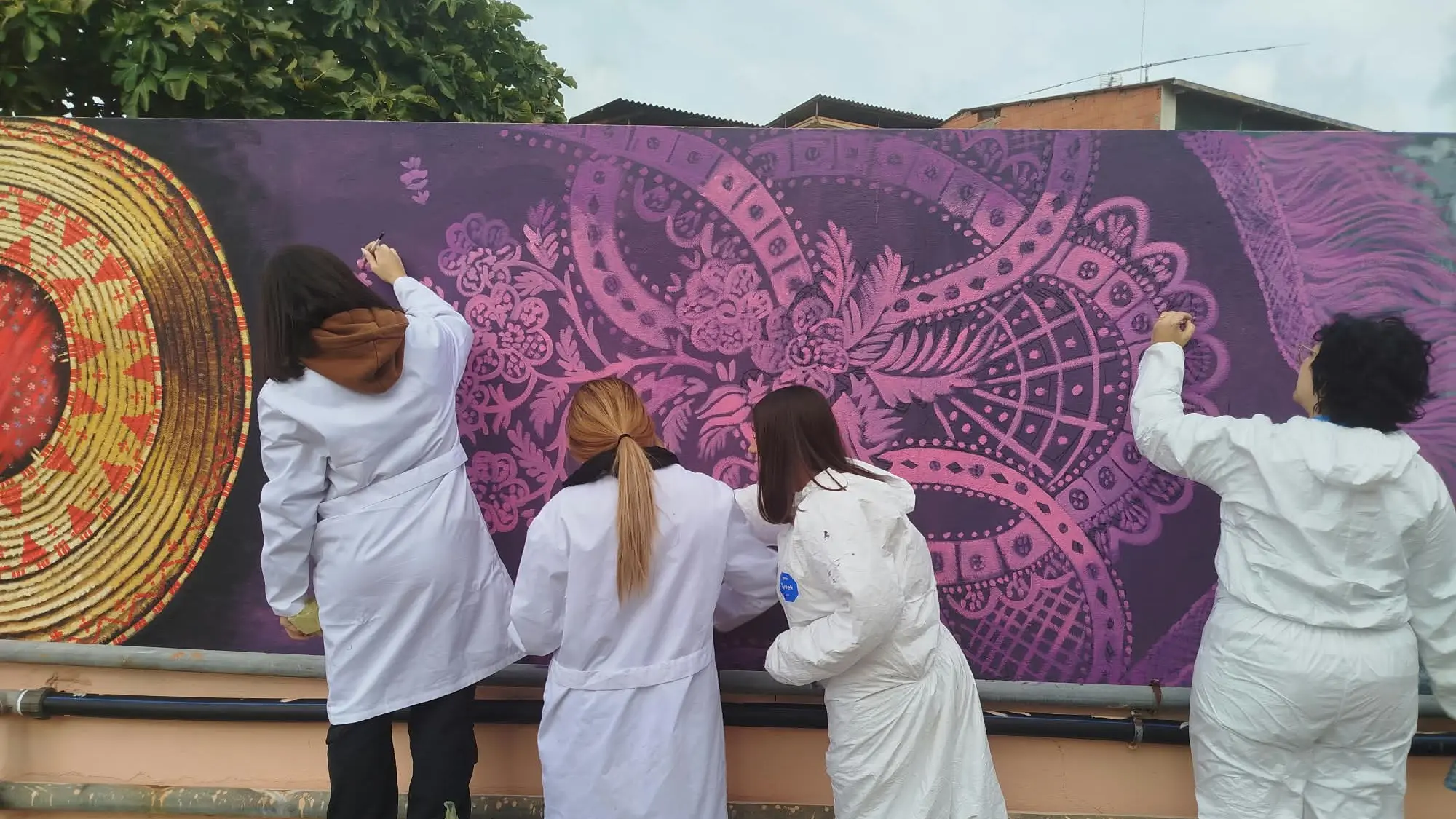


Paintbrushes, paints, scaffolding, and a wealth of creativity are currently transforming the courtyard of the Buonarroti-Volta High School in Guspini. This week, the creation of a new, large-scale mural officially began, featuring students from the fourth and fifth grades of the Fashion and Construction, Environment, and Territory (4N, 5N, 4E, and 5E) majors. The students are working side by side to design and paint a collective work intended not only to redevelop the common areas but also to leave a lasting impact on the life of the school and the entire Medio Campidano region.
The initiative is part of the larger project "The Future of Memory," conceived and developed by A.Doc - Associazione Docenti APS (Association of Teachers) in close collaboration with the Guspini school, and made possible thanks to the contribution of the Autonomous Region of Sardinia through Law 12/25. Project coordinator Costanza Smaldini explains, "The students' activity is essentially a study into the evolution of the socio-urban aspects of the Guspini area. The first part of the mural is dedicated to textiles and decorations (Guspini shawls, rugs, baskets, and embroidery). The second part is dedicated to the archaeology of the Guspini area (nuraghe, sacred well). The third part evokes mines and a section dedicated to the Cambas de Linna mask."
Guiding the young artists in this intense workshop is Gisella Mura, a painter and muralist originally from San Gavino Monreale. An established professional on the island's and national art scene, Mura has already created numerous notable works commissioned by various public bodies and local governments. She now brings her technical and expressive expertise directly to the classroom—or rather, onto the walls—of the high school, teaching students the secrets of mural art and teamwork.
The project, however, is not limited to merely decorative or urban redevelopment. "The Future of Memory" was born with a specific cultural, pedagogical, and civic purpose: to critically assess the present and stimulate students and the community to reflect deeply on the social and political implications of the rapid transformations currently underway. In a contemporary world where the production of images, texts, and digital content is constant, frenetic, and accessible to everyone, it becomes increasingly urgent to question how to select, preserve, and transmit knowledge to future generations, preventing the overabundance of information from resulting in a loss of identity. The project's ultimate goal is precisely to transform historical memory, image culture, and archival skills into a shared, living, and accessible heritage: a concrete tool for critically interpreting the past and more consciously guiding the choices of today and tomorrow.