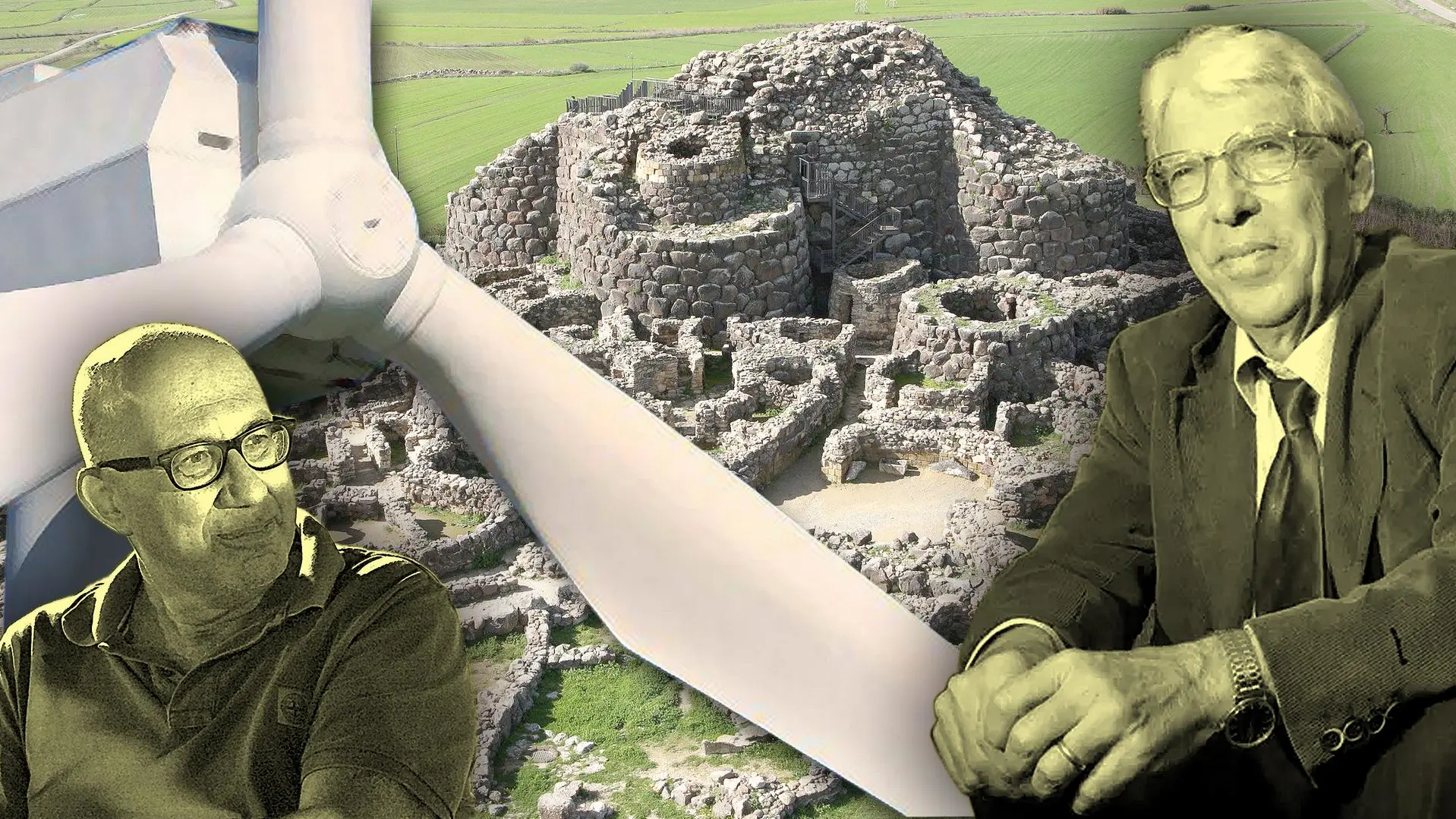


Children of the rebellious soul, heirs of the great "nuragic" school of Sardus Pater, the father of the immense Civilization of the Sardinian People, Giovanni Lilliu. If there are two protagonists who embody the great "master" through studies, symbiosis and character, they are Giovanni Ugas and Momo Zucca, his favorite students. A parallel history of acquaintances, of enlightened visions, of comparative analyzes between the Nuragic hinterland and the role of the ancient Sardinians in the wider Mediterranean. From the Giants of Mont'e Prama to the vestiges of the great palace of Barumini, they are always there: during and after the advent of Giovanni Lilliu in Sardinian archaeological history. Sedate and frank, always allergic to the impositions of Rome, extreme defenders of the identity of the Sardinian people, university professors, with an authoritative past in the rooms of the State Superintendencies.
Declaration of war
When they "pick up" the pen they know how and where to point it. Words are chained balls, as if they could not witness one more day of the great havoc that threatens the great Nuragic Civilization. They touched a raw nerve: the largest megalithic work ever excavated by their master, that monumental Nuragic Palace of Barumini which became the first Sardinian flag of the World Heritage Site. The sentence of the Regional Administrative Court of Sardinia, forced to take note of the State's negligence regarding the disfigurement of an industrial settlement of agrivoltaic panels between the large nuraghe, the castle of Las Plassas and the nuraghe of Turriga, was the classic straw that broke the camel's back . A Chinese silicon settlement ready to stand out in that landscape only because the Italian state forgot to recognize the archaeological interest of the Turriga nuraghe, positioned for 3,500 years just 236 meters from that recently authorized massacre of 24 hectares of mirrors and steel from stick in the most fertile agricultural lands of the Marmilla. The anger overflows, like a river in flood: «In Sardinia, thousands of Sardinian archaeological assets are known and documented (nuraghi, menhirs, giants' tombs, pre-nuragic burial hypogea called , necropolises and settlements of historical age) not subject to restrictions of ministerial protection, but, where they are in private property, they do not exist for the Italian Republic, as if the communities were not part of the Republic itself and were not witnesses to it! Thus, thousands of and nuraghi cannot be protected and valorised just because the Italian Republic has not yet formally recognized them through the declaration of cultural interest". An absence of protection that makes one cry sacrilege: "These testimonies of the past they are motherless girls, at everyone's , yet they have the same characteristics as archaeological assets subject to protection by law: antiquity, being architectural and historical monuments, instruments of identity of a place, part of the landscape and they belong only to the private individual on whose land it exists, but to the whole community, as stated in the Faro Convention".