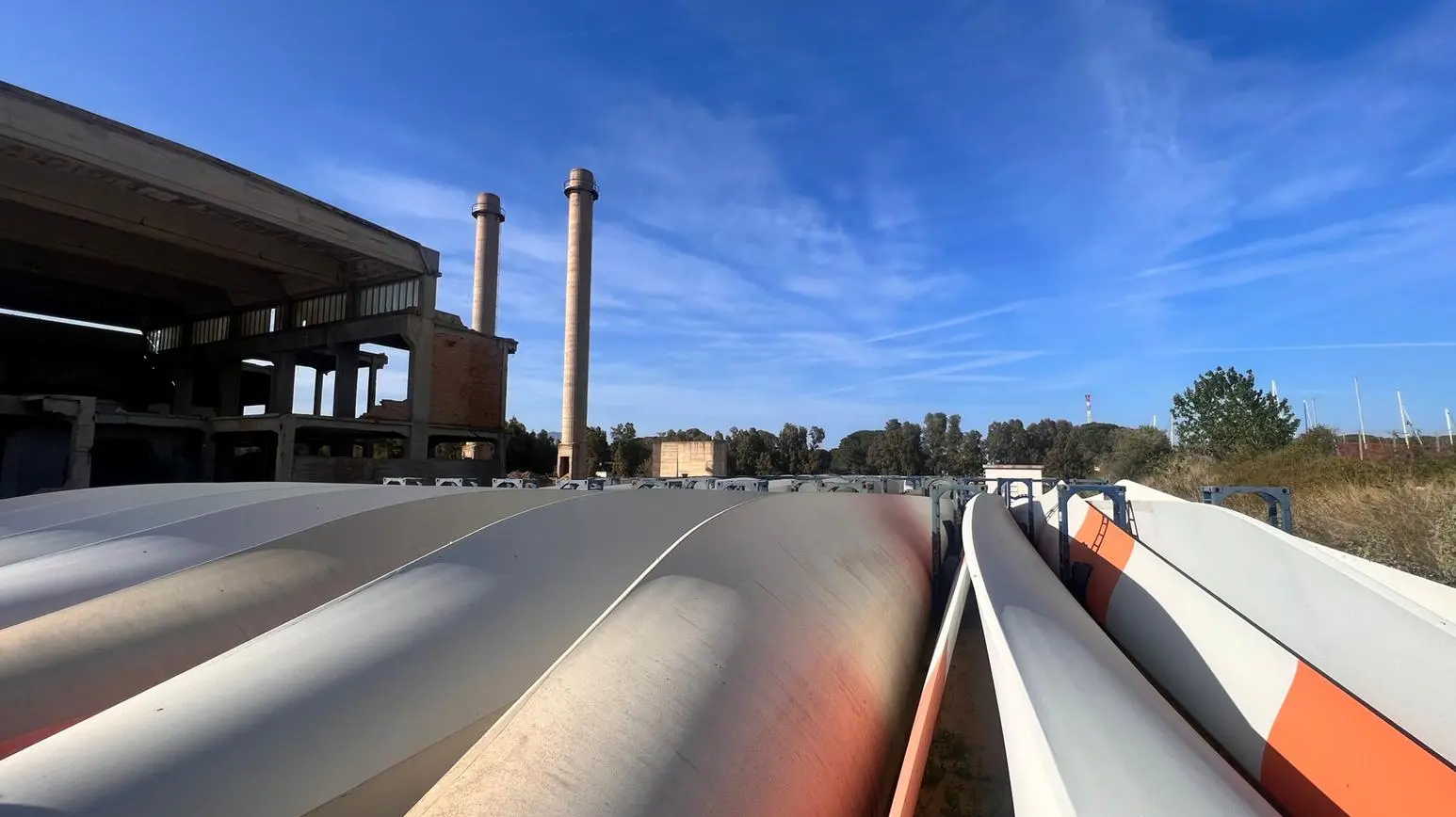


Rubble, everywhere. Two chimneys still perched on the horizon, symbol of an era shattered between thefts and failures, dreams and collective cheating. Layoffs and escapes, as befits most of those industrial stories that have damnably marked the modern history of the Island. Land of conquest, where private business becomes plunder, transforming into environmental devastation and degradation. For almost thirty years the piles of the old Arbatax paper mill, in the port enclave of Tortolì, have been a tax-free zone, not the coveted tax one. In the sense that everything is possible, where those who command "hover", but cannot be seen, where those who control are confused with those who devastate. A large "black hole" in the heart of an increasingly touristy oasis where world-class resorts are teeming, with a tourist economy that is making progress, albeit with a thousand difficulties.
From trees to shovels
The buildings that once turned trees into paper are no longer there, most having fallen under the blows of heavy vehicles paid to try to return that area to development. Nothing to be done, the only undertaking seems to be that reserved for public goods left at the mercy of anyone: transforming them into landfill, a place to hide, hide, dump waste from one's activities in an area until proven otherwise by everyone. Just to avoid paying the costs, most of the time imposing, of disposals aimed at increasing one's earnings by shifting the burden of disposal onto the community. Crossing that "free zone" from the sky is like entering a post-war film set, where everywhere you are warned of imminent dangers. Signs worn by time, made illegible by the Ogliastra sun, dot the advance of the camera on that disaster transformed by "grace received" into a wind-powered landfill on Sardinian land.
It works like this
Because it works exactly like this in this "colony" plundered by sea and land: they devastate the territories with wind turbines placed in the most exclusive places on the island, after a few years they dismantle them to make them bigger and earn more, and, in order not to spend nothing for the disposal of the old ones, they are looking for a " where they can hide everything from the "snoopers" on duty. Here they found it. Apparently far from prying eyes, urbanistically still an industrial area, in fact a pile of decay closed to the outside. From today officially the "Sardinian cemetery of wind power", that of the "hardened" multinationals who came to Sardinia to make wind and money, spreading waste and devastation. When the shadow of the chimneys breaks on that "sea" of wind turbines lying on the ground, exhausted after having sliced the air of the Tacchi d'Ogliastra for years, you understand that there is no need for any effective epitaph: here they lie the wind "farms" of the glossy , passed off as a "good thing", piled up as if in a timeless landfill, in the most impressive industrial scar on the eastern coast of the island. An infinite expanse of giant propellers, replaced between the peaks of Ulassai and surrounding areas, shortly before Covid turned the lives of Sardinians upside down. A stack of wind turbines that becomes a white-red wave among those buildings "bitten" by high-altitude jackhammers. Seeing that "wind cyclone" lying on the ground takes your breath away at the mere thought that those who made tons of money, grinding the Sardinian wind, did not have the "good manners" to dispose of those fiberglass ruins properly over many years and steel lined up in single file to mark the end of the first multinational assault on the island's peaks.