

One hundred and fifty years ago. Jules Gabriel Verne, in his restless and extraordinarily imaginative life, never paid too much attention to the boundaries of the Universe. He has traveled the globe far and wide, from " Twenty Thousand Leagues Under the Sea " to " Journey to the Center of the Earth ". He never despaired of the more irreverent names that his first novels unleashed in the envy of those who did not enjoy the same long and prophetic outlook. They accused him of everything and more, from childhood writer to "father of science fiction". He did not regret it, each time looking towards more and more unexplored horizons, both by science and by imagination.
The Mysterious Island
Imagine when, on the threshold of 1874, he edited the first voyage of " The Mysterious Island ". Not just a novel, not exclusively the restless imagination of a wandering writer from beyond the Alps, but a far-sighted prophecy tailored to that imaginary strip of land, surrounded by troubled waters, with the settlers of the time aiming to defend their land from foreign invasions overseas. The “ Jules of France ” did not speak of Sardinia.
Almost Sardinia
His visionary imagination, however, was shaped as an exact geographical reproduction of the land of the Nuraghi: Island, attacked by invaders attracted by its riches, senseless search for autonomy and economic and energy independence. It is in that story as compelling as it is visionary that the "prophet" sculpts his most enlightened prediction: «I believe that water will one day be used as a fuel, that the hydrogen and oxygen of which it is made, used separately or simultaneously , will offer a source of inexhaustible heat and light and of an intensity that fossil coal cannot provide. Water is the coal of the future." One hundred and fifty years ago, in fact.
Giant of Physics
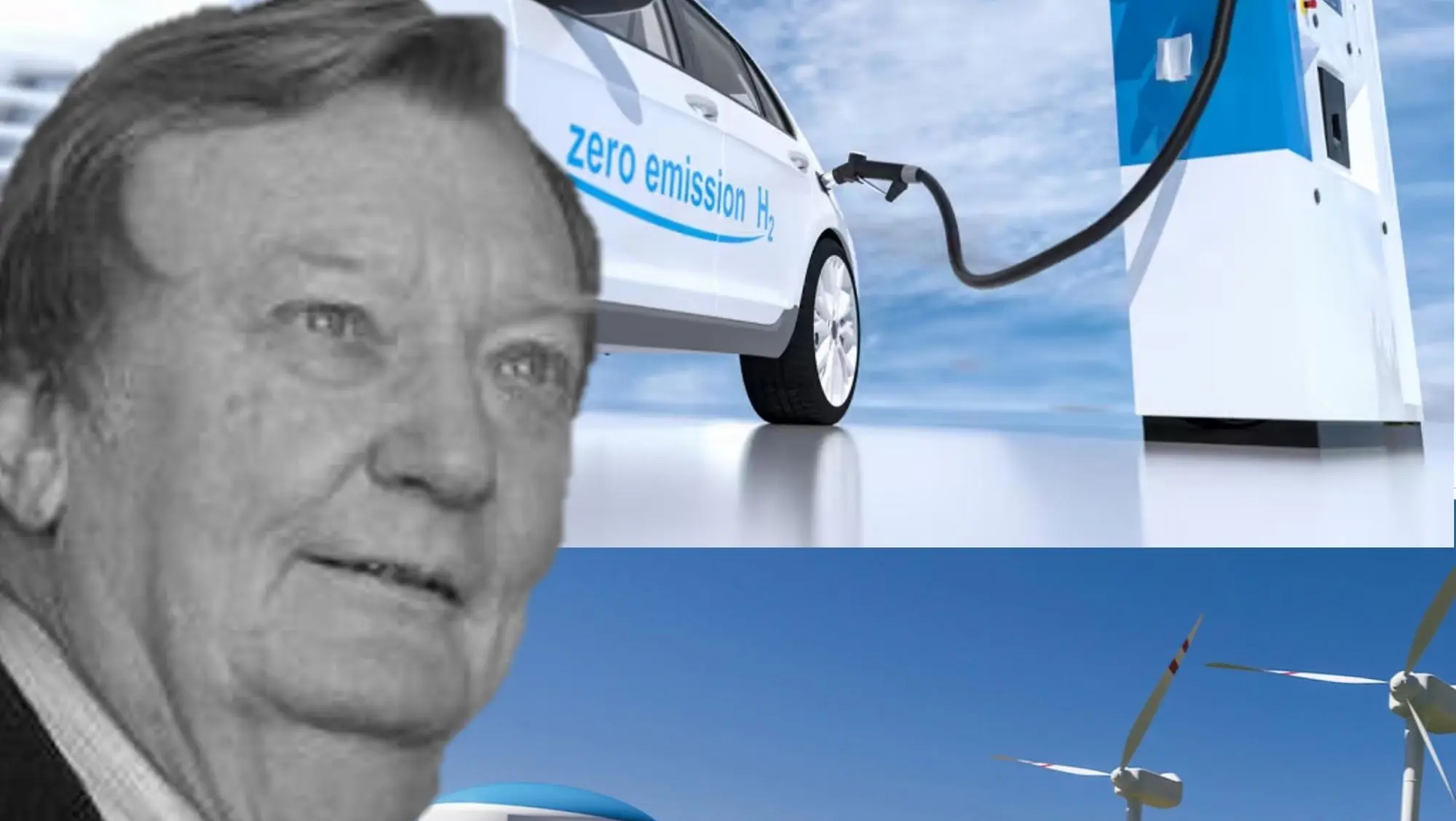
On an equally mysterious island, that of Sardinia, which has also always been attacked and invaded by profiteers and speculators of all kinds, twenty years have passed, almost an eternity in the face of the progress of artificial intelligence. In the Gregorian calendar it was May, the year of the Lord 2002. Energy, then, was still only turbans and barrels, OPEC and Arabs, petrodollars and refineries, including the eyesore located in the heart of the Gulf of Angels. The prophecy of the "gas station attendant" who fills you up with an ideal water pump was still floundering in the depths of science fiction when the most high-sounding name in world research landed on the Island of the Sun and the Wind. Carlo Rubbia, Nobel Prize for Physics in 1984, visionary and scientist, irreverent and enlightened, when he lands in the land occupied by the Morattis, Eni, petrochemicals and coal, does not yet know the mission that will be entrusted to him. The gaze is long, it aims at the primacy of home-made energy, produced with those inexhaustible resources which, as Verne wrote, one day will be the coal of the future. He accepts, without reservations, the giant of "Physics", always a long and determined gaze: he will have to design the Hydrogen Island, an epochal turning point to build energy independence for the future of Sardinia and the Sardinians.