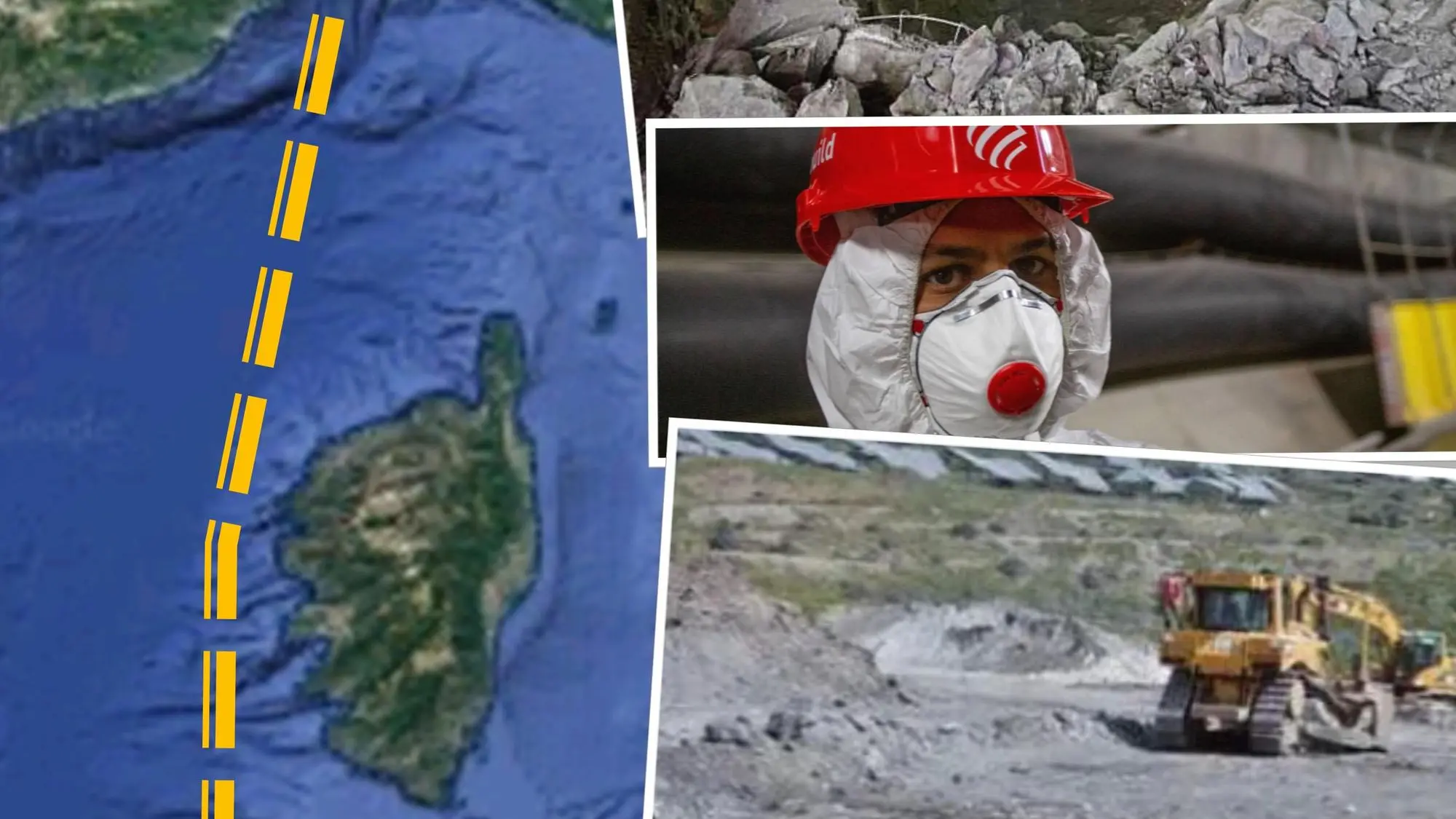


The papers were to remain strictly confidential. Armored in the deep bowels of the rocky border between the Ligurian Apennines and the Alps, in the heart of the Giovi Pass, the gateway to Genoa towards the Po Valley. All strictly prohibited. To plan there is the largest transfer of asbestos waste ever made in the Bel Paese. An operation so dangerous that for months it was discussed only in the secret rooms, those of high-end affairs, reserved for major Italian public works. At stake is the largest infrastructural construction site on the Peninsula, the one for the construction of the "third pass of the Giovi", the fastest railway in northern Italy to connect Genoa and Tortona, or rather Liguria with the Po Valley.
What does Sardinia have to do with it?
The "sacred" European texts number it among the main segments of the Rhine-Alpine Corridor, one of the fundamental connections of the strategic trans-European transport network, the one that connects the strongest European regions, between the port of Rotterdam, in the North Sea, and Northern Italy, Genoa. What Sardinia has to do with this operation was not only difficult to know, but also to imagine. And yet, the excellent minds of the great Italian infrastructural works, paid billions upon billions, have assigned a role to the Nuraghi Island: a state landfill. Never like this time has the definition adapted to a devastating plan, which if it weren't written in black and white in the papers enclosed in the offices of the Department of the Environment of the Region, which "was" autonomous of Sardinia, could easily be reclassified in the chapter of bad jokes.
Asbestos demolition
Instead, it's all true: the big companies, the ones that are excavating the "amiantiferous" bowels of the tunnels of the third pass of the Giovi at the gates of Genoa with explosives and giant moles, want to ship to Sardinia, to the Serra Scirieddus landfill, between Carbonia and Gonnesa, a veritable mountain of excavated material that they themselves define as a "special hazardous waste", with asbestos levels exceeding one gram for every kilogram.