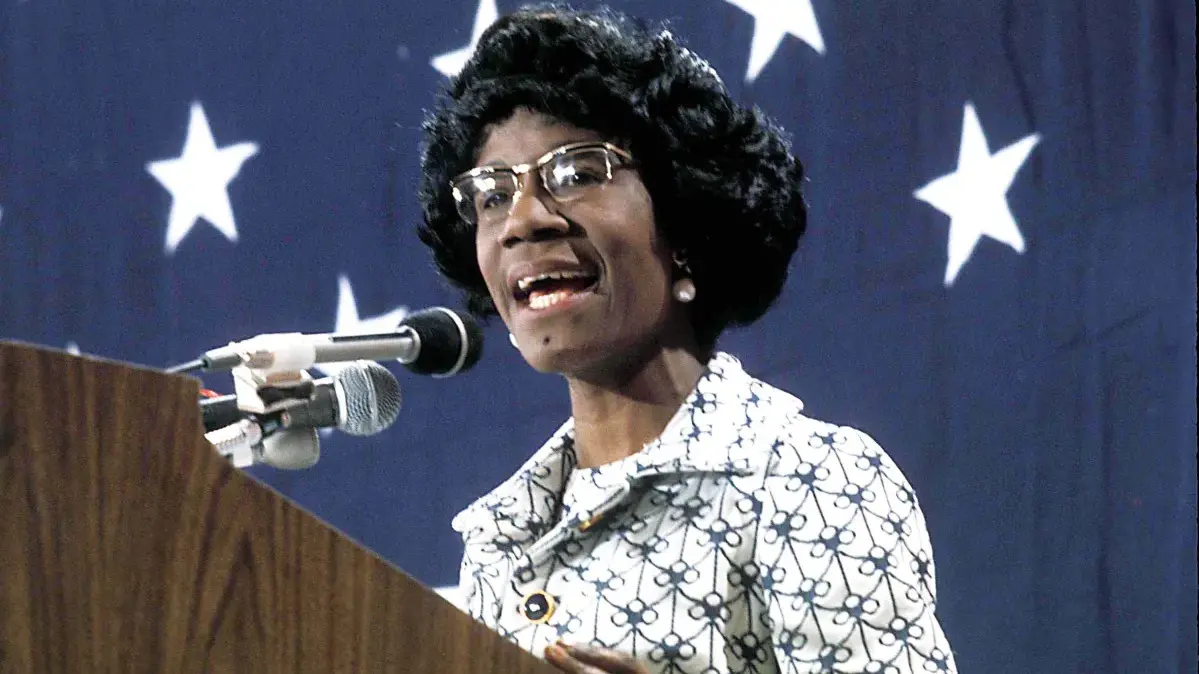


She didn't become the first African-American president of the United States, but she demonstrated that anyone—even a black woman, a category that in the racist America of the 1960s represented doubly marginalized—can aspire to the White House. Shirley Anita St. Hill Chisholm did, however, achieve one prestigious milestone: she was the first black woman in the history of the United States Congress. It was 1968, perhaps the most terrible year for civil rights, marked by the assassination of Martin Luther King Jr. on April 4 in Memphis, Tennessee; by the riots in 100 American cities; and by protests against the Vietnam War.
The mother of women who today, after the Republicans' rejection of Trump's policies in the midterm elections, have set other firsts: in Georgia, Democrat Keisha Lance Bottoms is the first African-American elected governor in US history, while in Texas, Democrat Gina Hinojosa is the state's first Hispanic governor. However, Shirley Chisholm didn't like being identified by that flag planted in Congress. "I don't want to go down in history as 'the nation's first black congresswoman' or 'the first black woman congresswoman.' I'd like them to say Shirley Chisholm had guts," she said after her farewell to politics, as the New York Times recalled in its obituary following her death in 2005 in Florida. In short, she didn't become president of the United States, but she showed the way for all those who might aspire to the Oval Office.
Born on November 30, 1924, in Brooklyn, New York, to parents of Caribbean origin—a factory worker father and a seamstress mother—Shirley spent her childhood with her sisters in Barbados, entrusted to the care of her maternal grandmother and aunts. She said this was a crucial experience for her development: she received a rigorous education and developed a strong sense of discipline and independence, so much so that she began reading at age 3 and a half and writing shortly thereafter, a milestone she often cited to emphasize the importance of early schooling for children.
Returning to Brooklyn, she had distinguished herself as a model student since elementary school, but it was during those years that she began to understand the challenges of being an intelligent black girl in a wealthy white school. After graduating high school, in 1946, she earned a degree in sociology from Brooklyn College, and later a master's degree in education from Columbia University. Her chosen career shaped her entire political career: she directed several child care centers, and her daily contact with less well-off families allowed her to gain firsthand knowledge of the difficulties of African-American communities and the most economically vulnerable citizens.