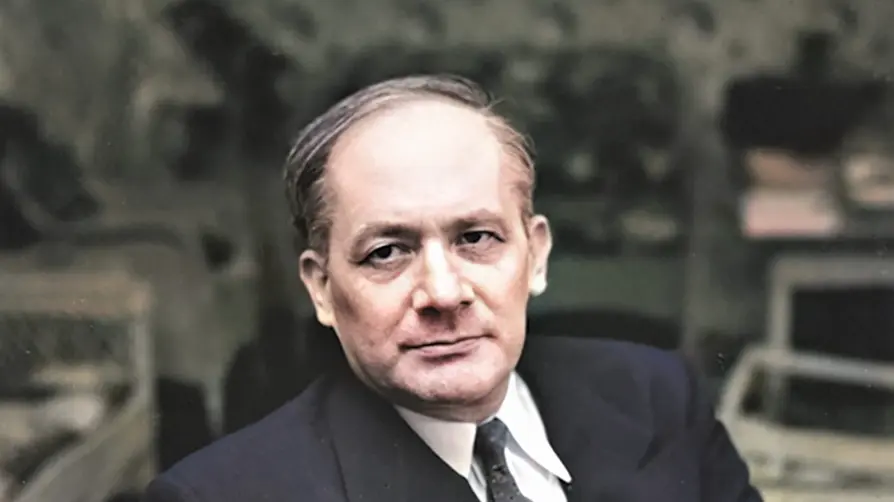


There was a man, a Polish jurist born with the twentieth century, who first gave a name to that crime of such magnitude that it surpassed all jurisprudence. His name was Raphael Lemkin , and recounting his life means retracing the twentieth century of great crimes against humanity.
Relegated to a simple legal theorist, Lemkin has, however, been guiltily forgotten, while his neologism – the term “genocide” – has become the word of the last century and of this one .
Starting from the documents and his works, Girolamo De Michele in his Il profeta proponente (Neri Pozza, 2025, p. 320, also e-book) tells the story of this tenacious visionary prophet, pays homage to his memory and offers precious ideas for a critical reflection on today's ideological debate .
But who was Raphael? And how did the word genocide originate? The fight for the legal definition of the crime of exterminating entire populations was the Polish jurist's lifelong battle, a battle rooted in his personal experience. Lemkin was born in 1900 in the city of Hrodna, now Belarus, but at the time a Polish territory annexed by the Tsarist Russian Empire. From childhood, the future jurist learned that being Jewish meant being at the mercy of the will and oppression of the majority. Anti-Jewish pogroms were, in fact, frequent in Tsarist Russia.
After the First World War, he enrolled in law school and began to consider the need for international legislation capable of preventing and combating all forms of hatred against minorities, whether ethnic, religious, or cultural. He had read about the extermination of the Armenians during the Great War and became convinced that crimes aimed at completely erasing a people from the face of the Earth could not simply be classified as war crimes . They were crimes against humanity itself that required specific jurisprudence.
Lemkin's ideas caused a stir in his homeland, and the jurist was accused of caring only about defending the rights of minorities , such as the Jewish minority to which he belonged, and not about advancing Poland's interests. Despite his isolation, he made increasingly alarmed, but unheard, appeals regarding what was happening in neighboring Germany with Hitler's seizure of power.