









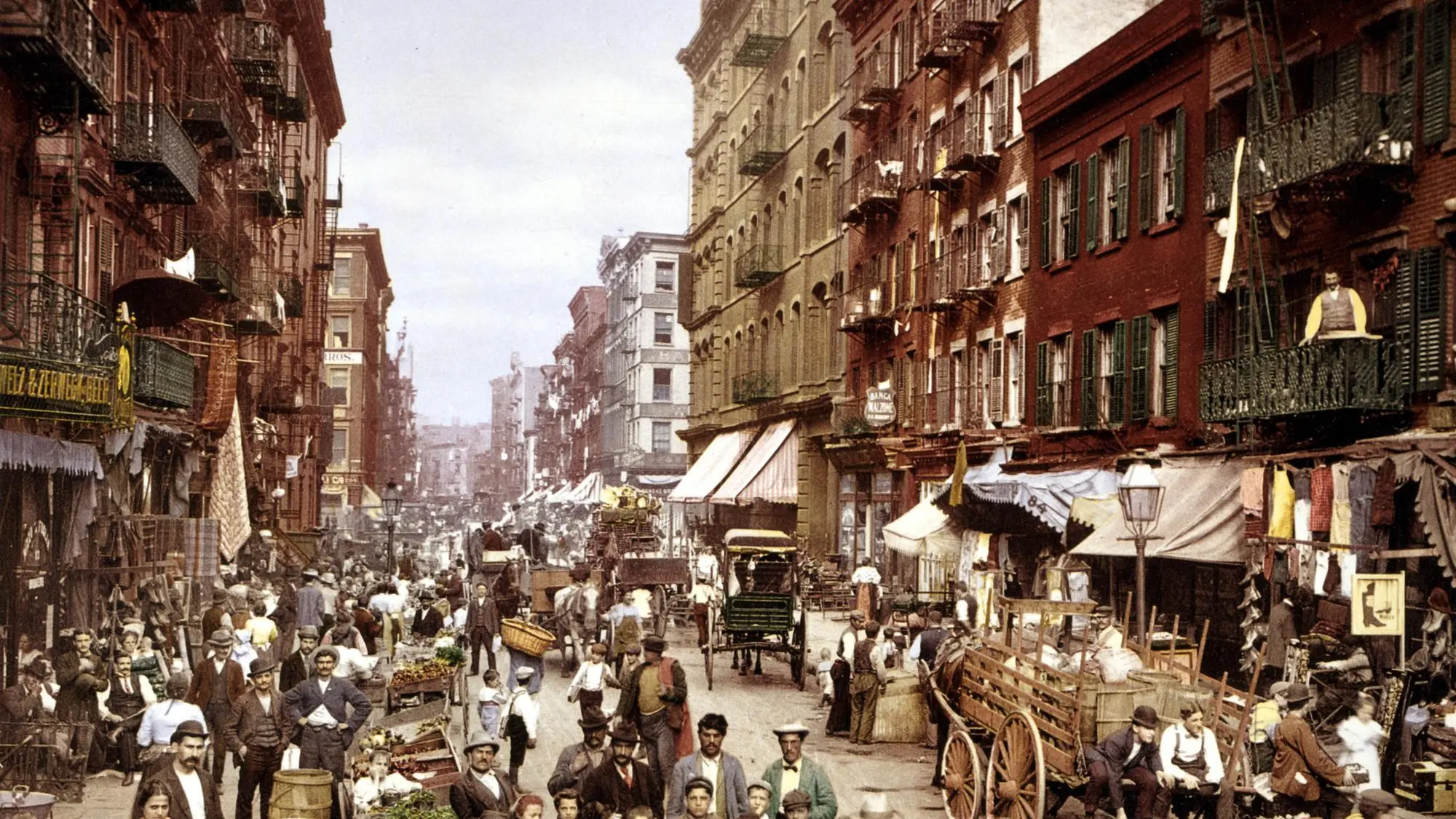


The name Garibaldi Mario Lapolla probably means little to today's Italian readers. Yet, Lapolla - born in Rapolla (Basilicata) in 1888 and emigrated with his family to the United States as a child - was among the first writers to tell the story of the life of the Italian community in America, conveying with extraordinary intensity the social tensions, ambitions and contradictions of East Harlem, the largest Italian neighborhood between the nineteenth and twentieth centuries and the nucleus of the future Little Italy.
An English teacher in New York City public schools, Lapolla was a multifaceted man: a publicist, a writer of novels and cookbooks, a passionate illustrator and painter, and a political activist. Above all, he was a witness and a keen observer, and he described the world of emigration with a unique perspective: his personal experience and his work as an educator allowed him to grasp both the hopes of the first generation of Italians in America and the challenges of their children, torn between inherited identities and new aspirations. Through his works, Lapolla helped define a literature of emigration rich in contrasts, in which the Italian community confronts the American dream and its shadows.

This is demonstrated by the publication by the publishing house readerforblind for the first time in Italy of the debut novel by the Italian-American writer, Il fuoco e la carne (readerforblind, 2025, pp. 428), published in the United States in 1931. It is a novel that overflows with ambition and passion and that tells, with a lucid gaze and from a privileged position, the soul of Italian Harlem and the often cruel dream of America.








