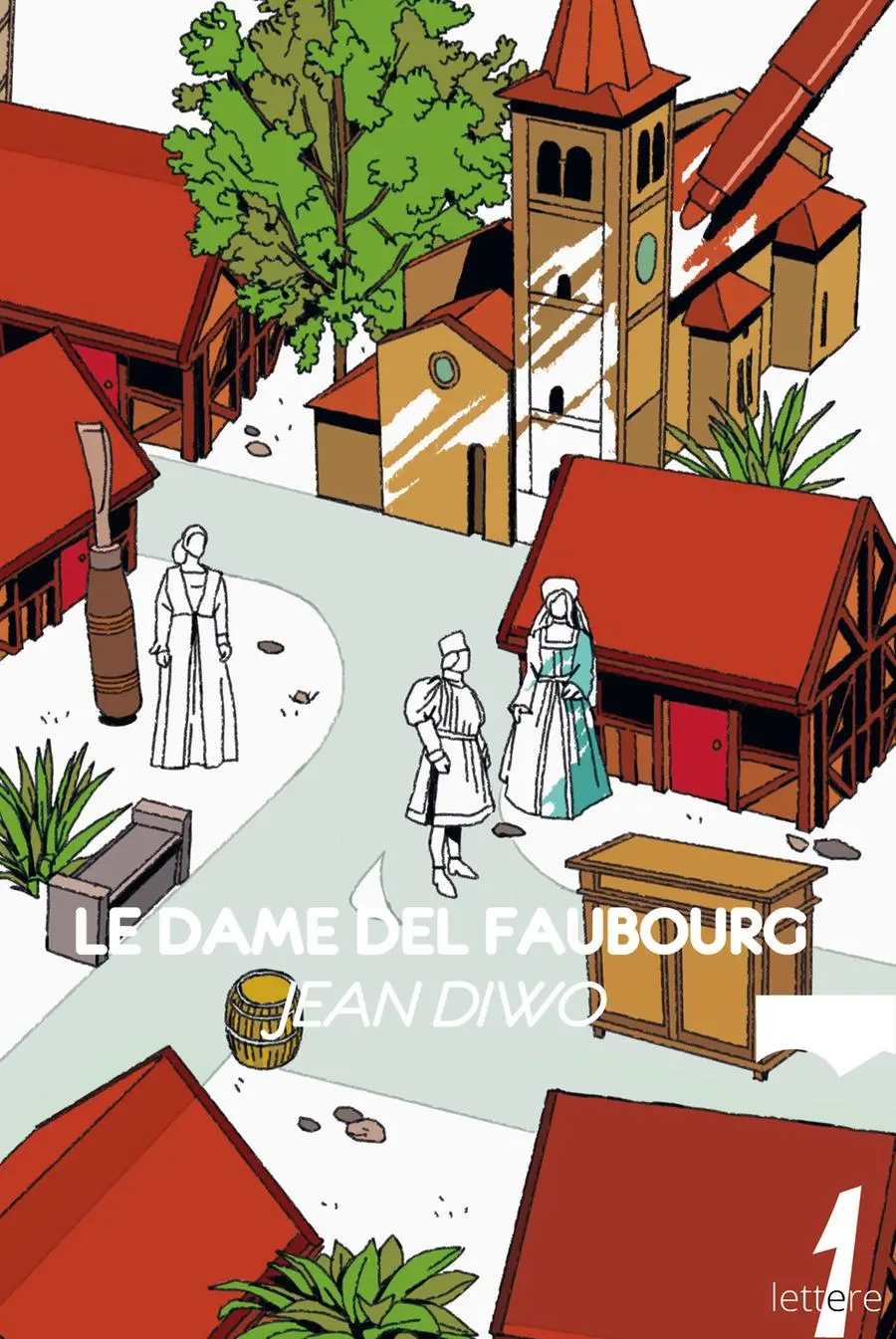












Faubourg Saint-Antoine - one of the oldest and most important suburbs of Paris - is an artery born around the twelfth century and characterized by the presence of carpenters, furniture makers, cabinet makers and wood artists gathered around the Abbey of Saint Antoine. A community that, thanks to the protection of the various abbesses - the so-called ladies of the Faubourg - will promote the birth of a creative movement of wood and the affirmation of French furniture elevated to a work of art. And it is precisely the story of a family of furniture-making carpenters that inspired the French novelist Jean Diwo (1914-2011) for his "Le Dame del Faubourg" (21lettere, 2021, pp. 600, also e-book), first novel of a trilogy that has sold over one million copies in France.
In this great tale pervaded by a contagious lightness and vivacity it all begins in 1471, when Louis XI sits on the throne of France. With the bundle on his shoulder and the stick as an apprentice carpenter, Jean Cottion arrives in Paris on a sunny day. Here his life is intertwined with that of the master Pierre Thirion, a well-known furniture maker from the Faubourg, and with that of the Abbess Jean IV, mother superior of the Abbey. From this meeting, the story unfolds over the centuries in the lively Faubourg Saint-Antoine, in which the author introduces us to the stories of several generations of Parisian artists and artisans, giving life to an exciting family saga. Thus we discover, thanks to Diwo's careful historical research, scenes of daily life in France of past centuries, the hierarchical organization of the suburbs of Paris, the rise of a community of artisans who will bring prestige to French art, but also the influence and relations between politics and the clergy, the tensions and difficulties of the people, the likes and dislikes between nobles, the discriminations, beliefs, clichés, customs of an era far from ours. At the same time the reader rediscovers the great history of France through the smaller - but no less significant - history of the Cottion-Thirion family, the cabinetmakers of the Faubourg Saint-Antoine. A story in which eras follow one another together with fashions between 1471 and 1789.