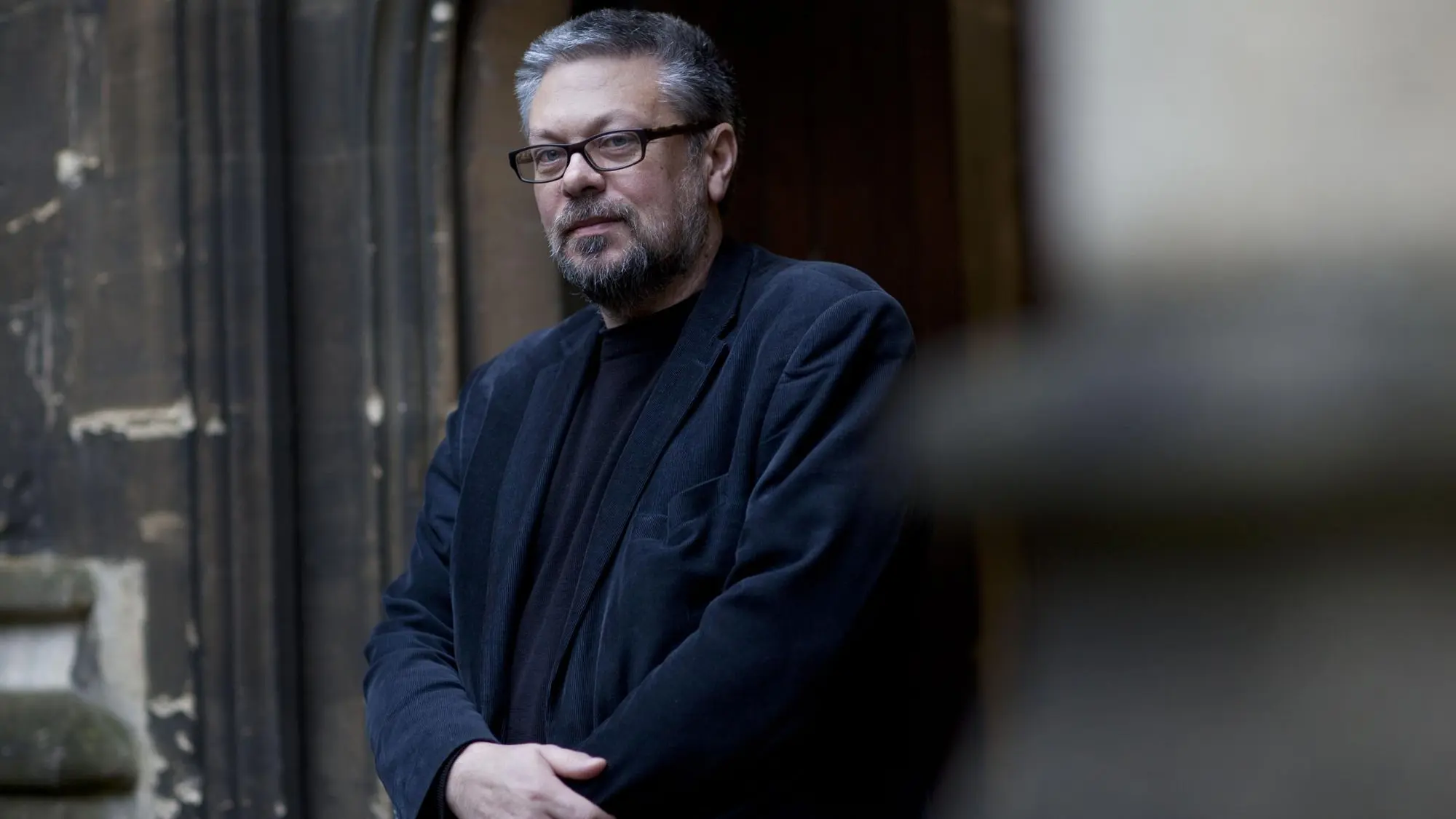


“Did you think the Russian people were grateful to Gorbachev? Not even for a dream, and do you know why? Because he wasn't a real Tsar. One with a capital Z ”. With these few words the writer Mikhail Shishkin , fresh winner of the European Witch Prize 2022 with the novel " Vanishing Point " (21lettere, 2022), makes us understand how little the West understands the soul of Russia. Shishkin also adds: “Russia and the West, we have been observing each other carefully for centuries, but we cannot see each other well. Something is wrong with the focus. We see nothing but reflected images ”.
To try to go beyond these reflected images, the Russian writer presents to the Italian public " Russki mir: war or peace? " (21lettere, 2022, pp. 256, also e-book), a collection of in-depth essays on some dynamics of contemporary Russia with a horizon that starts from the origins of the Russian state.
It is an undoubtedly fascinating and well translated volume by Veronica Giurich Pica in which, starting from the first Viking invasions, passing through the Mongolian occupation, Shishkin talks about his Russia up to the present day , with the awareness that one cannot understand a nation and a people if its history is not known, if its past is not reckoned with, even unpleasant ones. In particular, the Russian writer focuses more on the last century in which his motherland tried twice to establish a democratic government. The first for a few months in 1917, after the fall of the tsarist empire; the second for a few years after the collapse of the USSR. Two attempts that have been swept away, the first since the birth of the Soviet empire, the second by the affirmation of Putin's authoritarianism.