

The journey, the tension to movement, has always intrigued mankind. Traveling embodies for Baudelaire one of the fundamental stages that the individual must go through in an attempt to at least partially satisfy the irrepressible and insatiable desire for the absolute.
It doesn't matter whether you follow the straight path or the path of sin, the only thing that matters is reaching moments of contact with the Absolute. And on this basis, Franco Battiato thought up the lines: "I invite you to travel / In that country that looks so much like you".
The series of L'Unione Sarda entitled "Murales di Sardegna" is an invitation to discover an identity itinerary among the towns of our island.
From tomorrow, Saturday 22 April, the third volume will be on newsstands, on sale with L'Unione Sarda for €8.50, plus the cost of the paper.
Guided by the curator, the photographer Gianni Sirigu, readers will discover the works of art "en plein air" present in Capoterra, Carbonia, Cardedu, Cargeghe, Cuglieri, Decimoputzu, Desulo, Donori, Dualchi, Elini, Elmas, Escalaplano, Esporlatu, Esterzili, Fluminimaggiore, Flussio, Fonni, Gairo, Genoni, Gergei.
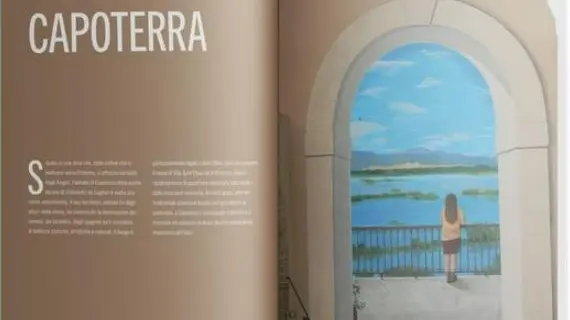
The realist images stand out right from the first pages of the third volume: Capoterra offers a vision linked to the contemporary, such as hunting scenes or agricultural work. Naturally, the celebration in Sant'Efisio is inevitable; in fact in the past, in the 17th century, the ancient village had assumed the name of Villa Sant'Efisio. Carbonia's murals summarize the hardships of work and daily living, almost an invitation to put aside the agony of the past and look to the future with hope. Cardedu, a town in the Ogliastra area, has a mural with colors that recall the early French Fauves Twentieth century. Cargeghe, which has its roots in a past full of satisfactions, today has made its murals a tourist attraction. The vision of Cuglieri's works offers a mix of sensations between classic and modern. Sacred and profane divide the walls of Decimoputzu. One of the places not to be missed, especially by tradition, is Desulo: the works embody the most typical values of Sardinia.