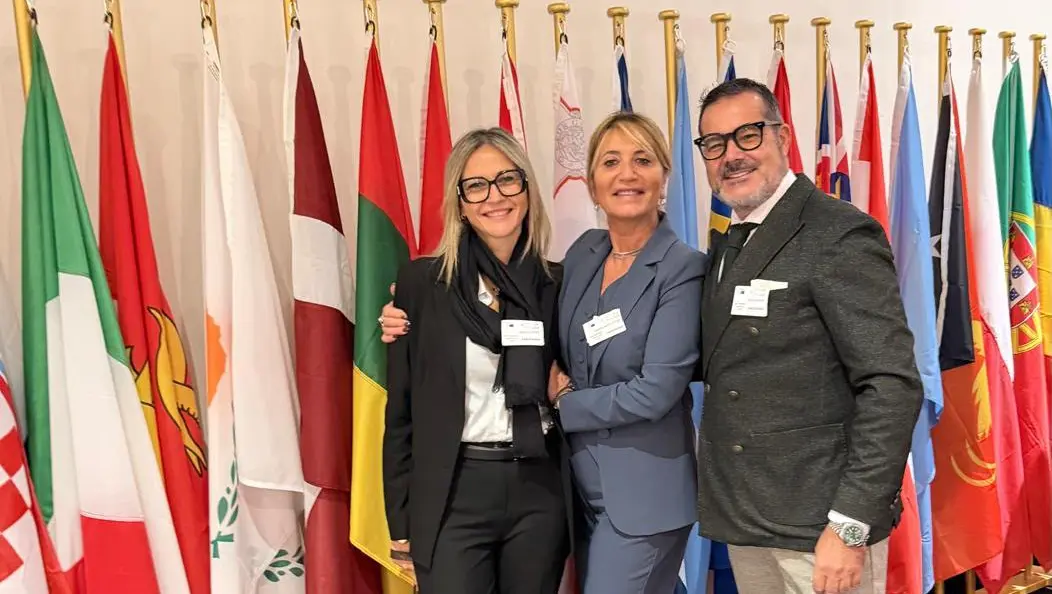


Putting higher technological education at the heart of European policies was the challenge relaunched in Brussels at the "I T4lenti del Fut2ro" event, which also included the ITS Academies of Sardinia. The aim was to promote an increasingly strategic training model to meet the needs of businesses. Representing the Sardinian system were Sabrina Serra, president of the ITS Academy TAC and the Association of ITS of Sardinia, and Ottavio Sanna, director of the ITS Academy TAGSS, an organization specializing in the agri-food supply chain. The meeting was also attended by the Minister of Education and Merit, Giuseppe Valditara, the Vice President of the European Parliament, Antonella Sberna, and the President of Rete ITS Italy, Guido Torrielli.
At the heart of the discussion was the role of ITS Academies as a concrete tool for guiding graduates into the world of work. These advanced technological training programs enable students to acquire specialized skills, meeting the demands of a market increasingly in search of qualified professionals. This represents a particularly significant opportunity for young Sardinians, who can access free training and build a career path consistent with their aptitudes. "It was an important meeting because it highlighted the value of ITS for our businesses and, especially, for young people," emphasized Ottavio Sanna. "For high school graduates, these programs represent a great opportunity, as they allow them to acquire skills sought by companies free of charge and prepare for a profession aligned with their abilities and aspirations." Another key theme of the day was the economic sustainability of the system and the need to ensure continuity of investment. In recent years, thanks to PNRR resources, ITS Academies have been able to build new laboratories, renew equipment, and expand their capacity, strengthening their training offerings. A growth path that now requires additional resources to consolidate the results achieved. Guido Torrielli, president of Rete ITS Italy, addressed this point, drawing institutions' attention to the need for structural and specific funding, including through the European Social Fund. This is considered essential to allow foundations to plan medium-term activities, maintain investments, and continue developing quality training programs. "At a time when a significant portion of resources is being allocated to other sectors, such as defense, it is crucial not to neglect training," Sanna continued. "Investing in ITS means supporting the growth of companies and providing our students with the tools they need to build their professional futures." The discussion then expanded to an international dimension. Among the prospects that emerged in Brussels was the possibility of exporting the Italian ITS Academy model beyond Europe's borders, through collaborations with countries like Argentina and Egypt, and with other African countries. The goal is to share skills and experiences, developing training programs that meet the needs of the participating regions and, at the same time, the demands of Italian businesses. "It was a very positive day of discussion, during which we received great attention from European institutions," adds the director of the ITS Academy TAGSS. "Opening up to other countries represents an opportunity to publicize our model, create new collaborations, and broaden the career prospects of young people."
The Sardinian delegation's participation in the European Parliament thus confirms the role of ITS Academies as a bridge between training and employment. This system, also in Sardinia, aims to provide young people with concrete skills and businesses with qualified professionals, contributing to the region's economic development and competitiveness.