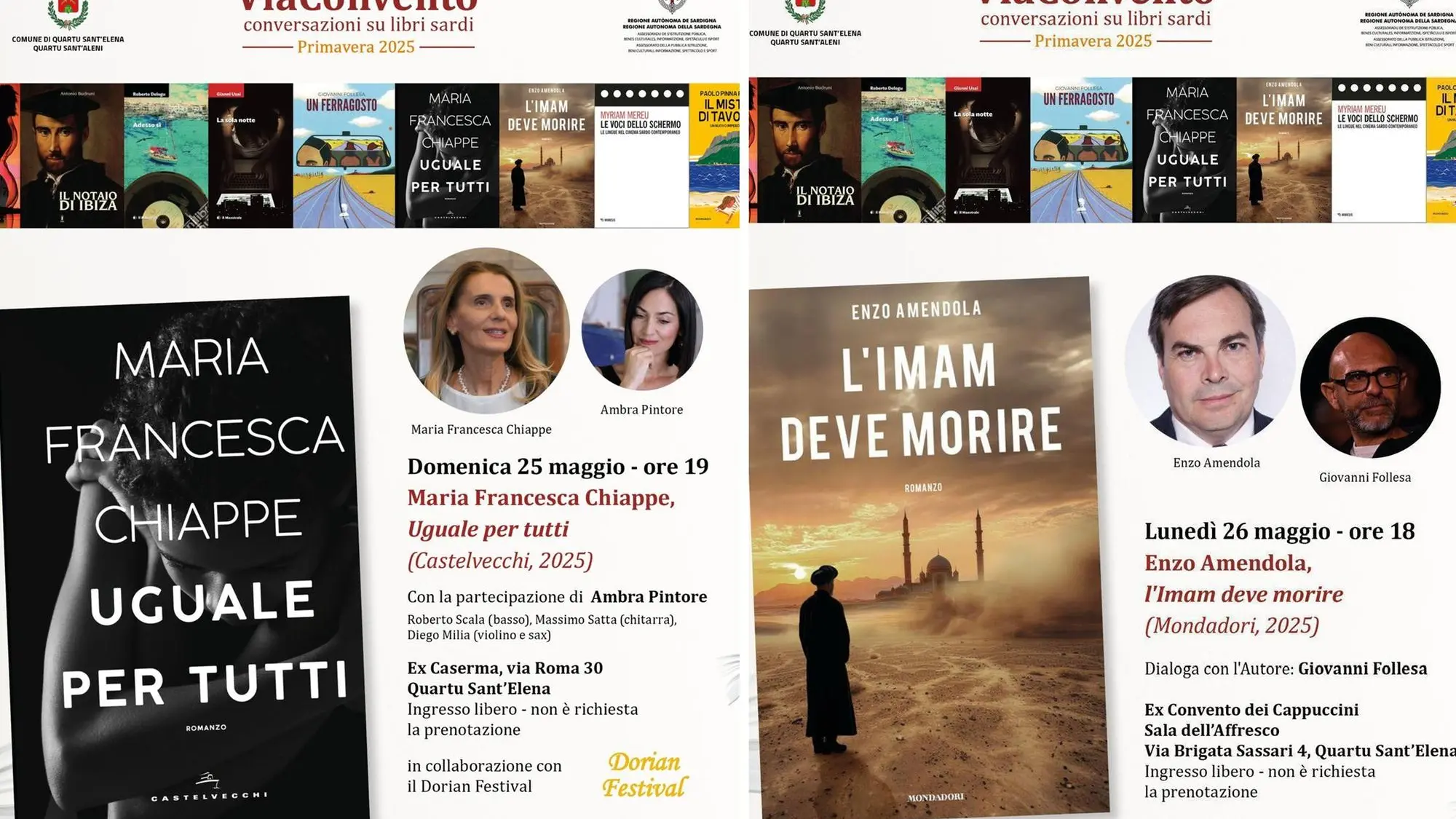


Two authors, two novels, two ways of telling the world: Maria Francesca Chiappe with Uguale per tutti (Castelvecchi, 2025) and Vincenzo Amendola with L'imam deve morire (Mondadori, 2025).
They will be the protagonists on Sunday 25 and Monday 26 May in Quartu as part of the ViaConvento literary review, in two evenings that will be held in the Ex Caserma in via Roma and in the Ex Convento dei Cappuccini.
Domenica Maria Francesca Chiappe and “Equal for all”
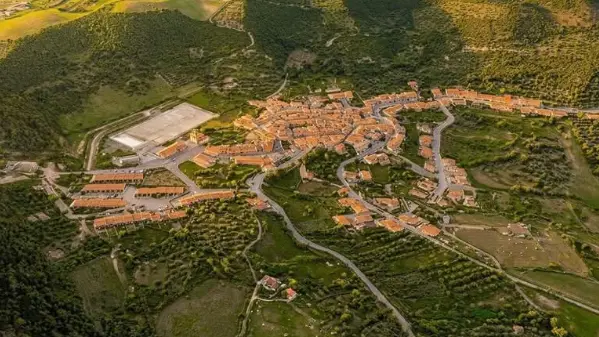
Cagliari, the white city, is tinged with shadows in the new novel by Maria Francesca Chiappe, Uguale per tutti, the third chapter of her Cagliari series, which in collaboration with the Dorian association will be presented in a national premiere on Sunday 25 May at 7 pm in the former Caserma in via Roma, 30, in Quartu Sant'Elena. The author, journalist and councilor for Culture of the Municipality of Cagliari, returns with her sharp pen, capable of transforming news into narration and the places of the city into living characters. In conversation with her is Ambra Pintore, who will not limit herself to leading the meeting but will intertwine words and music, accompanied by Roberto Scala on bass, Massimo Satta on guitar and Diego Milia on violin and sax. Because, in Cagliari, even a mystery novel needs a soundtrack.
In Uguale per tutti Chiappe weaves a plot that unfolds between three symbolic places of the city: the desolate beach of Giorgino, the hill of Monte Urpinu, the alleys of the Marina . Three crimes, three stories: a dead man on the beach, a corpse on the heights of Monte Urpinu, a girl who, after a party in the wealthy city of Via Milano, reports a sexual assault. The protagonists who have become dear to the readers of the series investigate: Annalisa Medda, a tenacious journalist who never gives up, and Fernando Corallo, head of the Mobile with an infallible instinct but a heart marked by the awareness that the truth is a luxury. "Three threads that knot together, but are not easily untied - explains Chiappe -. It is an investigation into justice, the kind that should be the same for everyone, but which often stumbles". Despite the realism of the places and atmospheres, the author is keen to point out: "It's all the fruit of my imagination". An imagination that, however, feeds on her experience as a reporter, someone who knows how to dig into the bowels of reality without fear of getting her hands dirty. but Chiappe returned to weave her web with a Cagliari that is both beautiful and bloody. In which places are not just a backdrop but characters: who talk, plot, hide. “I wanted to tell the story of a city that I love, but that sometimes hurts,” confides the author. A novel that bites the conscience, like a knife in the night.