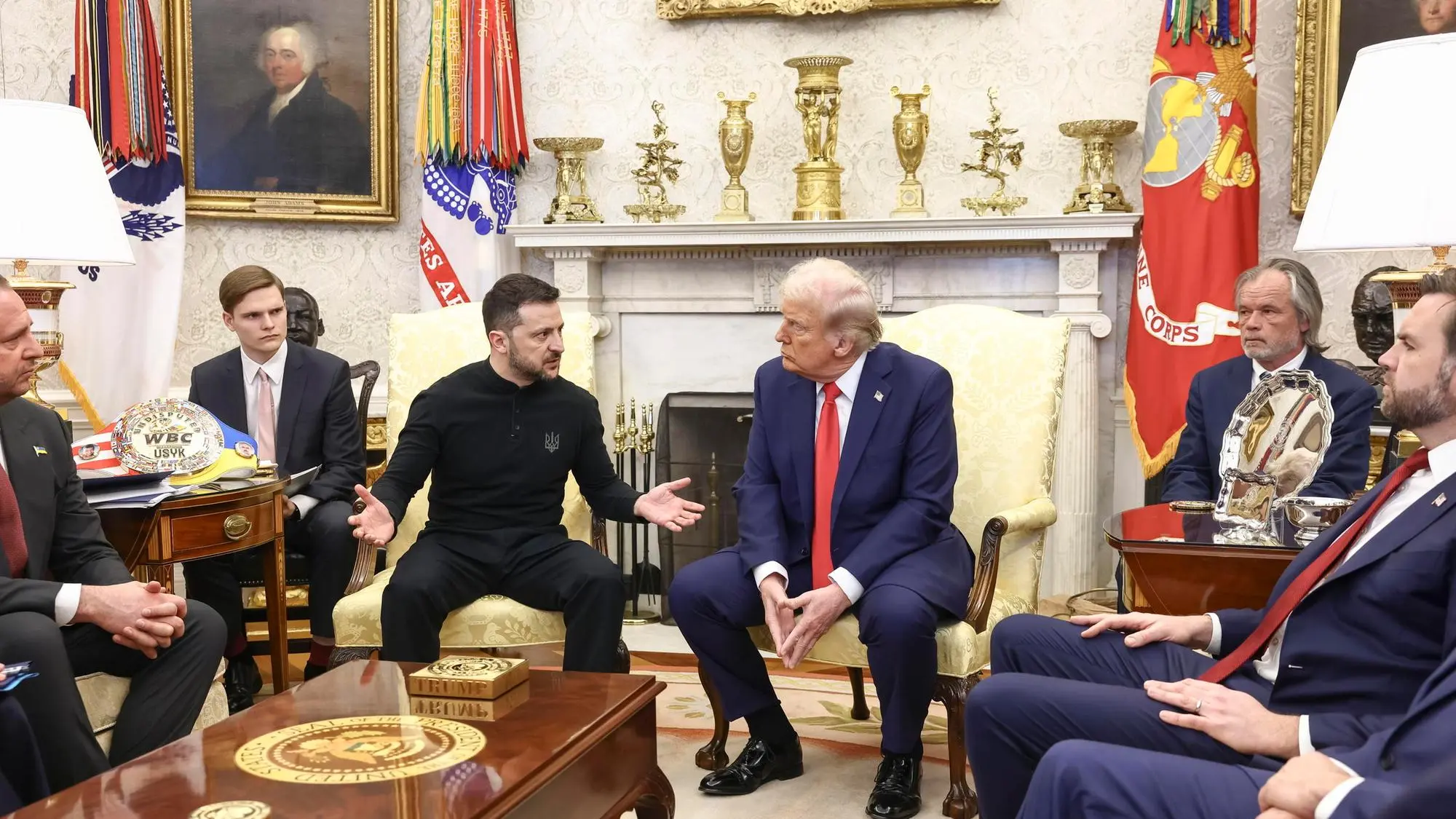


What happened last February 28, 2025 in Washington should induce a reflection inspired by rationality and concreteness on the part of the European Union as a whole, and of the individual countries that compose it, since, if it were not clear, that meeting, in its tone, in its contents, and in its mortifying epilogue, would seem to have marked the construction of a clear dividing dam between two waters, if metaphorically we wanted to describe it in these terms.
The “West”, as it has always been conceptually conceived, would seem (the dubious formula is imposed) to have been archived, and at the outcome of that fateful meeting, it might perhaps seem inappropriate to express oneself in terms of “alliance”. The position of the new tenant of the White House, and of his entire very powerful entourage, diametrically opposed to that followed by his predecessor and by the European Union itself, seems to have been clear, and emerged in all its self-evident “clarity” during the meeting-clash between Donald Trump together with his Vice JD Vance, and Volodymir Zelensky.
According to Donald Trump, Volodymir Zelensky does not have the credentials to negotiate and is not yet ready for peace. In essence, to be brief, according to Donald Trump, Volodymir Zelensky is negotiating much more than he is capable of doing. In essence, according to the bare and crude words of Donald Trump, either Kiev decides to pursue a peace agreement as outlined by the United States, or it will have to continue fighting alone without American military and financial support. The European Union is “not counted”, in the sense that its positions do not seem to interest the White House, which, otherwise, would have involved it.
Among the Europeans, no one, in truth, has been involved. But Volodymir Zelensky, and with him the European Union itself, would seem to continue to reiterate that they certainly want peace, but a "just peace" (an expression that should perhaps find unanimity of meaning among all interested parties), focused, on the one hand, on the presence of European peacekeeping troops that are effectively part of any possible agreement to safeguard Ukraine from further potential Russian attacks, and on the other hand, focused on the restoration of its territorial integrity, meaning with this expression, not only the recovery of the Crimean peninsula, lost following a war in 2014, but also of a good part of its eastern territories, such as, for example, the Donbas region.