
















LEGGI IL QUOTIDIANO
LEGGI IL QUOTIDIANOOggi 11 November
L'Unione Sarda English
Abbonati
ITA|ENG|DEU|RUS|CIN
videolina Linkradiolina linkSardegna 1 linkVai online linkPBM link
Read the newspaper
L'Unione Sarda English
Subscribe
L'Unione Sarda

Iniziative Editoriali

  • Biblioteca dell'identità

Account

  • Abbonati
  • LEGGI IL QUOTIDIANO
ABBONATI A L’UNIONE SARDA

SCARICA L'APP L'UNIONE DIGITAL

Download GoogleDownload apple
videolina Linkradiolina linkVai online linkPBM link

2021 L'Unione Sarda S.p.A. Tutti i diritti riservati. É vietata la riproduzione, anche parziale e con qualsiasi mezzo, di tutti i materiali del sito. | Indirizzo della Sede Legale: Piazzetta L'Unione Sarda nr. 24 | Capitale sociale 11.400.000,00 i.v. | Codice Fiscale ed iscrizione presso l'Ufficio Registro Imprese di Cagliari 01687830925 (P.I. 02544190925) | REA: CA-136248

Cookie e Privacy PolicyModifica impostazioni privacyInformativa commentiCorporate
L'Unione Sarda

News

  • Cronaca Sardegna
  • Economia
  • Salute
  • Cultura
  • Sport
  • Gossip
  • Turismo

Servizi

  • Necrologi
  • Annunci
  • Pubblicità

Bella Sardegna

  • Spiagge

Iniziative Editoriali

  • Biblioteca dell'identità

Account

  • Abbonati
  • LEGGI IL QUOTIDIANO
ABBONATI A L’UNIONE SARDA

SCARICA L'APP L'UNIONE DIGITAL

Download GoogleDownload apple
videolina Linkradiolina linkVai online linkPBM link

2021 L'Unione Sarda S.p.A. Tutti i diritti riservati. É vietata la riproduzione, anche parziale e con qualsiasi mezzo, di tutti i materiali del sito. | Indirizzo della Sede Legale: Piazzetta L'Unione Sarda nr. 24 | Capitale sociale 11.400.000,00 i.v. | Codice Fiscale ed iscrizione presso l'Ufficio Registro Imprese di Cagliari 01687830925 (P.I. 02544190925) | REA: CA-136248

Cookie e Privacy PolicyModifica impostazioni privacyInformativa commentiCorporate
Home
A book to discover

When a civilization destroys itself

Historian Michael Kulikowski reconstructs the end of the Roman Empire as a great ancient tragedy
Robert Roveda
19 luglio 2023 alle 08:00Aggiornato il 19 luglio 2023 alle 07:59
When a civilization destroys itself
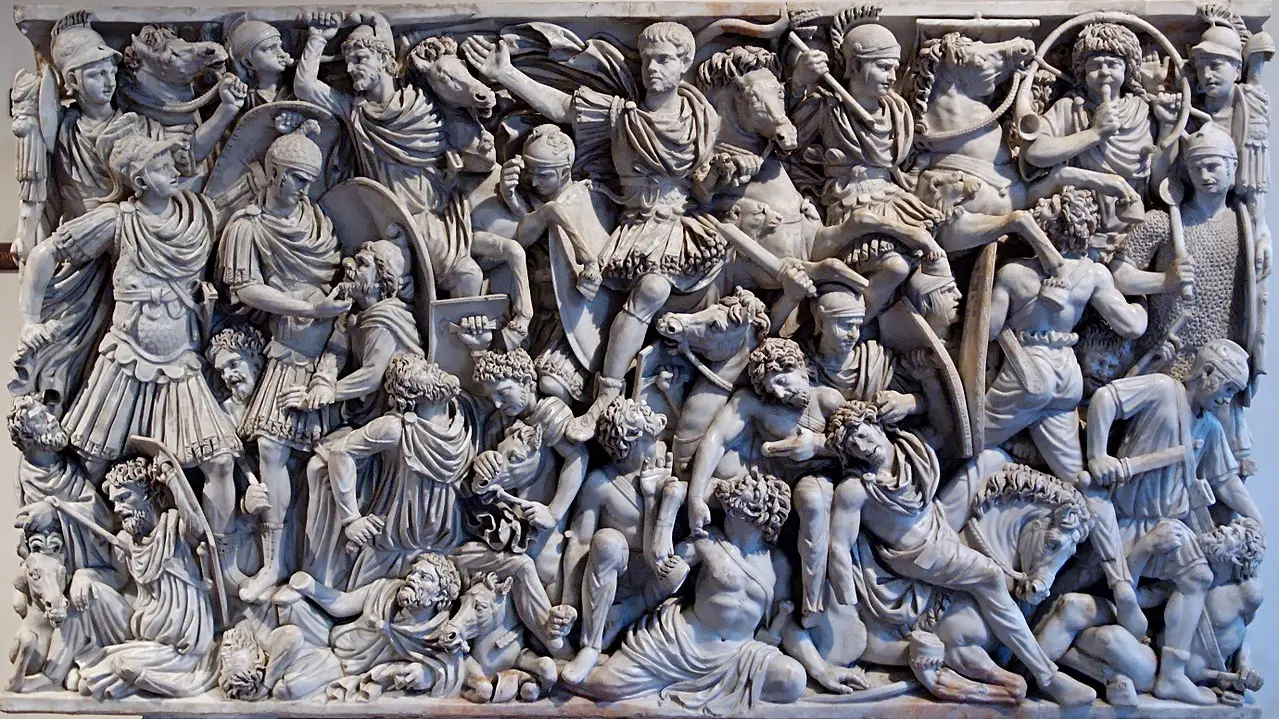
Una scena di lotta tra Romani e barbari tratta dal Sarcofago Ludovisi del III secolo d.C.
Resta informato su WhatsApp
FacebookXLinkedInWhatsApp
Argomenti similiSLOT_11
  • Russi e russanti
    Caffè Scorretto

    Russi e russanti

    Luigi Almiento

Articoli correlati

Bomb scare, schools aren't closing. Meloni: "They want to scare us, not hit us. We'll react."
the emergency

Bomb scare, schools aren't closing. Meloni: "They want to scare us, not hit us. We'll react."

The prime minister called on the opposition and reassured them in a video on social media: "Nothing was found in the institutions. Those who send these threats want a nation that is terrified and fea…
Majority summit: "Forward with the statute, but no changes to the electoral law."
region

Majority summit: "Forward with the statute, but no changes to the electoral law."

The draft is ready and at the next session the special commission will begin examining all the articles.
Roberto Murgia
Grillo's appeal, the defense: "Evidence in our favor was ignored or undervalued, the trial must be retried."
Sassari

Grillo's appeal, the defense: "Evidence in our favor was ignored or undervalued, the trial must be retried."

In the grounds of appeal, a flurry of objections raised by the lawyers to the regularity of the conviction sentence of the Tempio Tribunal
Andrea Busia
Girasole: Mosquitoes test positive for the Usutu virus: Mayor's order comes into effect.
the alarm

Girasole: Mosquitoes test positive for the Usutu virus: Mayor's order comes into effect.

The verdict from the Teramo zooprophylactic institute is the first case in the municipality.
Roberto Secci
The eighteenth edition of the Carbonia Film Festival kicks off
cinema

The eighteenth edition of the Carbonia Film Festival kicks off

This morning, the Skan mural was unveiled at the ticket office, and the festival officially opens this afternoon. The event will get into full swing in the coming days.
MARCO CORRIAS
Salerno, a new adventure in the Eccellenza league: he will coach the Tortolì women's team.
soccer

Salerno, a new adventure in the Eccellenza league: he will coach the Tortolì women's team.

The 42-year-old coach returns to the bench, in a completely different context than those he has faced so far
Roberto Secci
Kimi Antonelli with his tricolor hair, Mercedes: "No words."
the champion

Kimi Antonelli with his tricolor hair, Mercedes: "No words."

In the video posted by the team, Kimi arrives at the headquarters, Wolff is incredulous: "Did you even pay?"
Costa Smeralda, the "emery gang" and thefts from dream villas: crimes prescribed after 16 years
Olbia

Costa Smeralda, the "emery gang" and thefts from dream villas: crimes prescribed after 16 years

In 2010, raids took place in Porto Cervo and Olbia, with the villa of an undersecretary of Labour and the residence of a Roman countess also targeted.
Andrea Busia
Ciro Grillo trial: appeal faces immediate risk of postponement
court

Ciro Grillo trial: appeal faces immediate risk of postponement

The defense: "A judge's signature is missing; the first-instance ruling must be retried."

“The light of the world has gone out…”. With these words one of the greatest Christian writers of the 4th-5th century, Saint Jerome, commented on the news of the sacking of Rome by the Visigoths in 410. The city had not suffered invasions for eight centuries: therefore until then it had represented the emblem of the invulnerability and immortality of the Roman state. For many men of the time, its fall therefore meant the end of civilization and the beginning of barbarism, so much so that Jerome himself wrote in those tragic days for all those who recognized in Rome the emblem of everything they believed in : “The head of the Roman Empire was struck down, the whole world was destroyed with the destruction of a single city”.

The end of the Roman Empire, conventionally fixed at 476 AD (the year in which the Middle Ages began), was in reality not a sudden collapse, determined by a single event, albeit dramatic, such as the sacking of Rome by hordes of those who they were generically called barbarians. It was the result of a long process of disintegration of the Roman state which was determined by many factors. Historian Michael Kulikowski, professor of Ancient History at Pennsylvania State University, in his recent essay "Imperial Tragedy" (Hoepli editore, 2023, Euro 28, pp. 402 also Ebook) emphasizes the serious responsibilities of those who held power in the empire: the ruling dynasties, the aristocratic classes, the military. Thus he recounts the period from the seizure of power by Constantine at the beginning of the fourth century to the arrival of the Lombards in the Italian peninsula (568 AD) as an age dominated by palace intrigues, religious conflicts and wars, as well as innumerable changes in social, religious and political structures.

Michael Kulikowski therefore disputes the notion that Rome fell to external invasions. Instead, it focuses on the choices of those who lived within the Empire, because it was not a single catastrophic moment that broke it, but a creeping, karst self-destructive process. After the reign of Constantine, the Roman Empire certainly had to face the growing threat of the barbarians: the Germans, but also the nomads of the steppes such as the Huns, increasingly violated its borders. The eastern regions of the Empire, albeit with difficulty, managed to face the enemy, while the western part of the Empire engaged in a struggle for survival with the aggressors. A struggle, however, ultimately destined to defeat. How come?

We know for certain that the attacks of the 4th and 5th centuries were different from those that had occurred before. They were no longer simple raids for the purpose of looting, but real migrations of peoples against which the Roman army found itself powerless. This impotence was a consequence of the profound crisis that had been affecting the western territories for at least two centuries: wars, famines, epidemics and political instability had led to the depopulation of the cities, the contraction of commercial traffic, the disappearance of small property in favor of large estates, the collapse of the slave production system. Most of the population lived in poverty, oppressed by a gigantic bureaucracy and rapacious taxation.

Even the army, which for centuries had saved Rome from ruin, was no longer what it once was. More and more Roman citizens escaped conscription by paying tribute or by finding refuge in territories beyond the Empire's border, safe from recruiting officers and even from tax collectors. Indeed, the barbarians became the backbone of the Roman military machine and even the military commanders who found themselves holding real power in the West were of Germanic stock.

At some point, the barbarians realized that they no longer needed an emperor to control the lands they had settled on. In 476, they deposed Romulus Augustulus, the Western Emperor, and sent the imperial regalia back to Constantinople. It was a symbolic gesture that brought the curtain down on an Empire in which even the Romans themselves no longer believed.

When a civilization destroys itself
La copertina

© All rights reserved