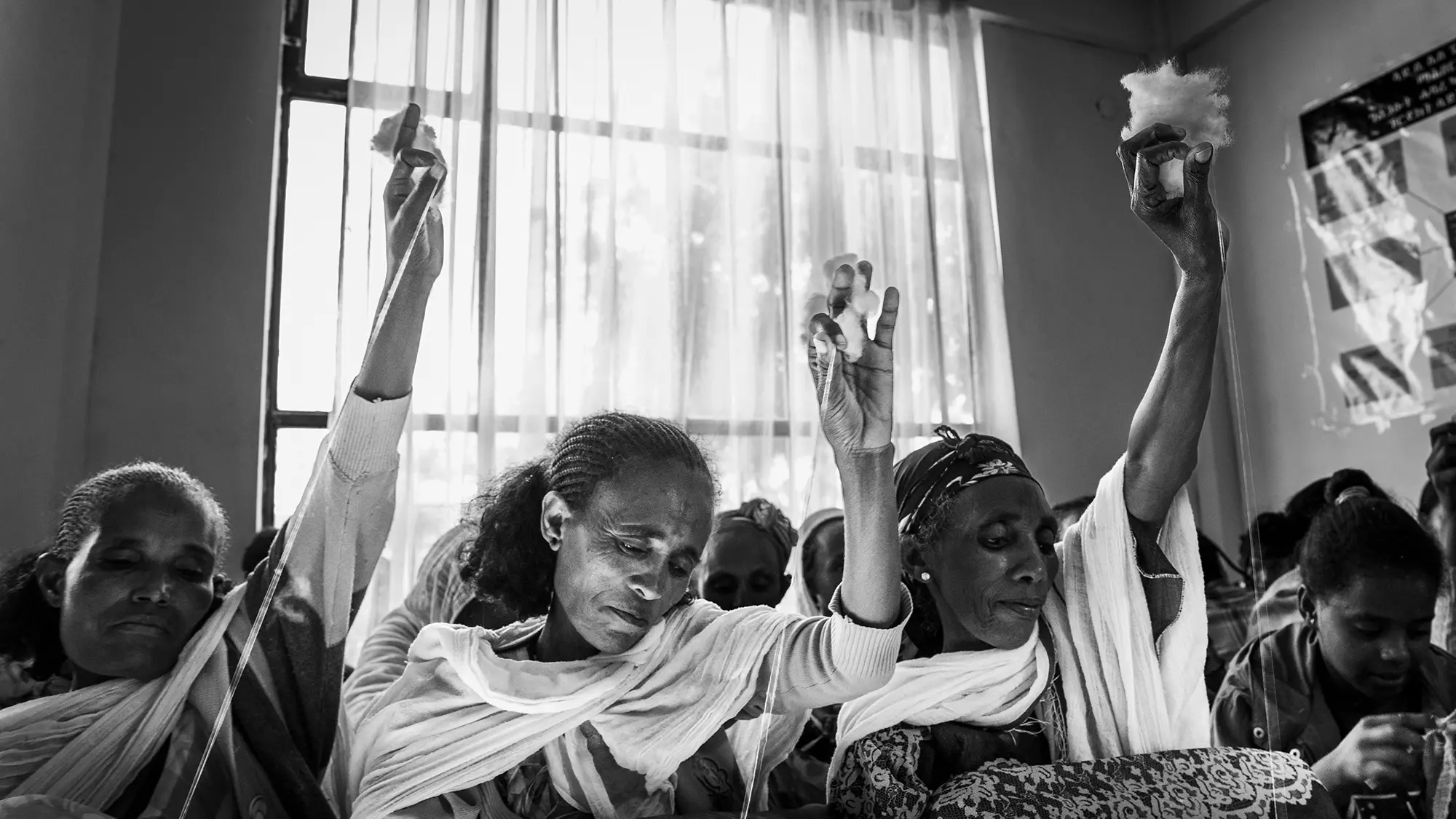


What remains of a war in the bodies and lives of those who experienced it? And how can photography recount violence without once again transforming people into objects exposed to the gaze?
These are some of the questions posed by Women's Bodies as Battlefields , the long-term project by Italian photojournalist Cinzia Canneri, which will be hosted at the MuA – Sinnai Museum and Archive from August 28th to October 4th. The work, the regional winner for Africa at the World Press Photo 2025 in the Long-Term Projects category, recounts the experiences of Eritrean and Tigrayan women forced to move between Eritrea, Ethiopia, and Sudan, in territories marked by political repression, war, and forced migration.
The project began in 2017, when Canneri began following the stories of women fleeing Eritrea and heading to Ethiopia. Many were leaving a country where national service can be extended indefinitely, crossing the border, exposing themselves to detention and various forms of violence.
With the outbreak of the Tigray war in November 2020, the research expanded to include Tigrayan women. The photographer thus brought together within a single narrative the stories of women belonging to different groups, yet united by the experience of rights violations, displacement, and sexual violence used as a tool of repression and war.
The project's title is clear: women's bodies become battlefields. It's not just a metaphor; it's the female body that military and political power exerts its control, affecting the individual and, through her, the entire community. In the stories collected by Canneri, the body retains the visible and invisible consequences of conflict, but it isn't represented exclusively as the site of the wound.
This is one of the most important aspects of the project. The women photographed are not reduced to the role of victims, nor are they mere images of a distant tragedy. They have a name, a story, family relationships, desires, and plans. The photography documents what they have endured, but also seeks what continues to exist beyond the violence: care, solidarity, the will to rebuild one's life, and, when necessary, the capacity to resist.