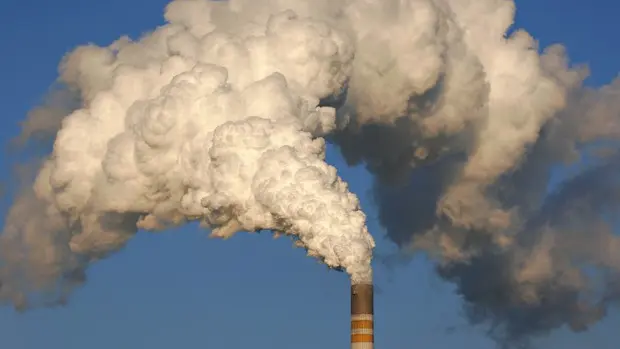


Air pollution can promote breast cancer . Women who live and work in places with higher levels of fine particles in the air are more likely to develop breast cancer than those who live and work in less polluted areas .
The results of the first study on the effects of both residential and occupational exposure to air pollution on the risk of breast cancer were presented at the Congress of the European Society of Clinical Oncology (Esmo) in Madrid. And experts are calling for a reduction in the limits .
«Our data showed a statistically significant association between long-term exposure to fine particle air pollution, at home and at work, and breast cancer risk . This contrasts with previous research that looked at exposure to fine particles only where women lived, showing little or no effect on breast cancer risk,” said Béatrice Fervers , head of the Center's Cancer Prevention and Environment Department. global oncologist Léon Bérard of Lyon.
In the study, the home and workplace pollution exposure of 2,419 women with breast cancer was compared with that of 2,984 women without breast cancer from 1990-2011. The results showed that the risk of breast cancer increased by 28% when exposure to fine particle air pollution (PM2.5) increased by 10 µg/m3, which is equivalent to the difference in concentration from rural areas to urban areas . Smaller increases in breast cancer risk have also been recorded in women exposed to high levels of larger particle air pollution (PM10 and nitrogen dioxide).
«These very small particles – explains oncologist Charles Swanton , of the Francis Crick Institute in London – can penetrate deep into the lungs and enter the bloodstream from where they are absorbed into the breast and other tissues. It will be important to test whether pollutants allow breast tissue cells with pre-existing mutations to expand and move toward tumor promotion through inflammatory processes, similar to our observations in nonsmokers with lung cancer. It is very concerning that small polluting particles and microplastics are entering the environment when we do not yet understand their potential to promote cancer."