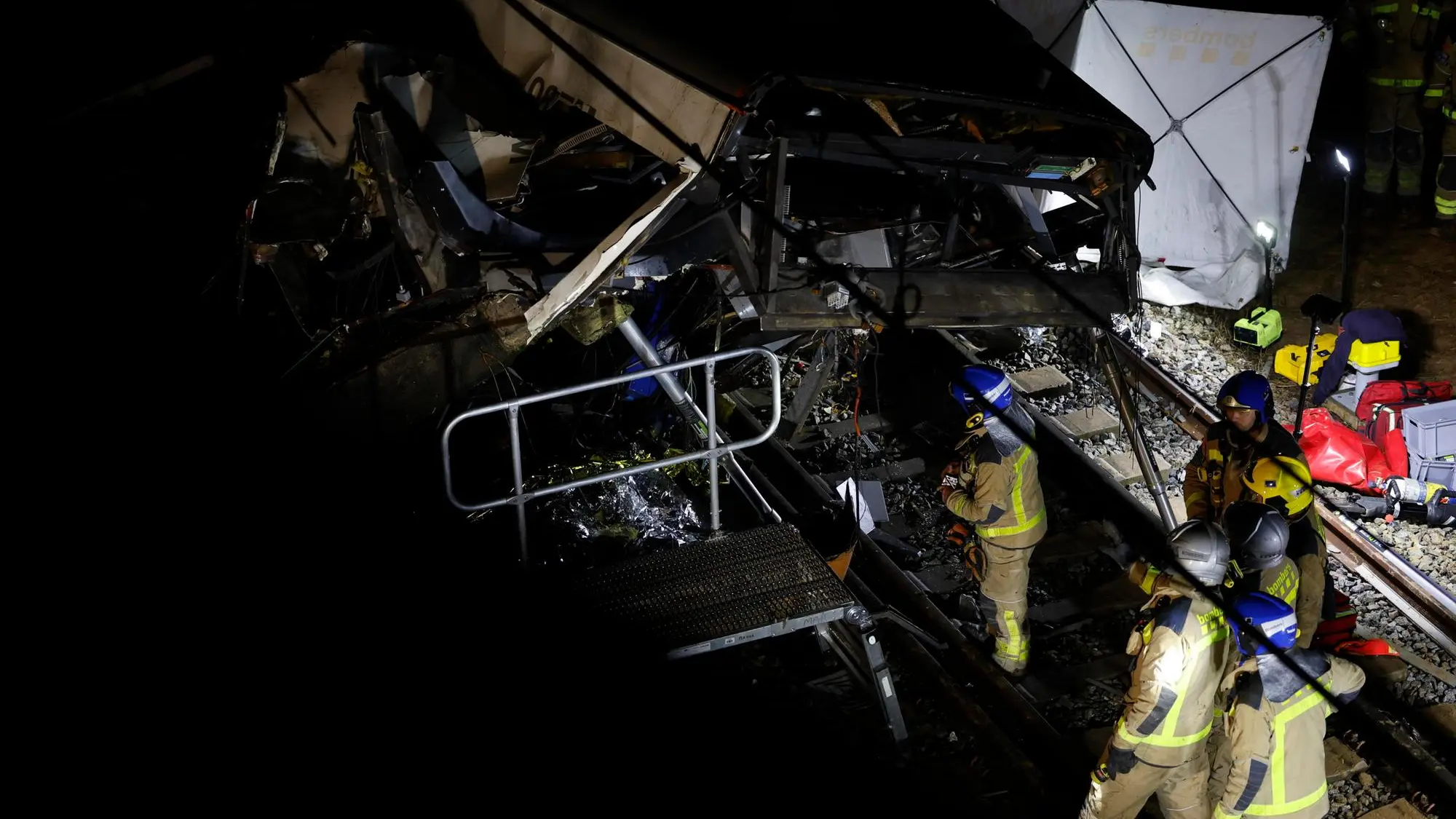


Spain has been hit by another train accident , just days after the disaster in Andalusia. A retaining wall collapsed as a regional train passed near Gelida in Catalonia, resulting in the provisional death of the train driver and around forty injuries, five of them serious. Initial reports suggest the collapse may have been caused by the heavy rains that have been hitting the region for days , prompting a red alert for flooding following Storm Harry.
Also in Catalonia, around the same time, there was another derailment due to rocks falling on the tracks, but fortunately there were no casualties . These two accidents have once again brought the national rail network to its knees, while in Adamuz, in the first of three days of national mourning, people continue to grapple with the tragedy that claimed at least 42 lives last Sunday.
Amid the piled-up wreckage and the ground flattened by heavy vehicles, time is marked by the meticulous work of rescue workers and forensic technicians, while the media was granted access to "ground zero" for the first time, during the visit of King Felipe VI and Queen Letizia. Standing before the red carriages of the Iryo train—numbers 6, 7, and 8—derailed and partially torn apart, our gaze rests on what remains: open suitcases, abandoned backpacks, torn-off seats. Eight hundred meters further on, two cranes work tirelessly to lift the carriages of the Alvia train, which fell into the embankment after impacting with the derailed Iryo carriages. Meanwhile, Civil Guard officers, aided by canine units, continue to search the pile of twisted wreckage for human remains.
The confirmed death toll has risen to 42, after four more bodies were recovered today, but it is still provisional, as more bodies may be inside the Alvia. In total, 39 injured people are still hospitalized—including four children—and 13 are in intensive care . As for the cause, "all hypotheses are open," Interior Minister Fernando Grande Marlaska reiterated. At least 20 forensic doctors and technicians from the Criminalistics section are working on comparing the victims' DNA to provide answers as quickly as possible to the families of the missing. In Córdoba, at the Ponente Sur Civic Center, a silent procession of grief has been taking place for two days. Around fifty relatives await news, protected by a police cordon and assisted by psychologists from the Cruz Roja, who are accompanying the families in the difficult task of accepting their loss in the absence of a body to mourn.