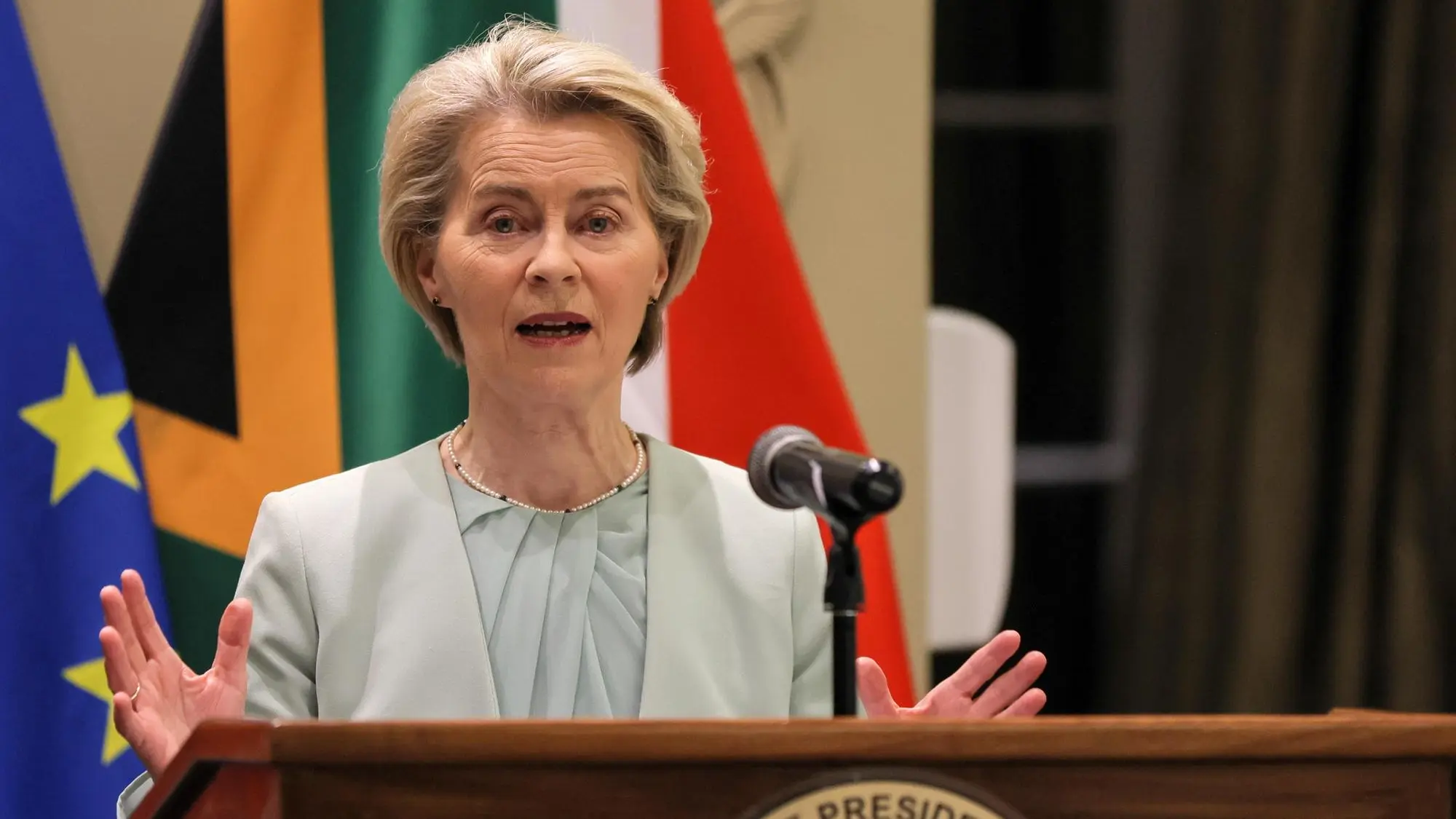


Last Saturday, in Cagliari, and not only there, the demonstration “Una Piazza per l'Europa” took place, to underline, among other things, the opposition to the rearmament proposed by Ursula Von der Leyen and the will to finally reach Peace by virtue of the “defense of European values”. Also on Saturday 15 March, the President of the Council of Ministers, Giorgia Meloni, had a telephone conversation with the Crown Prince and Prime Minister of Saudi Arabia, Mohamed bin Salman al Saud, in order to discuss, in the context of this bilateral agreement (therefore, possibly, binding only for the participants), the ongoing initiatives and the shared commitment to a just and lasting peace in Ukraine.
Starmer, for his part, always with reference to the Ukrainian issue, would like to convene the "coalition of the willing" to which the country Italy would not be willing to send soldiers. What emerges, it would seem (the conditional is a must) is the initiative of individuals and the lack of a common and shared European coordination referring to a single decision-making center. And this, with good likelihood, would seem to be the true limit of the Old Continent which, for this very reason, may not have the negotiating power necessary to impose its decisions.
Probably, what would have been the terms of the "Ukraine" question, would seem to have emerged immediately, that is, when Donald Trump took the decision to contact his Russian counterpart, Vladimir Putin, radically omitting to even seek functional coordination (at least courtesy) both with the Ukrainian President Volodymyr Zelensky (whose political role he seems to have made clear that he did not recognize, through elections, his fellow countrymen, at the time assigned to him) and, above all, with the European "allies". If we want to be necessarily concrete, in a nutshell, Donald Trump, in doing so, on the one hand, would seem (the dubious formula is imposed) to have given back a central role to Russia, isolated on the diplomatic, political and economic level by the previous Biden administration and, therefore, consequently, by the European Union itself which had adhered to the determinations of the same aforementioned administration sharing its actions and measures, and, on the other hand, would seem to have definitively excluded, a priori, the entry of Ukraine into NATO, as well as military aid, and therefore, still in a nutshell, would seem to have determined the exclusion of the European Union itself from the negotiating table due to the different, and perhaps even opposing, objectives to be achieved.