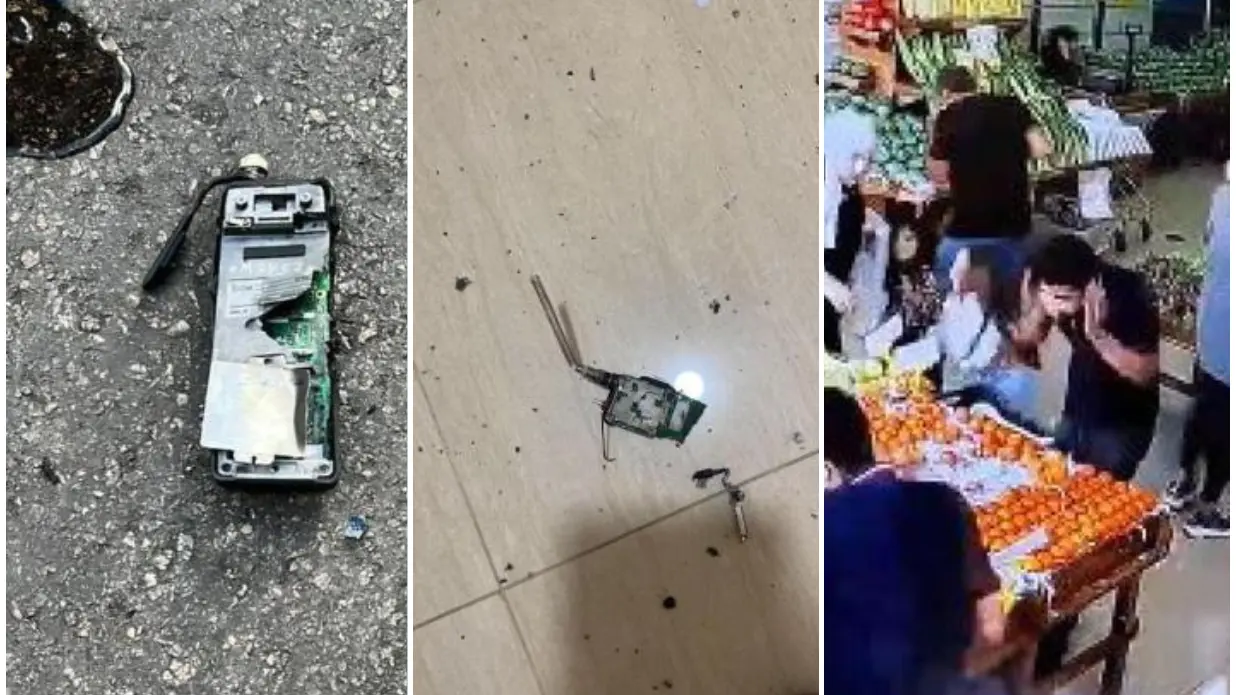


According to the Lebanese Ministry of Health, at least 20 people have died from the explosions of walkie talkies and radios used by Hezbollah soldiers , incidents that come a day after the explosion of pagers that caused another 18 confirmed deaths and thousands of injuries. Around 500 people have also ended up in hospital.
A scenario that has thrown the country into chaos, with thousands of people taking to the streets in protest in many cities and with Prime Minister Najib Mikati declaring that his government is preparing for "possible scenarios" of a major war with Israel .
Military walkie-talkies and fingerprinting devices were detonated in several locations across the country, including the Dahiya district of Beirut, a stronghold of the Shiite group, and in southern Lebanon. Images broadcast by local media showed burning apartments, burned cars, thick black smoke, and people fleeing.
Witnesses reported numerous ambulances taking the injured to hospital .
Other explosions were reported by Saudi media in Iraq, at the headquarters of the terrorist organization al Hashd al Shaabi in Mosul, at the same time as the explosions in Lebanon. In the southern suburbs of Beirut, explosions of devices occurred during the funerals of Hezbollah members killed on Tuesday in attacks with pagers. 1,600 are still hospitalized with injuries, some very serious. Five hundred militants lost their eyesight when their pager was shattered to pieces. And the Iranian ambassador in Beirut is also said to have lost an eye and 19 Pasdaran have been killed in Syria.
On the eve of Hezbollah chief Hassan Nasrallah's public speech, his cousin and chairman of the group's Executive Council Hashem Safieddine was clear: "These attacks will certainly be punished in a unique way, there will be bloody revenge," he said.