







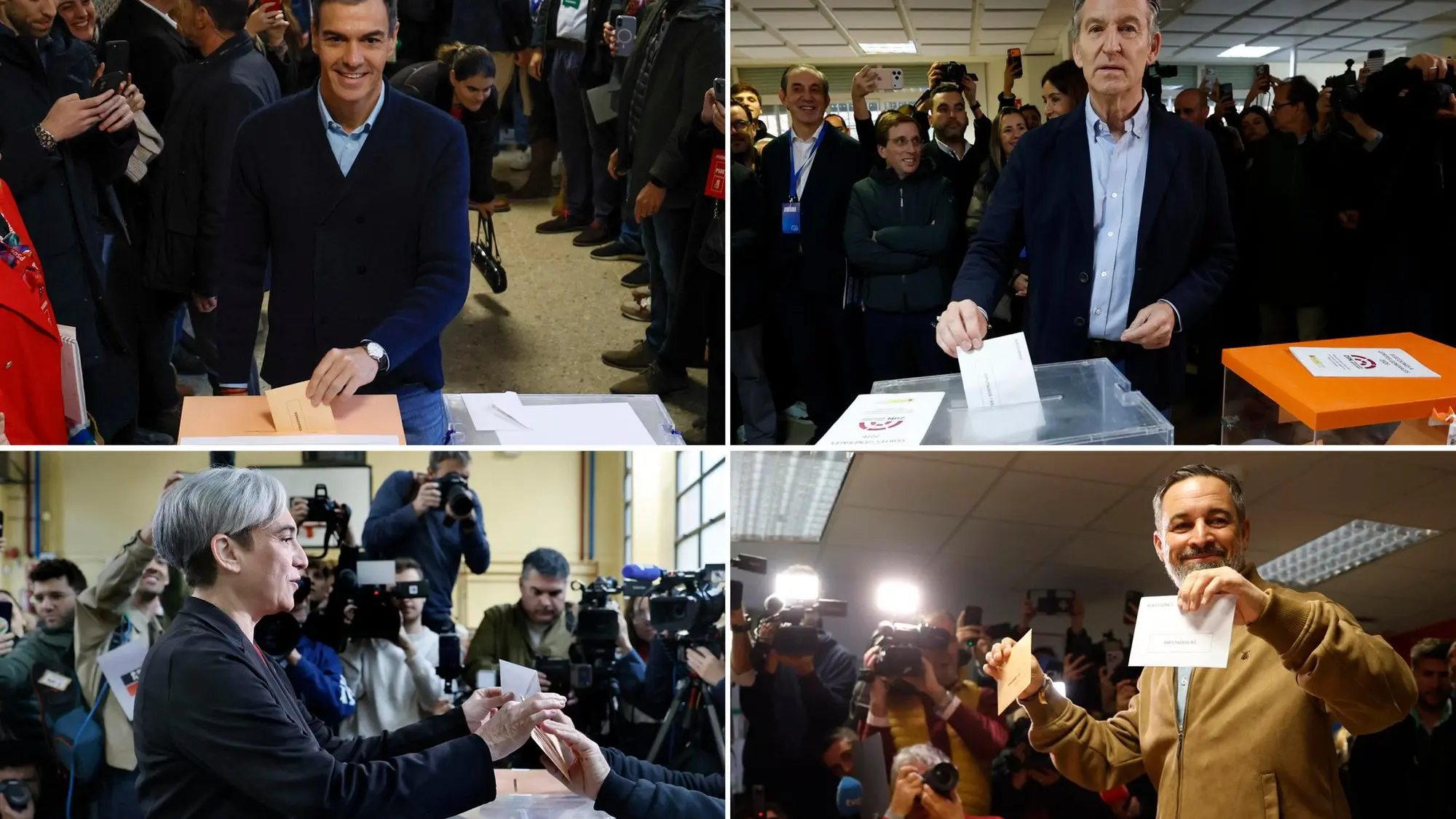


Voter turnout in Spain has reached a four-decade high, exceeding 78%. This is evident from the actual vote count, which is still underway. The figure is still rising and is approaching the levels of the 1982 elections.
And Spain is preparing to turn the page. Alberto Núñez Feijoo's Popular Party is leading in the first polls released after the election, confirmed by initial projections, with a result that would pave the way for a government with the far-right force Vox .
With the count reaching 30%, the PP is the leading party with 130 seats, a result which, added to the 49 seats won by Vox and the two deputies of Union del Pueblo Navarro (UPN), would allow the right-wing bloc to obtain an absolute majority in Parliament (176) .
Pedro Sanchez's PSOE (Social Democrats) has 116 seats. The Frente Amplio, to its left, has 10. Initial estimates therefore point to a turning point and a change of government in Spain, with a possible coalition between the center-right and the far-right, which would lead to government for the first time since the end of Franco's rule. Santiago Abascal would indeed hold the key to governability.
The political fact is the advance of Vox , which would have grown by four points compared to the 12.4% obtained in 2023. For the popular Feijoo, this would open the most delicate game: conquering the Moncloa by negotiating with an ally who aims to directly influence the policies of the new government.
"A heart-stopping vote count, with many seats likely to be decided by a hair's breadth," commented Miguel Tellado , secretary general of the Popular Party and director of Feijoo's electoral campaign, from the PP headquarters on Calle Genova in Madrid. Tellado celebrated the record turnout, calling it "historic, as these elections are historic, just as we in the PP were asking for." The party's number two added that the party awaits the results "with enormous enthusiasm," but also "with the serenity of those who have given their all."
Voters turned out en masse to vote, urged by both left-wing and right-wing blocs, in a vote that divided the country . The day was kicked off by Prime Minister Sánchez himself, who turned the vote into a personal challenge, banking entirely on activating the disillusioned progressive electorate and on the possibility of a comeback, against the odds, following Lula's example in the second round of the Brazilian presidential election.
"There's an epic turnout," he declared. "Today is the day Spain will decide what kind of country it wants for the next four years. There are many powers in a democracy, but the greatest power is the vote," he urged, convinced that a very high turnout would channel the necessary vote to the PSOE.
"These elections will define Spain's destiny for the next decade," declared Alberto Núñez Feijoo, the Popular Party's candidate. This is a rightward shift after eight years of Socialist government, with the possible arrival of the far-right Vox party, gaining acceptance in Spain for the first time since the end of Franco's rule. This development, if confirmed, could mark the end of the political career of Pedro Sánchez, who came to power in 2018 with a motion of censure against the popular Mariano Rajoy, who survived crises, predicted defeats, and fragile parliamentary majorities. At least until now.