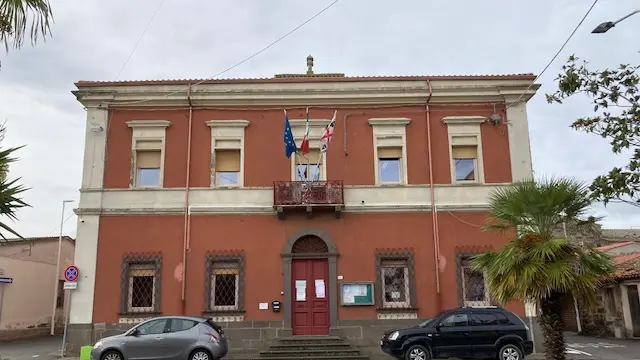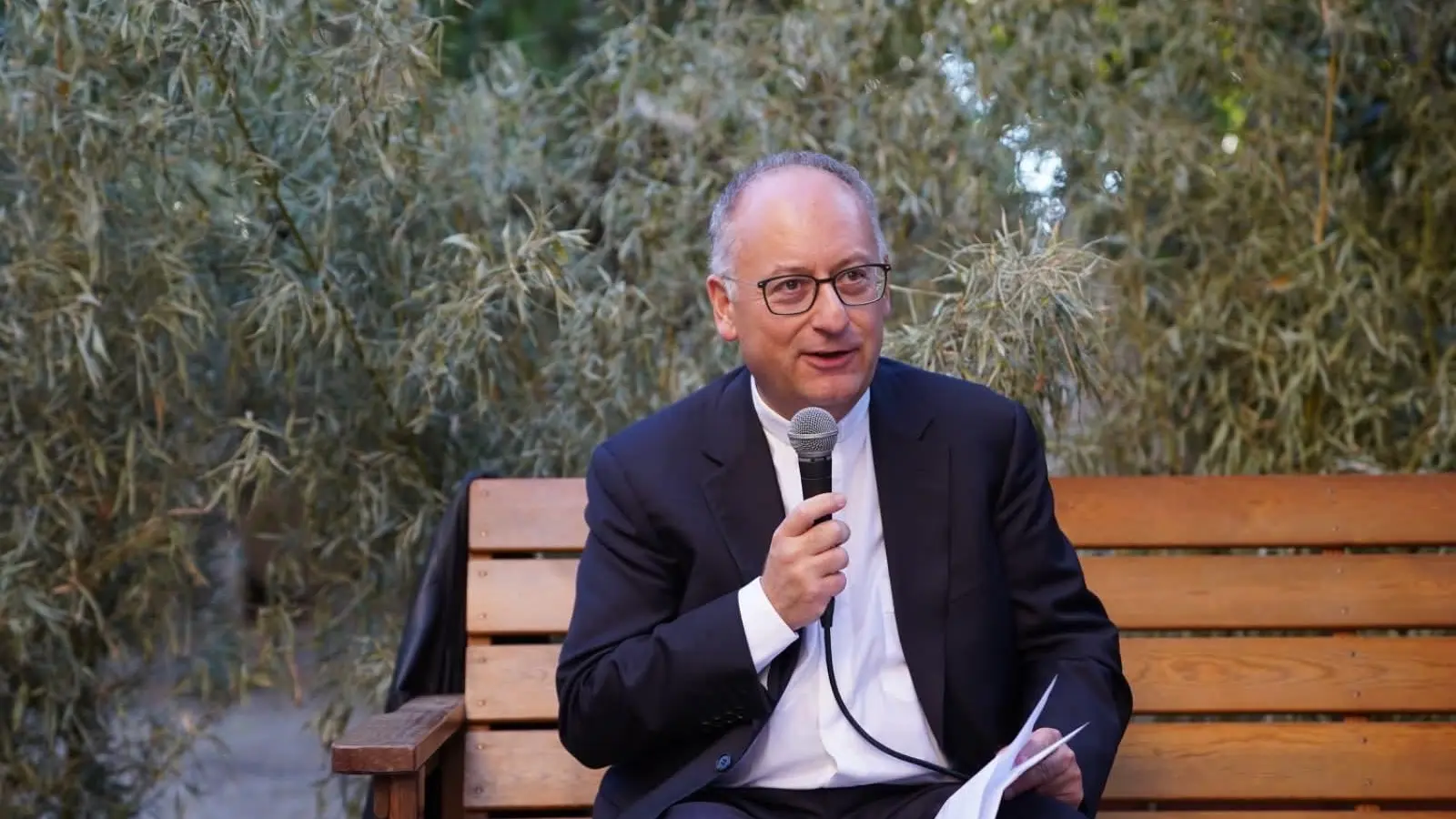


On the occasion of the twelfth edition of the Cultural Tourism Expo in Sardinia, the "Barumini Award – the Betilo for Culture" was awarded to Antonio Spadaro, Jesuit, journalist, theologian, and undersecretary of the Holy See's Dicastery for Culture and Education. Below, we publish his speech, titled "Animated Stones."
*******
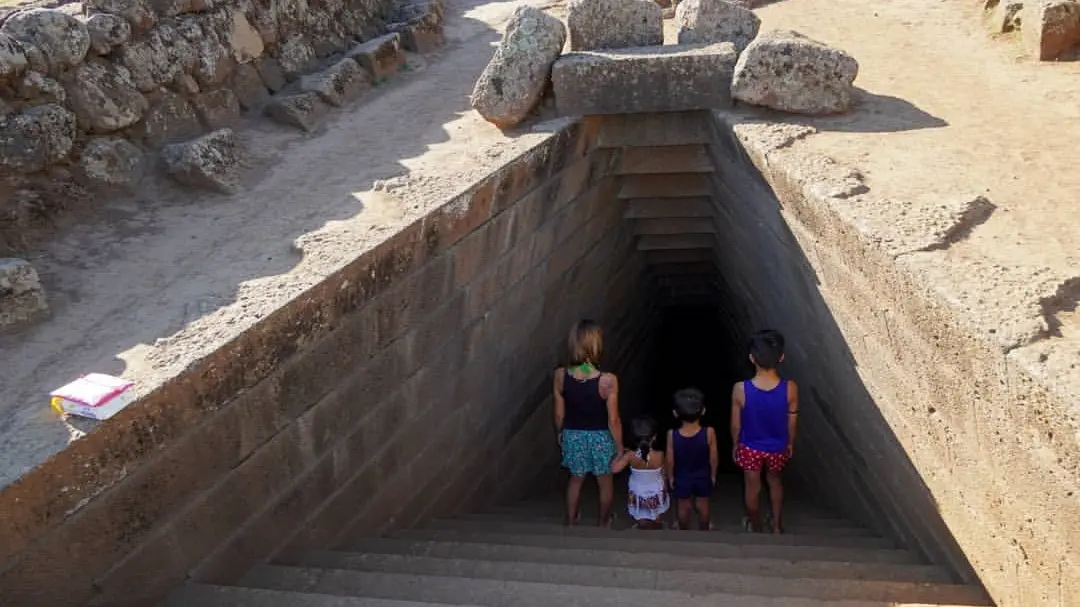
I thank the Barumini Sistema Cultura Foundation, its president, and those who bring it to life every day; I thank the mayor and the community of Barumini, and all of you here. Receiving an award in front of Su Nuraxi requires a certain sobriety: these stones have stood for over three thousand years and have heard so many words. Mine will be few, and I would like them to be, first and foremost, a way to say thank you.
The first thanks goes to a man who is no longer with us but remains present here every step of the way: Giovanni Lilliu. If a cultural award is being presented here today, it's because someone had the patience to remove the earth, layer by layer, until the stones began to speak again. Because stones speak.
I too, with much less patience and using only my pen, attempted to take the side of these stones, writing an article in December 2020 in La Civiltà Cattolica, of which I was then editor, on the importance of recognizing the nuraghe as a UNESCO World Heritage Site. I wasn't starting from scratch. In 1886, another Jesuit, Father Alberto Maria Centurione, had devoted a long series of articles to the nuraghe in the same journal, "Recent Studies on the Nuraghe and Their Importance," collected in a volume two years later. Centurione admitted that the many studies seemed to him "flashes of fleeting clarity likely to leave the nuraghe in a chaos of conflicting opinions," yet he urged Italy to keep "its gaze fixed on its Sardinia, crowned as it is with towers that have defied the centuries." La Civiltà Cattolica has reprinted that volume in a facsimile edition.
The award is named after the betyl, and I wondered what it meant to receive it. The betyl is a sacred stone. In Sardinia, they are still found standing next to the giants' tombs.
The name, according to an ancient tradition, derives from Beth-El, "house of God," and is a word from the book of Genesis. Jacob flees, he is alone, and the night surprises him in some random place. He takes a stone, places it under his head, and falls asleep. He dreams of a ladder connecting earth to heaven. Upon awakening, he says, "Surely the Lord is in this place, and I did not know it." Then he raises that stone, pours oil on it, and says, "This stone, which I have set up as a pillar, will be a house of God." A stone used as a pillow becomes the sign of an inhabited place.