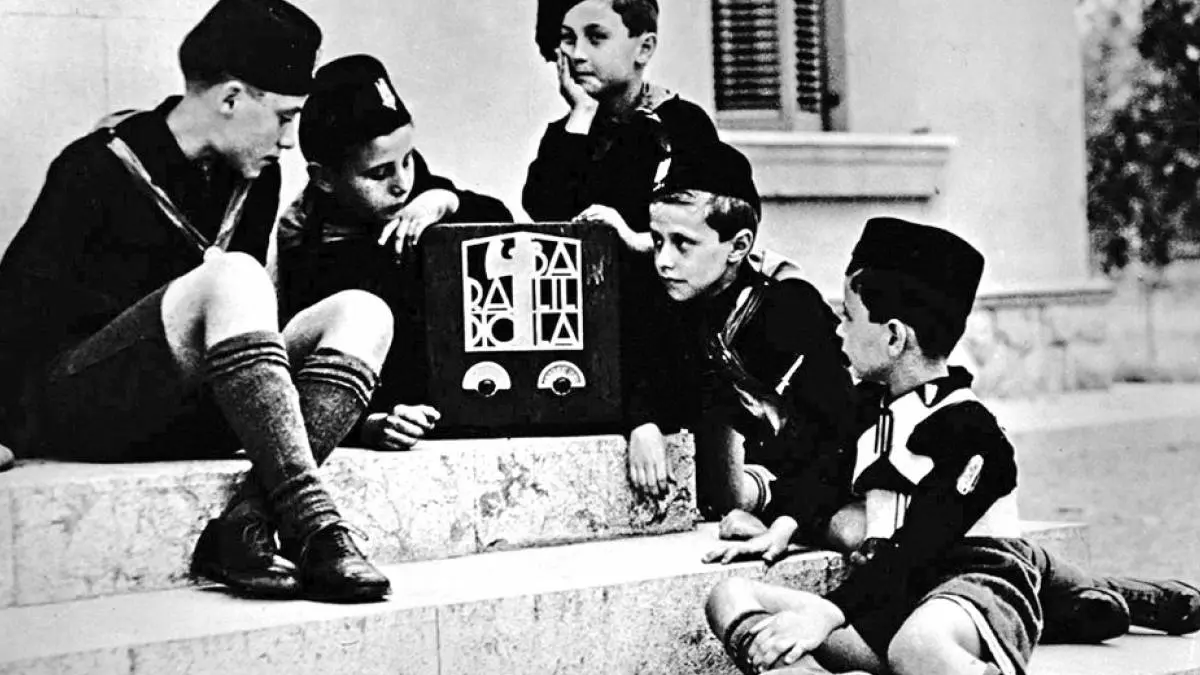


2024 is a year of homegrown media anniversaries. Italian television is seventy years old, given that the first regular Rai broadcasts date back to 1954. Radio broadcasts, on the other hand, are just a century old given that the Uri, Italian Radio Union, was founded in 1924. One hundred years ago, however, radio was still a privilege for a few given that in the second half of the 1920s there were only just over 40 thousand users in the national territory while the few existing broadcasters broadcast very few hours a day. The development of new broadcasters and the diffusion of radio devices required direct intervention from the fascist regime, which saw radio as a useful propaganda tool. Thus in 1927 the Eiar, Italian radio audition body (the ancestor of the RAI), was founded, a state body that had the aim of making radio broadcasts popular. Furthermore, the regime launched some projects to spread radio sets. The “Rural Radio” project, inaugurated in 1931, aimed for example at spreading radio outside urban environments by providing farmers with thousands of radio sets. In the cities, however, the "Radio Balilla" was widespread, a radio set made by the best companies. It was a simple radio, inexpensive (and payable in installments), and was not capable of receiving from abroad, thus avoiding interference with fascist policies.

The increase in the number of devices was also accompanied by richer programming, aimed at a varied and socially differentiated audience. In 1929 the first radio dramas were broadcast and the following year the first radio newspaper, the "Giornale parlatto", began: fascist propaganda thus made its entry on Italian frequencies, which however also included journalistic columns and reports on the main sporting events ( such as the Giro d'Italia and the football championship). In 1933, “Cronache del regime” was inaugurated, a program dedicated to the story of the fascist exploits and conquests of the regime.