

The Sardinia decree comes into force from today , which identifies the works and infrastructures necessary to phase out the use of coal on the island and to decarbonise the industrial sectors of the Region , according to the provisions of the Integrated National Energy Plan and the climate (Pniec).
In general, the works constitute "interventions of public utility, which cannot be postponed and urgent": among the works considered urgent there is "the creation of a new generation capacity with renewable sources and adequate energy storage resources ".
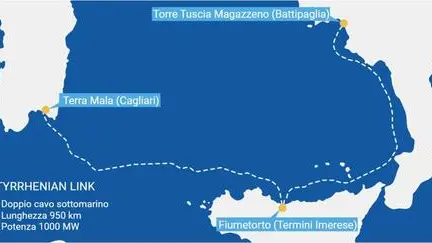
The decree also identifies a series of infrastructures of the electricity system that will be built by Terna Spa. In particular, the Tyrrhenian Link submarine cable , with reference to the Sardinia-Sicily connection. The extension of the national gas transportation network, also for tariff purposes, to Sardinia is also foreseen.
The transport of natural gas will take place by sea: the regasification terminals of Panigaglia (in Liguria) and off the coast of Tuscany (Olt), will allow the loading of LNG on barges, while the gas "shuttle ships" - with the system called Floating Storage and Regasification Units (Fsru) - will dock in the port of Portovesme for the south of the island and at the service of the metropolitan city of Cagliari, and in Porto Torres for the north and the metropolitan area of Sassari . Also planned is the construction of a regasification plant in the port area of Oristano, and possibly of Cagliari . From these three points the networks that will serve the whole island will unravel.
It will then be the Regulatory Authority for Energy, Networks and Environment (Arera), within six months from the date of entry into force of the decree, to define the regulatory framework to allow, for at least five years, the distribution tariffs "in line with those of tariff areas with similar costs ".