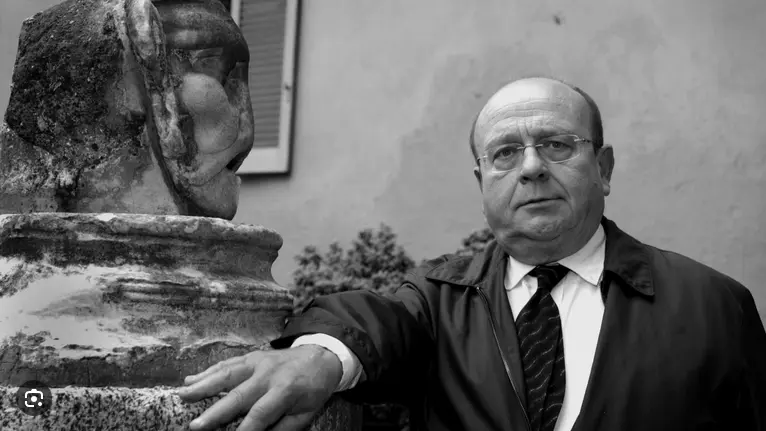


On 18 October 2003, one of the most original literary voices on the European scene of the second half of the twentieth century died: Manuel Vázquez Montalbán .
It was a sudden death, which occurred in Bangkok, thousands of kilometers from Barcelona, the city that had always been at the center of Vázquez Montalbán's life and literary production.
Singer of a total and popular Barcelona, made up of workers and prostitutes, of history and underworld, of languages as noble as they are ferocious , no one has been able to describe the Catalan capital like the creator of the character of Pepe Carvalho , former CIA collaborator, gastronome, chef , book burner by disappointment, private investigator by profession.
But how much of that total and popular Barcelonaism remains in our 4.0 era? This is what the writer and journalist Giuliano Malatesta tries to investigate in the essay " In Barcellona with Manuel Vázquez Montalbán " (Perrone, 2023, pp. 128), a volume included in Passaggi di dogana , a series that explores the places starting from the authors who they inhabited.
Unfortunately, not much remains of the atmospheres and settings in which Pepe Carvalho moved.

Montalbán talked about his city trying to keep alive that historical and political memory that over the years some have naively mistaken for nostalgia for youth and a lost age. And now that after some time the city, besieged by mass tourism, is no longer that "populist paradise" but has become bourgeois under the banner of self-satisfied Catalan postmodernism.